
Genesis 11:27–25:11
A Chosen People
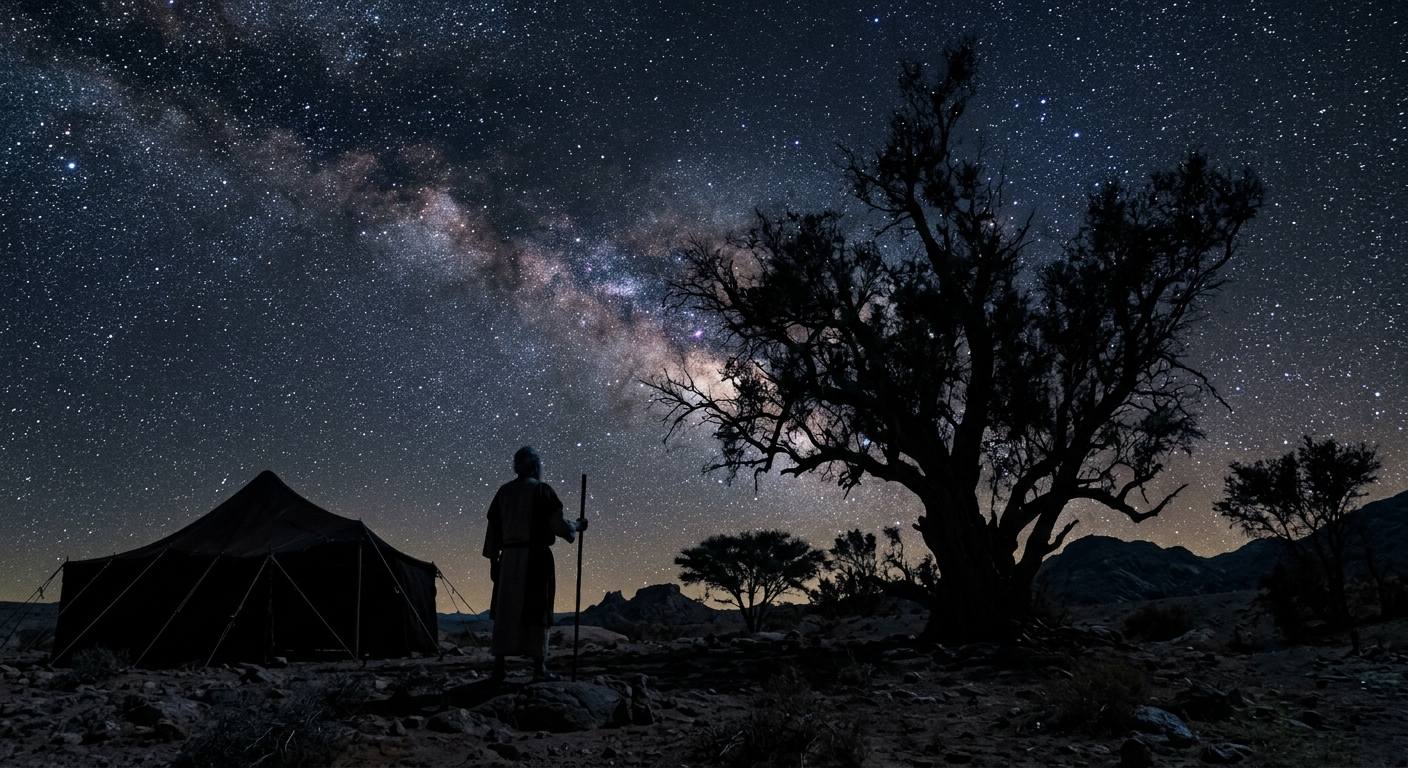
Image Caption: Abram looks up at the star-filled night sky.Source: (Google Gemini) [https://gemini.google.com/app/]
He took him outside and said, “Look up at the sky and count the stars — if indeed you can count them.” Then he said to him, "So shall your offspring be." (Genesis 15:5)
At this promise, Abram, a Gentile chosen from among the nations, "believed YHWH, and he credited it to him as righteousness" (Genesis 15:6). There was not yet a chosen people Israel, not yet an Exodus from Egypt, not yet a law revealed from Sinai, yet by this — "he credited it to him as righteousness" — we discover that which God seeks from every human heart: trust in God to carry out his promises. By this we may infer that anyone, Gentile or Jew, can be justified by faith and live (cf. Habakkuk 2:4). God credited to Abram a life-giving blessing — despite his fearful shortcomings yet to be told and before his death-defying sacrifice yet to be shown — even extending the offer of this life-giving blessing to a people yet to be born.
The Abram/Abraham saga is the first of the three great sagas of Genesis that show how God, through one man, would save the world.
Genesis 11:27 to 25:11 ⟡ Abram/Abraham Saga
The Abram/Abraham saga is a patriarchal narrative that presents in orderly episodes a portrayal of the faith journey of Abram, an Aramean Gentile called by God as the first of a new kind of nation. The account is episodic, meaning that it is made up of segmented stories whose coherence into a saga results from the orderly arrangement of episodes into a concentrically nested series of parallels. The parallelism appears in the correspondence not of vocabulary (collocations of words or phrases) but of themes:
- offers of blessing (12:1-9; 22:1-19)
- foreign threats to the ancestress (12:10-20; 20:1-18)
- family strife (13:1–14:24; 18:16–19:38)
- dream-state and vision narratives (15:1-21; 18:1-15)
- conception/birthright struggles (16:1-16; 17:23-27; 21:1-7, 8-21)
The center and axis of the palistrophic saga is the giving of the covenant sign of circumcision (Genesis 17:1-22), flanked by the changes of names: Abram to Abraham, and Sarai to Sarah.
If there is a rhetorical purpose inherent in the arrangement of the episodes describing the founder of saving faith (Genesis 11:27–12:11), it is focused on the sign of circumcision (Genesis 17:1-22): the covenant 'cut' made from generation to generation through which all progeny would pass and that pointed to a child to be born of a woman who would crush the head of the serpent (Genesis 3:15). It would be through Abram's line that this child would be born. It was to save all nations that the great nation born of Abram was called (Genesis 12:2-3).
Literary Form of the Abram/Abraham Saga
Genesis 11:27-32 ⟡ Abram’s Roots
By the end of Genesis 11, it will become clear that all the genealogies of Genesis 1–11 have been carrying forward the seed of ancient forebears to bring forth a child, not Terah's eldest but his last, yet named Abram ('Exalted Father'). Terah would not live to perceive the irony in that name or how God would transform a childless Abram and wife, Sarai, by an unlikely calling, an impossible promise, and an unthinkable test to make for them a great and enduring name.
One needs to understand the roots of Abram to make sense of the connection he had with his Aramean homeland and forebears. Abram and his relations were called out of Aram and away from their family, yet they would for two succeeding generations repair to their Aramean family for wives: Rebekah for Isaac; Leah (and Zilpah) and Rachel (and Bilhah) for Jacob. Little wonder that Deuteronomy 26:1-11 would decree:
1 When you have entered the land YHWH your god is giving you as an inheritance and have taken possession of it and settled in it, 2 take some of the firstfruits of all that you produce from the soil of the land YHWH your god is giving you and put them in a basket. Then go to the place YHWH your god will choose as a dwelling for his Name 3 and say to the priest in office at the time, “I declare today to YHWH your god that I have come to the land the Lord swore to our ancestors to give us.” 4 The priest shall take the basket from your hands and set it down in front of the altar of YHWH your god. 5 Then you shall declare before YHWH your god: “My father was a wandering Aramean, and he went down into Egypt with a few people and lived there and became a great nation, powerful and numerous. 6 But the Egyptians mistreated us and made us suffer, subjecting us to harsh labor. 7 Then we cried out to the Lord, the God of our ancestors, and the Lord heard our voice and saw our misery, toil and oppression. 8 So the Lord brought us out of Egypt with a mighty hand and an outstretched arm, with great terror and with signs and wonders. 9 He brought us to this place and gave us this land, a land flowing with milk and honey; 10 and now I bring the firstfruits of the soil that you, Lord, have given me.” Place the basket before YHWH your god and bow down before him. 11 Then you and the Levites and the foreigners residing among you shall rejoice in all the good things YHWH your god has given to you and your household.
True, the 'Aramean' in Deuteronomy 6:5 was likely Jacob, its first referent, but what applied to Jacob would apply as well to his fathers, Isaac and Abraham. All were wandering Arameans, yet each would be divinely named. It was YHWH who renamed Abram, Abraham. It was YHWH who named the impossible child Isaac. It was YHWH who wrestled Jacob and renamed him, Israel — a name by which they have brought and will bring blessing to all nations.
tôledôṯ of Terah — Genesis 11:27-32
| כז וְאֵלֶּה תּוֹלְדֹת תֶּרַח--תֶּרַח הוֹלִיד אֶת-אַבְרָם, אֶת-נָחוֹר וְאֶת-הָרָן; וְהָרָן, הוֹלִיד אֶת-לוֹט. | 27 Now these are the generations of Terah. Terah begot Abram, Nahor, and Haran; and Haran begot Lot. |
| כח וַיָּמָת הָרָן, עַל-פְּנֵי תֶּרַח אָבִיו, בְּאֶרֶץ מוֹלַדְתּוֹ, בְּאוּר כַּשְׂדִּים. | 28 And Haran died in the presence of his father Terah in the land of his nativity, in Ur of the Chaldees. |
| כט וַיִּקַּח אַבְרָם וְנָחוֹר לָהֶם, נָשִׁים: שֵׁם אֵשֶׁת-אַבְרָם, שָׂרָי, וְשֵׁם אֵשֶׁת-נָחוֹר מִלְכָּה, בַּת-הָרָן אֲבִי-מִלְכָּה וַאֲבִי יִסְכָּה. | 29 And Abram and Nahor took them wives: the name of Abram's wife was Sarai; and the name of Nahor's wife, Milcah, the daughter of Haran, the father of Milcah, and the father of Iscah. |
| ל וַתְּהִי שָׂרַי עֲקָרָה: אֵין לָהּ וָלָד. | 30 And Sarai was barren; she had no child. |
| לא וַיִּקַּח תֶּרַח אֶת-אַבְרָם בְּנוֹ, וְאֶת-לוֹט בֶּן-הָרָן בֶּן-בְּנוֹ, וְאֵת שָׂרַי כַּלָּתוֹ, אֵשֶׁת אַבְרָם בְּנוֹ; וַיֵּצְאוּ אִתָּם מֵאוּר כַּשְׂדִּים לָלֶכֶת אַרְצָה כְּנַעַן וַיָּבֹאוּ עַד-חָרָן, וַיֵּשְׁבוּ שָׁם. | 31 And Terah took Abram his son, and Lot the son of Haran, his son's son, and Sarai his daughter-in-law, his son Abram's wife; and they went forth with them from Ur of the Chaldees to go into the land of Canaan; and they came to Haran and dwelt there. |
| לב וַיִּהְיוּ יְמֵי-תֶרַח, חָמֵשׁ שָׁנִים וּמָאתַיִם שָׁנָה; וַיָּמָת תֶּרַח בְּחָרָן. {פ} | 32 And the days of Terah were two hundred and five years; and Terah died in Haran. {P} |
Genealogy of Terah
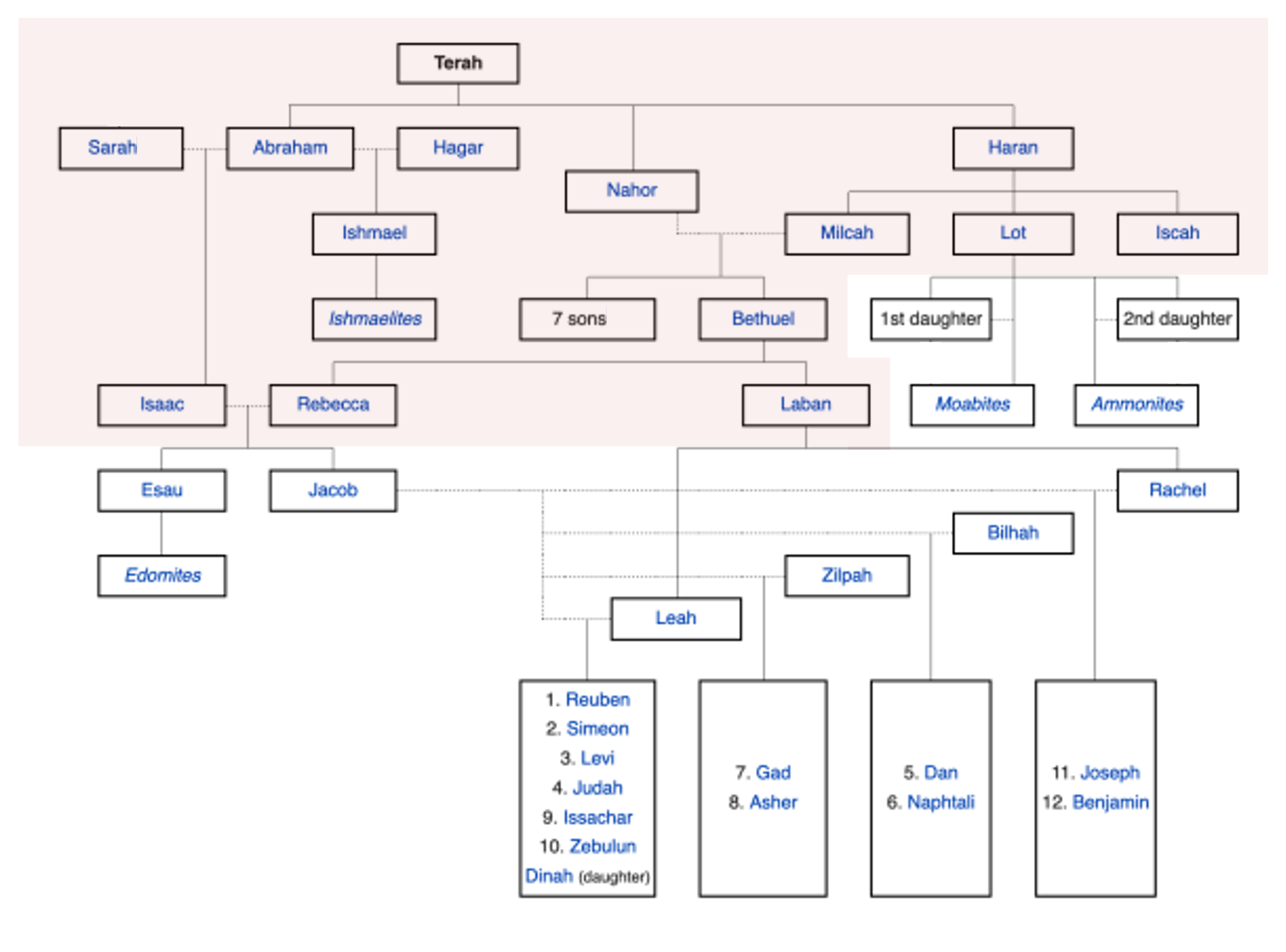 Image Caption: Genealogy of Terah. Source: Abraham's family tree (Wikipedia) [https://en.wikipedia.org/wiki/Abraham's_family_tree]; Genealogies in the Bible (Wikipedia) [https://en.wikipedia.org/wiki/Genealogies_in_the_Bible]
The sons of Terah — Haran (the eldest), Nahor, and Abram (the youngest) — became further interconnected with their family through marriages to women descended from Terah. Nahor married Milcah, daughter of his brother Haran (Genesis 11:29). Abram married Sarai, his half-sister by Terah through another mother (Genesis 20:12). Haran's son, Lot, interbred in drunkenness with his own two daughters (Genesis 19:30-36).
Among the names listed in Genesis 11, several — Serug, Terah, Haran, Nahor, and Abram — survive as names of towns in ancient Aram, and these, as well as others in Terah's line, appear among linguistic parallels in late-3rd- and 2nd-millennium BC texts.
- The name Serug corresponds to 'Sargi' in Assyrian inscriptions of the 7th century BC and lives on as modern Sürüyc, 35 miles (56.5 km) northwest of Haran.
- The name, Terah, is preserved in a town named Til Turahi (“Mound of Terah”) is mentioned in 9th-century BC Assyrian texts as north of Haran, also in the Balikh River valley. At Mari (18th century BC): ARM 2 §37 lists Ti-ra-ḫu as a head of household. At Ebla (24th century BC): Personal name tu-ra-ḫu on tablet TM 75.G.1969 matches the three-consonant Semitic root of Terah (TRḤ).
- A town, Nahor, is mentioned in Genesis 24:10 as the home of descendants of Bethuel, a son of Nahor (Genesis 24:24). This town is also mentioned in texts from Mari and Cappadocia from the 19th through 18th centuries BC, as well as in Assyrian inscriptions from the 14th century BC. Later Assyrian records from the 7th century BC refer to it as Til Nakari, 'Mound of Nahor'. Allthough its exact location is unknown today, such references in ancient texts place it in the Balikh River valley south of Haran. Cappadocian trade tablets from Kültepe (19th century BC) include Na-ḫu-ru (Nahor) as a theophoric or toponymic element.
- The name Haran is preserved in a city mentioned in Genesis, whose ruins lie within the modern city of Harran, Turkey. The earliest records of Harran come from the Ebla tablets (ca. 2300 BC). Harran's name is said to be from Akkadian ḫarrānum (f.), "road"; ḫarrānātum (pl.). Cappadocian trade tablets from Kültepe (19th century BC) include Ḫa-ra-an (Haran) as a theophoric or toponymic element.
- The name Abram appears in early texts. At Mari (18th century BC): ARM 7 §23 mentions A-ba-ra-mu, a direct linguistic parallel to Abram.
- The name Sarai appears in some early texts. The theophoric feminine Sa-ra-tum (Sarai) appears at Mari.
- The name Laban appears in some early texts. The Nuzi onomasticon lists Lā-ba-nu (Laban).
- The name Milcah appears in some early texts. The Nuzi onomasticon lists Mi-ka-ilu (Milcah).
The recurrence of every principal family name in separate, datable archives argues strongly for the historicity of a clan bearing precisely those names at the very time Genesis locates them.
Sources: Lars Haukeland, 'Evidence for Serug, Nahor and Terah (Genesis 12)' (larshaukeland.com) [https://larshaukeland.com/bits-pieces/archeology/genesis/evidence-for-serug-nahor-and-terah/]; Harran (biblical place) (Wikipedia) [https://en.wikipedia.org/wiki/Harran_(biblical_place)]; Evidence for Terah's family's existence? (Bible Hub) [https://biblehub.com/q/Evidence_for_Terah_s_family_s_existence.htm]
From the correlation to place names, some interpreters have inferred that "Terah, Nahor and Serug — Abraham’s father, grandfather and great grandfather (Genesis 11:22-26) — seem to be the eponymous ancestors of towns in the basin of the Balikh River, near Haran. … All three names appear in Assyrian texts from the first half of the first millennium B.C.E. as the name of towns or ruined towns in the regions of Haran, namely Til-(sha)-Turakhi (the ruin of Turakh), Ti-Nakhiri (the ruin of Nakhir) and Sarugi."
Source: P. Kyle McCarter, 'Abraham as a Historical Figure' (My Jewish Learning) [https://www.myjewishlearning.com/article/abraham/]; reprinted from Ancient Israel: From Abraham to the Roman Destruction of the Temple, edited by Hershel Shanks (Biblical Archaeology Society).
Still, the antiquity of such names, Serug, Terah, Nahor, Haran, and Abram, is better corroborated by their attestation in ancient texts and onomastica. This is no less the case with the name, Abram: “Besides Mari, the name Abram is known also from Ebla, Ugarit, Egypt and Cyprus. These occurrences show that the name Abram is authentic and not completely uncommon among west-Semites … ” (Gösta W. Ahlström, The History of Ancient Palestine, Minneapolis: Fortress Press, 1993, p. 181).
For over a century, scholars have noted examples of names akin to Abram or Abraham in ancient written sources, including George Barton's observation made in 1909: "a discovery of the name Abraham, of which probably much more notice will be taken, has been made in some Babylonian letters from Dilbad or Dilmu, the modern Delim, a few miles southeast of Borsippa. These letters were written in the reign of Ammizaduga, one of the last kings of the dynasty to which Hammurabi belonged. In five of these letters an Abraham is mentioned, who appears to have been a small farmer, and who rented a small tract of land from a certain well-to-do landowner named Sin-iddin. The Babylonian spelling of the name is not uniform: A-ba-am-ra-am, A-ba-ra-ma, and A-ba-am-ra-ma are the forms in which it appears."
Source: George A. Barton, 'Abraham and Archæology' Journal of Biblical Literature, Vol. 28, No. 2 (1909), pp. 152-168 [https://www.jstor.org/stable/4617143].
Interpreters would do well to accumulate all attestations to the use of ancient names, toponymic, and more importantly, textual and onomastic, since written evidence is more often datable and contemporary with their authors.
Abram's Chronology & Contemporaries
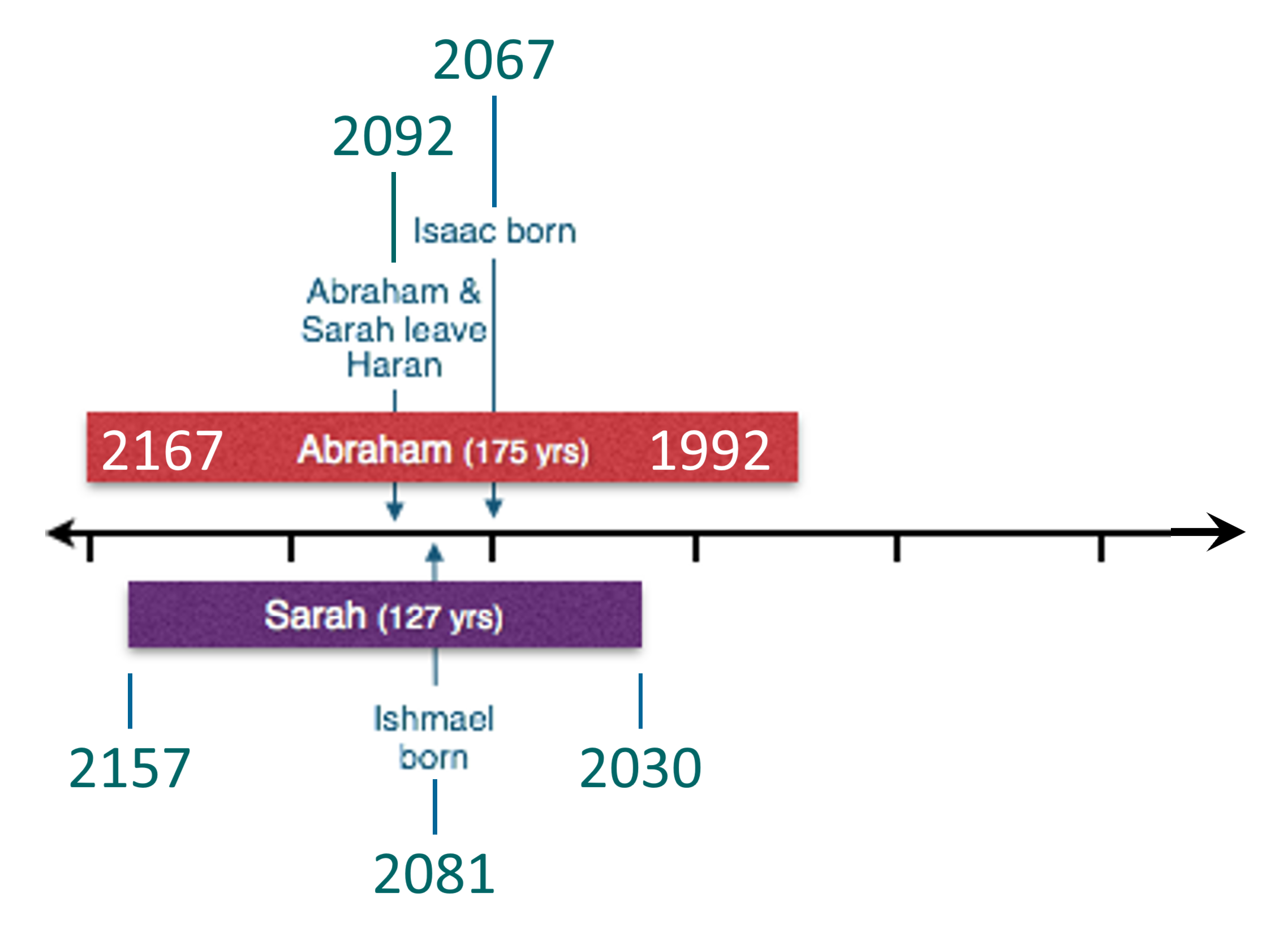 Image Caption: Timeline of Abraham and Sarah.
Some scholars date the story of Abraham to the period of Ur-Nammu (2112–2095 BC), who founded the Ur III Dynasty. The period of Abraham, Isaac, Jacob, and Joseph would endure to the time of Hammurabi (1810–1750 BC), the sixth king of the First Babylonian Dynasty. In Israelite culture, this was the Middle Bronze Age (2100–1550 BC).
Edward R. Thiele’s chronology places Abraham's birth in 2167 BC.
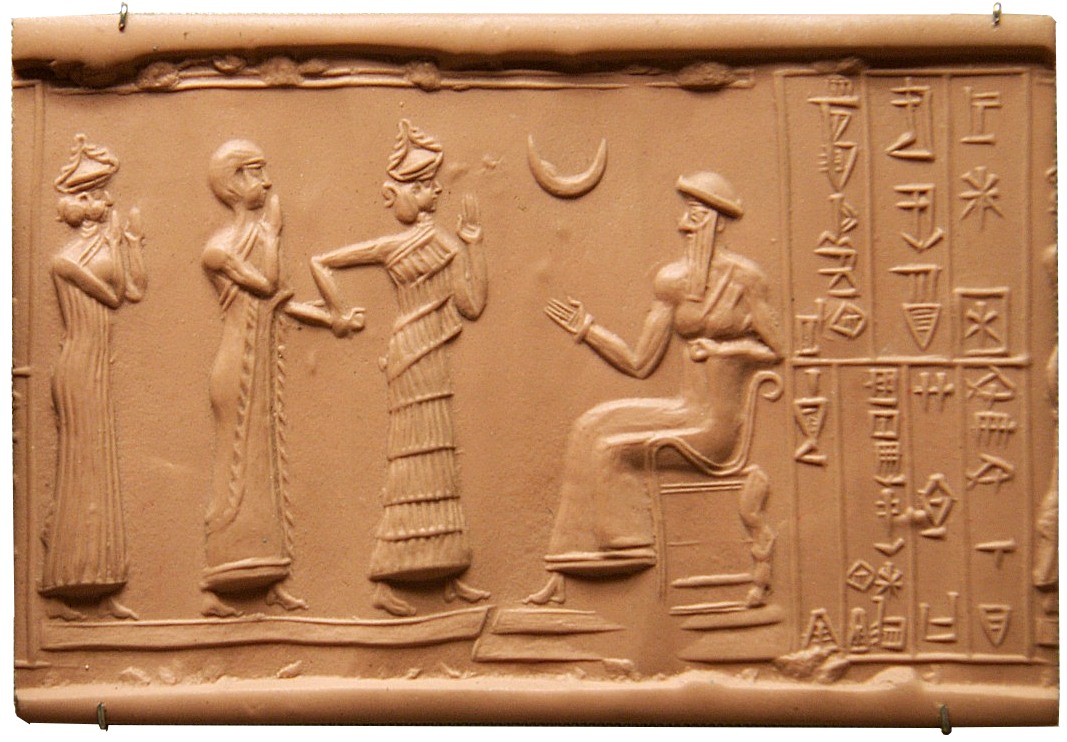 Image Caption: Enthroned King Ur-Nammu, founder of the Third Dynasty of Ur; Seal Impression. The name of King Ur-Nammu (𒌨𒀭𒇉) appears vertically in the upper right corner. Source: Ur-Nammu (Wikipedia) [https://en.wikipedia.org/wiki/Ur-Nammu] and [https://commons.wikimedia.org/wiki/File:Ur-Nammu_seal.jpg]
Enthroned King Ur-Nammu (2112–2095 BC), founder of the Third Dynasty of Ur, on a cylinder seal. Inscription of the upper segment: "Ur-Nammu, the Great King, King of Ur".
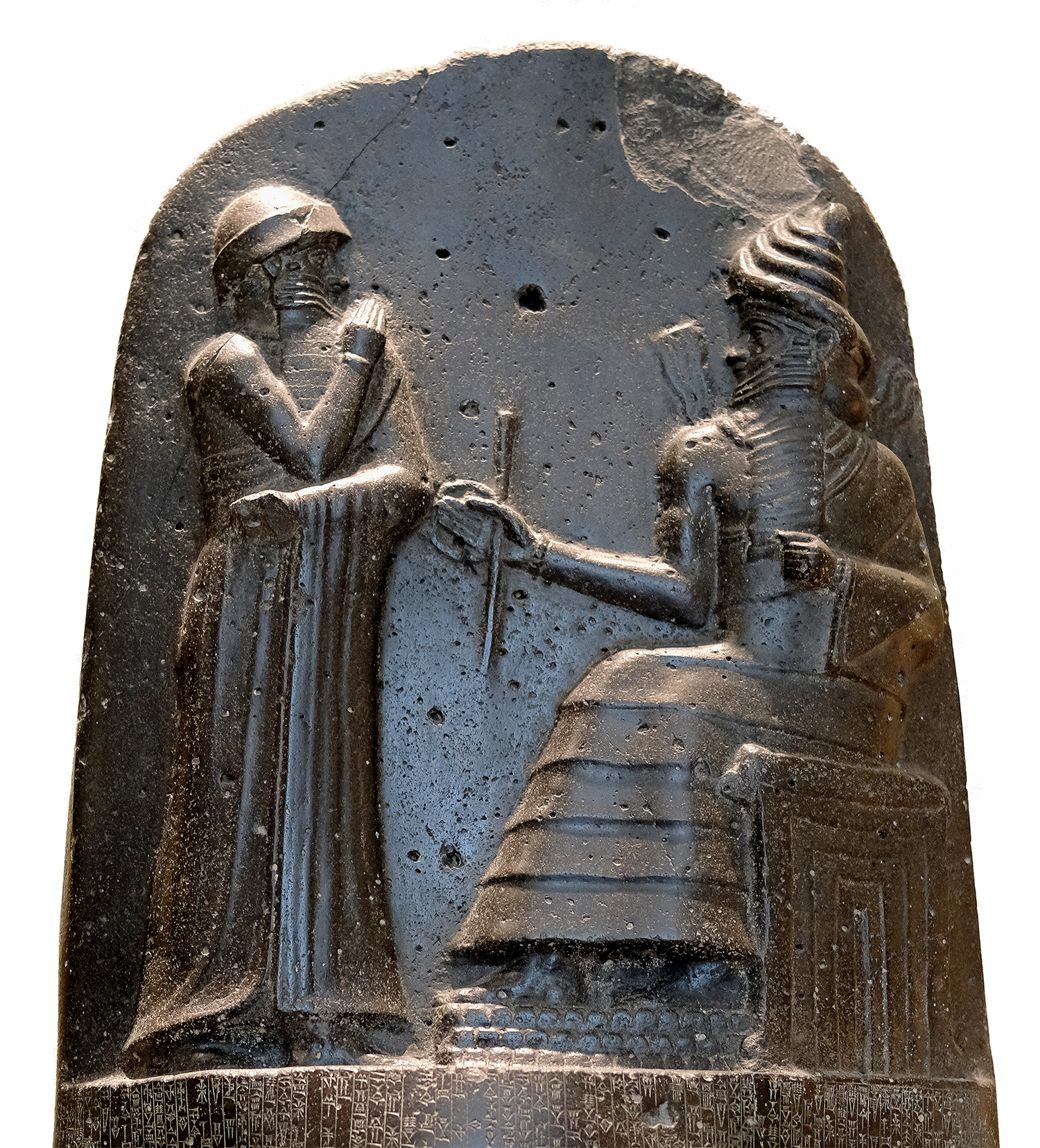 Image Caption: Hammurabi receiving his royal insignia from Shamash (or Marduk) on the Hammurabi stele. Source: Hammurabi (Wikipedia) [https://en.wikipedia.org/wiki/Hammurabi]
Relief on the stele of Hammurabi (𒄩𒄠𒈬𒊏𒁉) (1810–1750 BC), the sixth king of the First Babylonian dynasty, reigning from 1792–1750 BC, is depicted as standing and receiving his royal insignia from Shamash (or possibly Marduk). Hammurabi holds his hand over his mouth as a sign of prayer.
Migration of Abram
Route from Ur
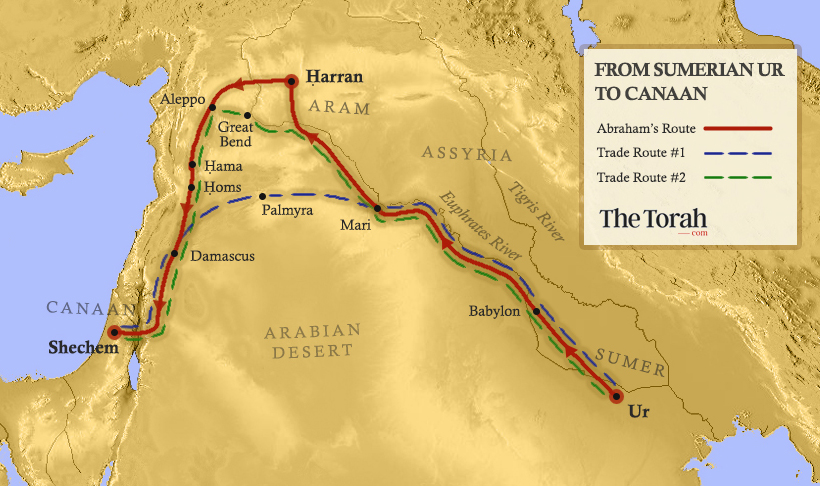 Image Caption: Route of Abram from Ur. Source: Gary A. Rendsburg, Ur Kasdim: Where Is Abraham’s Birthplace? (The Torah) [https://www.thetorah.com/article/ur-kasdim-where-is-abrahams-birthplace]
Ur-Kaśdim ('Ur of the Caldeans') is today generally identified with the great Sumerian city of Ur in southern Iraq. This identification was first proposed by Henry C. Rawlinson (1810–1895), and Sir Leonard Woolley (1880‒1960) established it as a standard identification. The Chaldeans indeed lived in southern Mesopotamia in the 1st millennium BC, when the terms Babylonia and Chaldea became interchangeable (7th to 6th centuries BC), even during the reign of Nebuchadnezzar II.
However, Genesis 11:31 says, "And Teraḥ took Abram his son, and Lot the son of Haran, the son of his son, and Sarai his daughter-in-law, the wife of Abram his son; and they went out with them from Ur-Kaśdim to go to the land of Canaan, and they came to Ḥaran and dwelt there." Teraḥ then died in Haran.
Ḥaran is a city in southeastern Turkey, 16 kilometers north of the Turkish-Syrian border; it is still called by that name today. The city is well known from cuneiform sources, in both Eblaite and Akkadian, reaching back to the 3rd millennium BC.
Route from Urfa
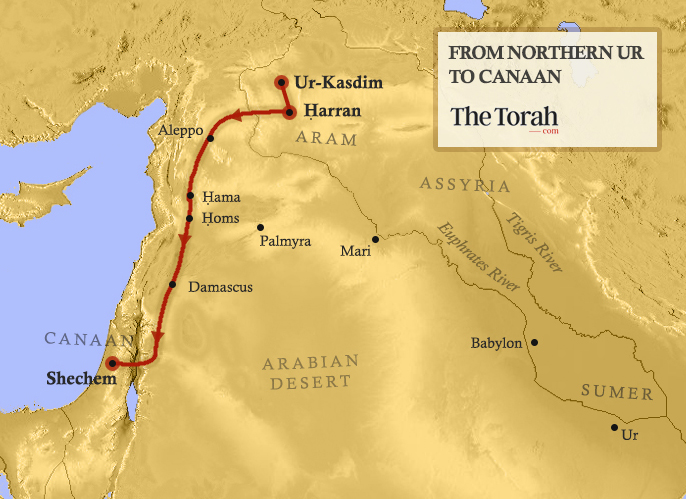 Image Caption: Route of Abram from Urfa. Source: Gary A. Rendsburg, Ur Kasdim: Where Is Abraham’s Birthplace? (The Torah) [https://www.thetorah.com/article/ur-kasdim-where-is-abrahams-birthplace]
Before the excavations at Ur in southern Mesopotamia, there was a site in northern Mesopotamia that many considered the locale of the biblical Ur of the Chaldeans. According to the Greek historian Xenophon (431–354 BC), the Chaldeans were a warlike people who blocked the way to Armenia (Anabasis 4.3.4), as neighbors of the Armenians but at war with them (Cyropaedia 3.1.34). Xenophon also mentions the Chaldeans in connection with the Carduchi (i.e., ancient Kurds) (Anabasis 5.5.17). To this day, the term lives on within the Chaldean Christian community, which inhabits the region.
If only in the first millennium BC the Chaldeans migrated from northerne Mesopotamia to southern Mesopotamia, then they must have lived in northern Mesopotamia during the third millennium BC, when Abram lived. This would weigh in favor of identifying 'Ur of the Chaldeans' with a city of northern Mesopotamia.
Cyrus Gordon (1908–2001) dug with Woolley at Ur in the 1930s, but he did not accept Woolley's conclusion on the identity of Ur of the Chaldeans with Ur of southern Mesopotamia. Gordon inferred that if Teraḥ and family left Ur-Kaśdim to travel to Canaan, but stopped en route in Ḥaran, then Ur-Kaśdim should be north of Ḥaran, not far southeast of it. Turkish Jewish, Christian, and Muslim tradition identifies ancient Urfa as biblical 'Ur of the Chaldeans', the birthplace of Abraham.
The identification of 'Ur of the Chaldeans' with the Turkish town of Urfa was commonly held in the 19th Century, as George Bush (1796‒1859) notes:
The Jews, according to Mr. Wolff, still call the place by the name in the text, אור כשדים Oor Kaśdim, or Ur of the Chaldees, and it is a place of pilgrimage as the birth-place of Abraham …
Deuteronomy 26:5 describes Israel’s ancestors as wandering Arameans: אֲרַמִּי אֹבֵד אָבִי “A wandering Aramean was my father”. The Aramean heartland is located in northern Mesopotamia.
Source: Gary A. Rendsburg, Ur Kasdim: Where Is Abraham’s Birthplace? (The Torah) [https://www.thetorah.com/article/ur-kasdim-where-is-abrahams-birthplace]
Route from Urkesh
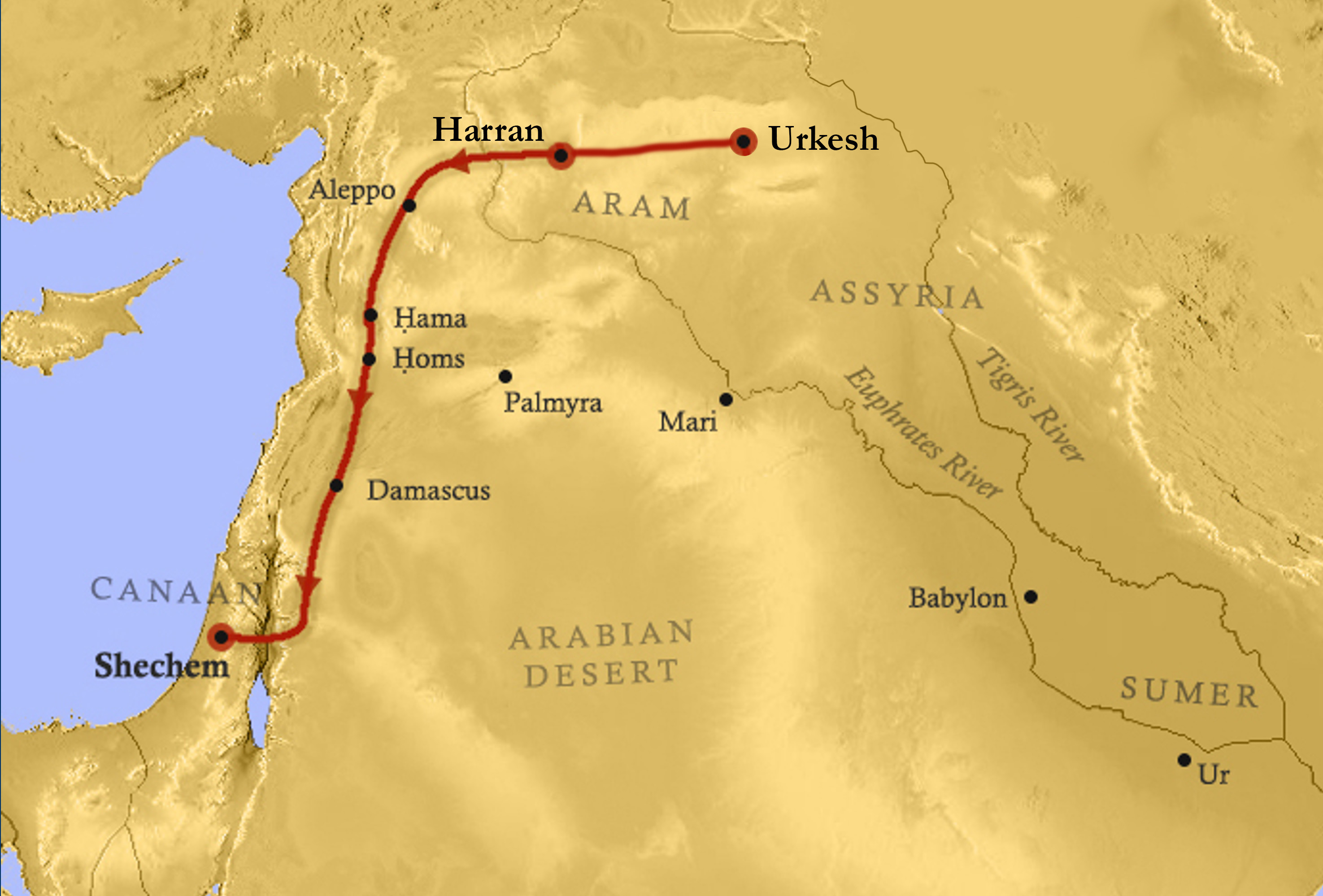 Image Caption: Route of Abram from Urkesh. Source: Adapted from Gary A. Rendsburg, Ur Kasdim: Where Is Abraham’s Birthplace? (The Torah) [https://www.thetorah.com/article/ur-kasdim-where-is-abrahams-birthplace]
Ancient Urkesh (Tell Mozan) was once a major hub of the ancient Hurrian civilization. Little was known about Urkesh or the Hurrian civilization for thousands of years. In the 1980s, archaeologists discovered Tell Mozan, a huge mound with an ancient palace, temple, and plaza. After a decade of excavation, researchers realized that Tell Mozan was indeed the Hurrian city of Urkesh.
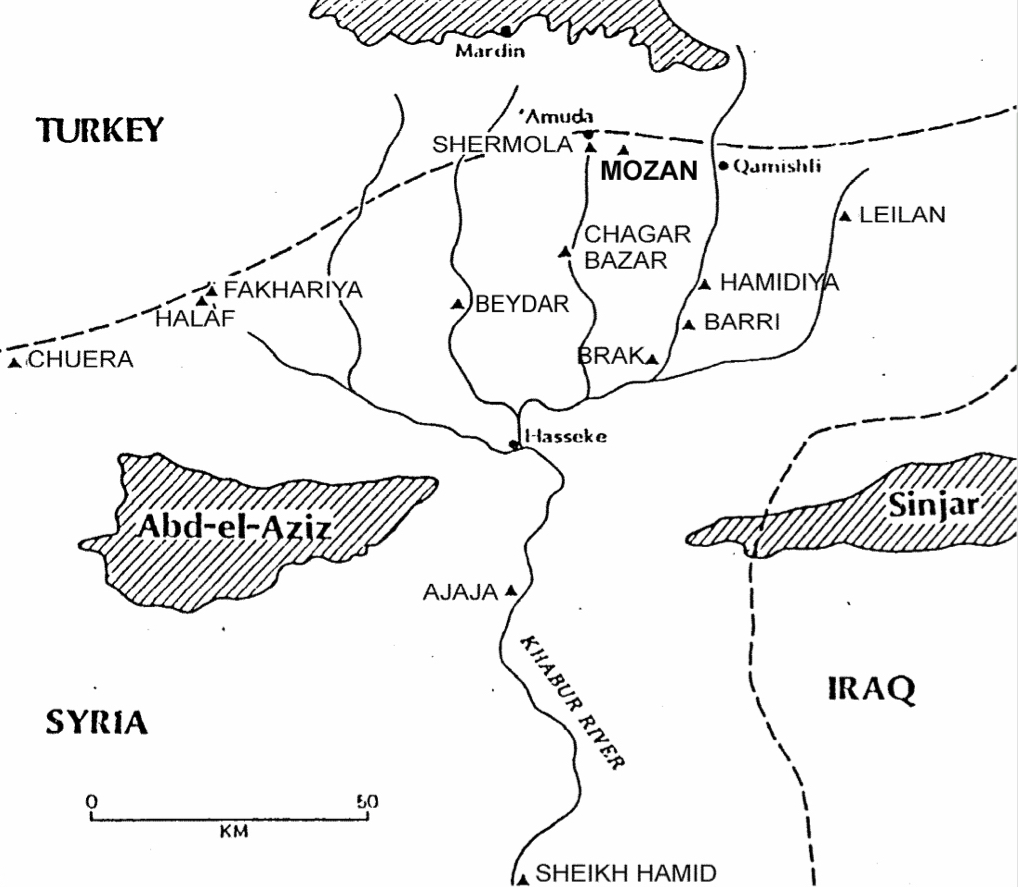 Image Caption: Map of the Khabur River and ancient cities of the Hurrian Ledge. Source: Urkesh (Urkesh.org) [https://urkesh.org/images-overview/khabur.jpg]
Urkesh (Tell Mozan) is situated on a branch of the Khabur River in northern Syria. The similarity of the name, Urkesh / Urkish, to the name 'Ur Kaśdim' is perhaps more than fortuitous. Moreover, the location of Urkesh 100 miles east/northeast of Harran makes it an attractive alternative site for the proposed home of Terah and his family from which they would have traveled west by way of Harran while heading toward Canaan. If Terah had traveled from Urkesh to Canaan, he would not have needed to detour to go to Haran; it would have been directly en route.
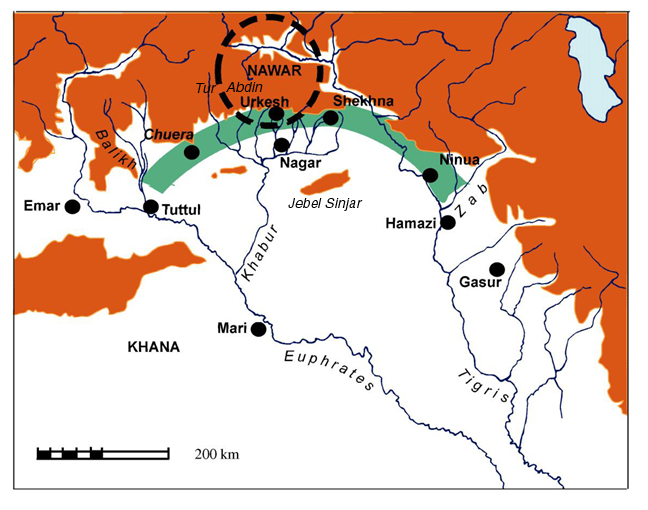 Image Caption: The Hurrian Ledge. Source: Urkesh and the Hurrians (Urkesh.org) [https://urkesh.org/02/013k.htm]
There were probably only a few truly Hurrian cities, distributed along the piedmont arc of what is now northern Syria that is called the Hurrian urban ledge. Urkesh was a large city, one of several Hurrian settlements across the Hurrian Ledge, that endured from the early fourth millennium BC until the latter part of the second millennium (ca. 1300 BC). During twenty-five centuries, Urkesh shared in the social and political development of ancient Syro-Mesopotamia.
Because of its location 'beyond the Euphrates', its position along a route to Canaan that would pass directly through Harran, and the antiquity of its name — a name that resonates with the biblical name, 'Ur Kaśdim' — we may consider ancient Urkesh as a viable candidate for the birthplace of Abram.
Sources
- "Archaeologist, Villagers Protect Ancient Syrian City as Civil War Rages." UCLA Newsroom. May 23, 2014. [https://newsroom.ucla.edu/stories/archaeologist-villagers-protect-ancient-syrian-city-as-civil-war-rages]
- The Rediscovery of Urkesh: Forgotten City of the Hurrians (Ancient Origins) [https://www.ancient-origins.net/ancient-places-africa/rediscovery-urkesh-forgotten-city-hurrians-003287]
- "Tell Mozan Urkesh." Urkesh.org. [https://www.urkesh.org/attach/English A4 O908 special topics.pdf]
- "Tell Mozan." World Monuments Fund. [https://www.wmf.org/project/tell-mozan]
- "Tell Mozan (ancient Urkesh)." Barnard. [https://www.barnard.nl/mozan.html]
Cities of Abram — Ur / Urfa / Urkesh
Ur
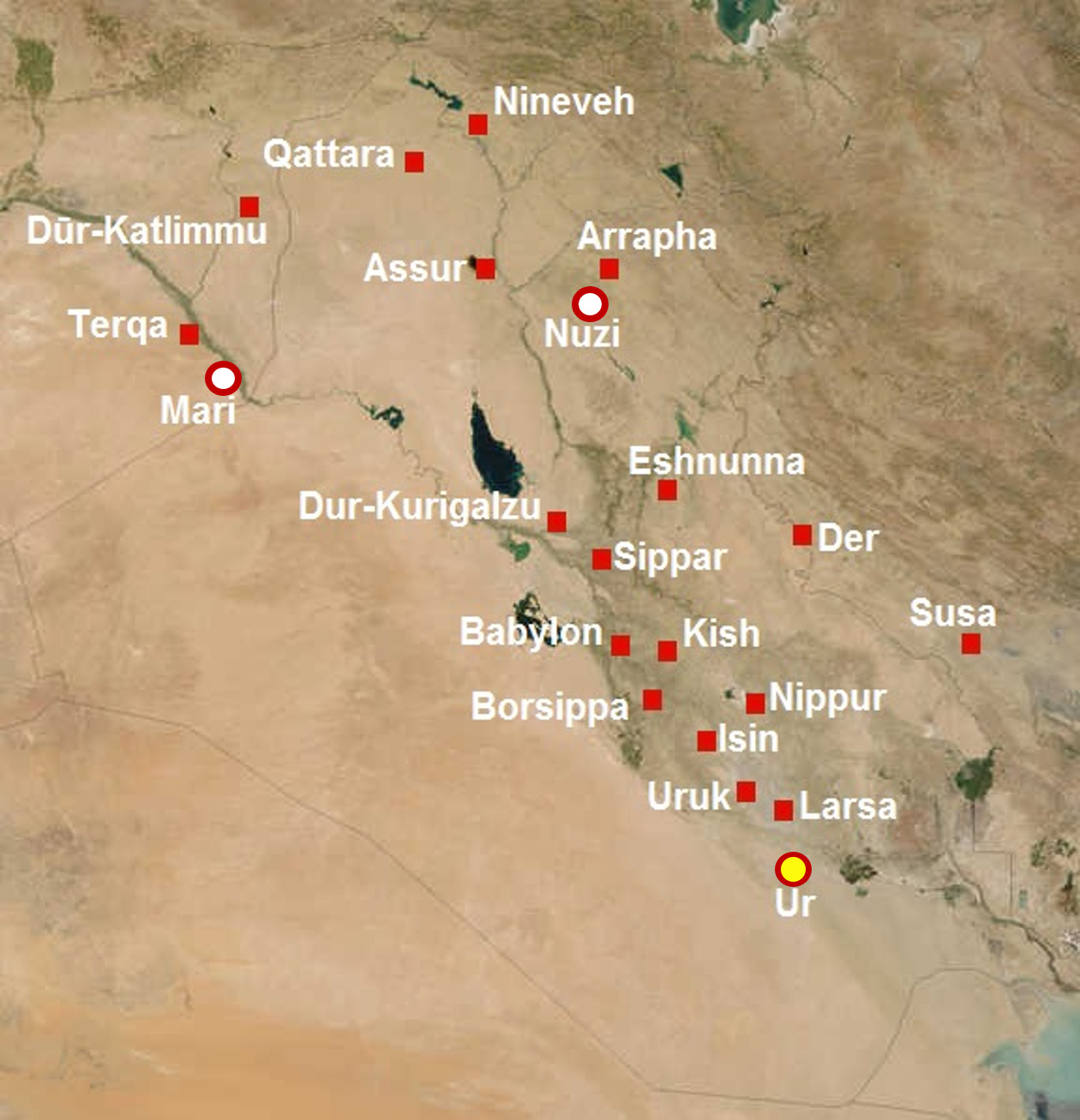 Image Caption: Cities of Abram: Ur
In 1862, Henry Rawlinson identified Ur Kaśdim with Tell el-Muqayyar (Ur) near Nasiriyah in the Baghdad Eyalet of Ottoman Iraq. In 1927, Leonard Woolley excavated the site and identified it as a Neo-Sumerian archaeological site where the Chaldeans would later settle around the 9th century BC.
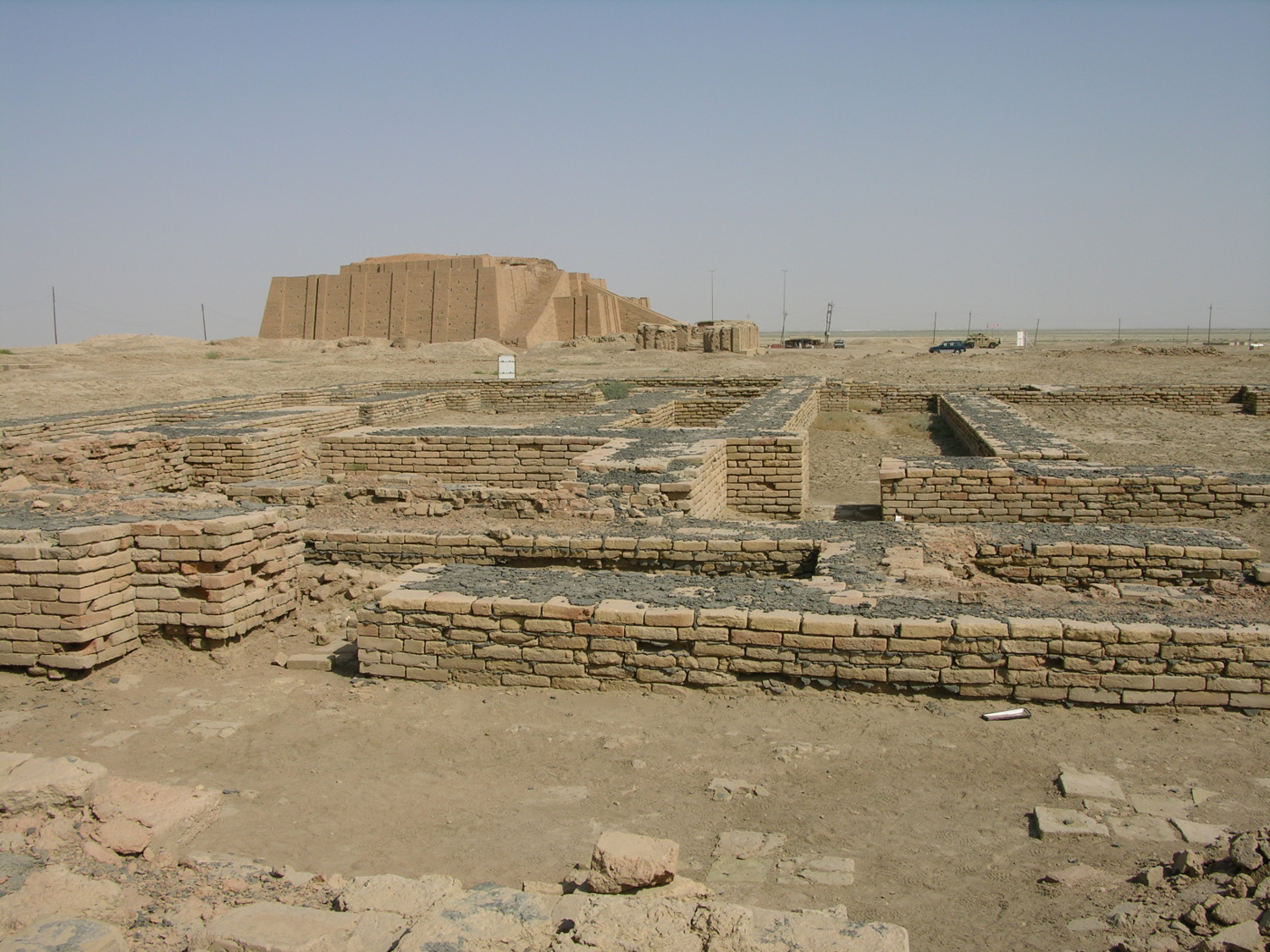 Image Caption: Ur Ziggurat. Source: Ur of the Chaldeas (Wikipedia) [https://en.wikipedia.org/wiki/Ur_of_the_Chaldees]
The Neo-Sumerian ziggurat of Ur was originally built during the Early Bronze Age (21st century BC) by King Ur-Nammu of the Third Dynasty of Ur. However, there is a problem with the location of Ur in Sumer, which is situated southwest of the Euphrates and thus on the same side of the Euphrates as the land of Canaan: it does not fit with the description of Joshua 24:2:
Long ago your forefathers — Terah, father of Abraham and father of Nahor — lived beyond the Euphrates and worshipped other gods. But I took your father Abraham from beyond the Euphrates and led him through the whole land of Canaan.
Yet, even if this Ur of southern Mesopotamia was not the 'Ur of the Chaldeans' from which Abram came, it was nonetheless already a powerful and influencial city in the time of Abram. Centuries later, after it had crumbled into ruins, it was restored by the 6th-century BC Neo-Babylonian King Nabonidus. More recently, in the 1980s, Saddam Hussein encased those ruins with a partial reconstruction of the façade and staircase.
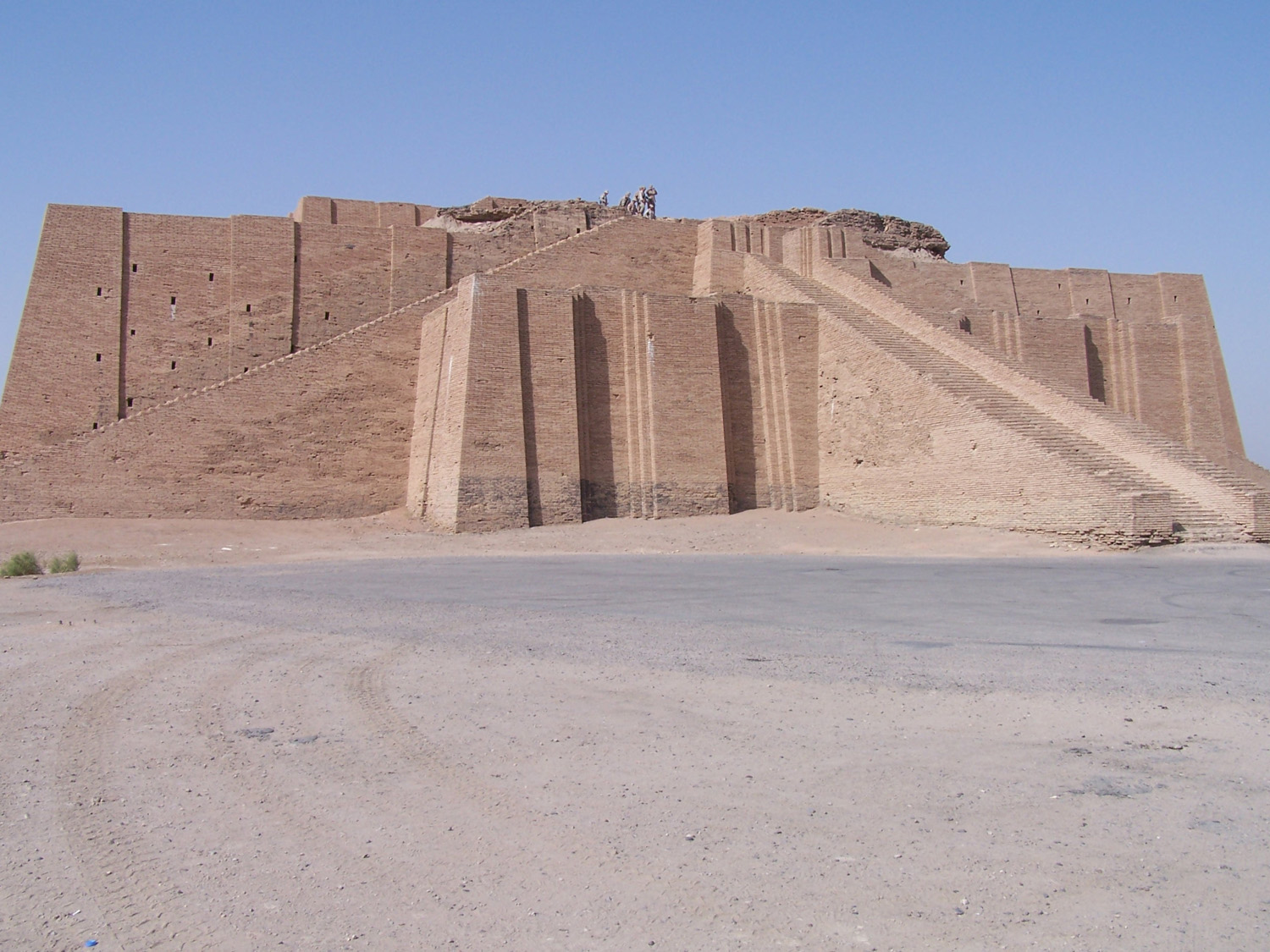 Image Caption: Ur Ziggurat: partially reconstructed façade and staircase. Remains of the actual Neo-Babylonian structure are visible at the top. Source: Ziggurat of Ur (Wikipedia) [https://en.wikipedia.org/wiki/Ziggurat_of_Ur]
The Ziggurat of Ur is one of the best-preserved of Mesopotamian ziggurats from the Neo-Sumerian Period, comparable with that outside Mesopotamia at Dur Untash (Chogha Zanbil), 30 km southeast of Susa, in Iran.
Urfa
The ancient city now called Urfa was located 'beyond the Euphrates'. This would seem to fit with the description of Joshua 24:2:
Long ago your forefathers — Terah, father of Abraham and father of Nahor — lived beyond the Euphrates and worshipped other gods. But I took your father Abraham from beyond the Euphrates and led him through the whole land of Canaan.
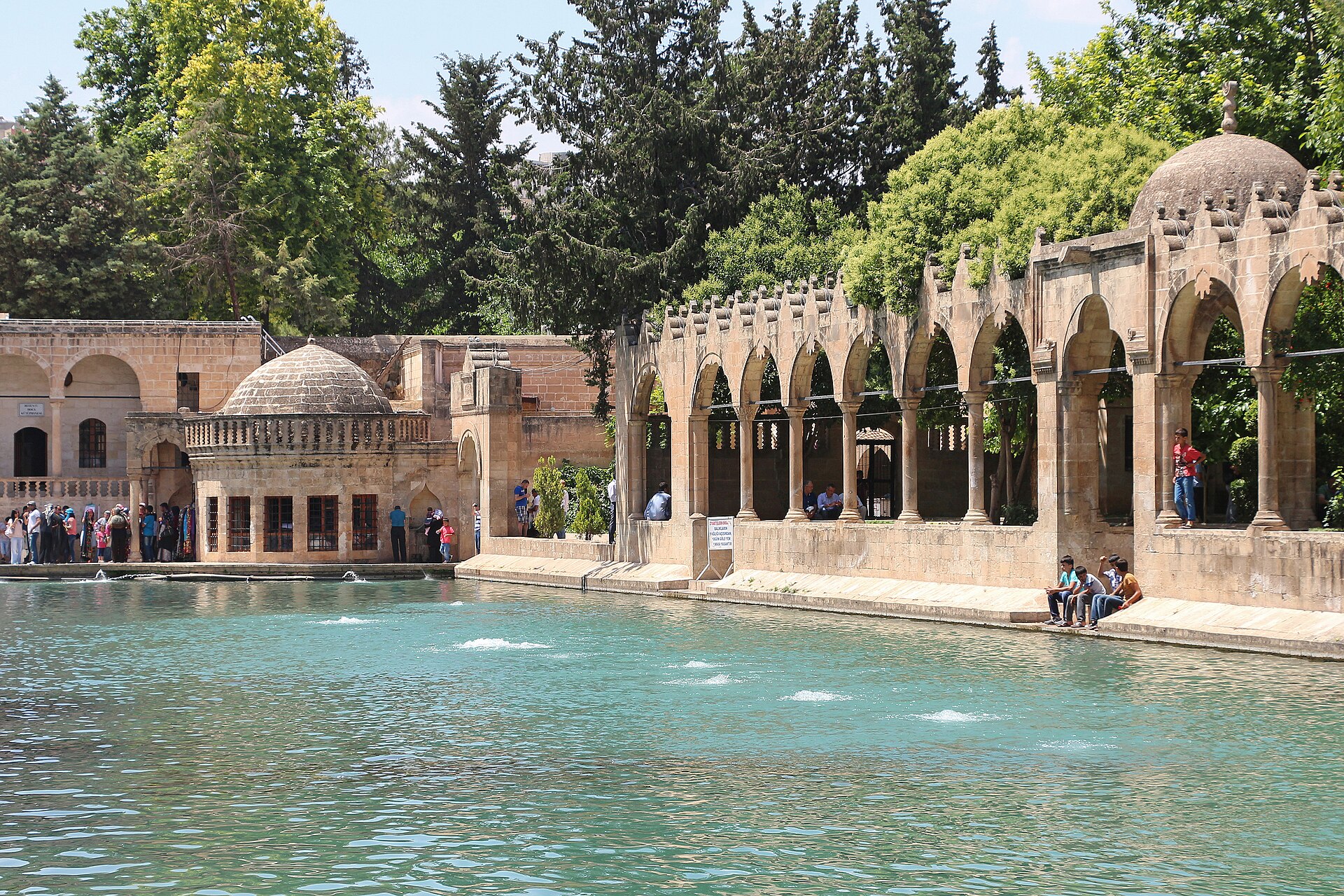 Image Caption: Pool of Abraham at Urfa. Source: Ur of the Chaldees (Wikipedia) [https://en.wikipedia.org/wiki/Ur_of_the_Chaldees]
There is also a local tradition at Şanlıurfa (Urfa) that Abraham was born in Urfa. However, records indicate that the earliest name of the city was Admaʾ (also written Adme, Admi, Admum; Imperial Aramaic: אדמא), recorded in Assyrian cuneiform in the Old Assyrian period (ca. 2025 to 1365 BC). It is recorded in Syriac as ܐܕܡܐ Adme. It is doubtful, therefore, that the city would have been known as 'Ur of the Chaldeans' either in the period contemporary with Abram or of the later Israelite scribes who brought Genesis into its final form. Modern names of the city (Şanlıurfa or Urfa) are likely derived from Urhay or Orhay (Classical Syriac: ܐܘܪܗܝ, romanized: ʾŪrhāy / ʾŌrhāy), the site's Syriac name before the re-foundation of the settlement by Seleucus I Nicator.
Abraham's grandfather Nahor and great-grandfather Serug share names with cities located near Ḥarran in northern Mesopotamia ("Til-Nahiri" and Suruç), suggesting that Abraham's clan was well established in this region in the period before the migration from Ur-Kaśdim. However, there is another candidate city in the region of northern Mesopotamia whose ancient name more closely matches that of 'Ur of the Chaldeans'.
Urkesh
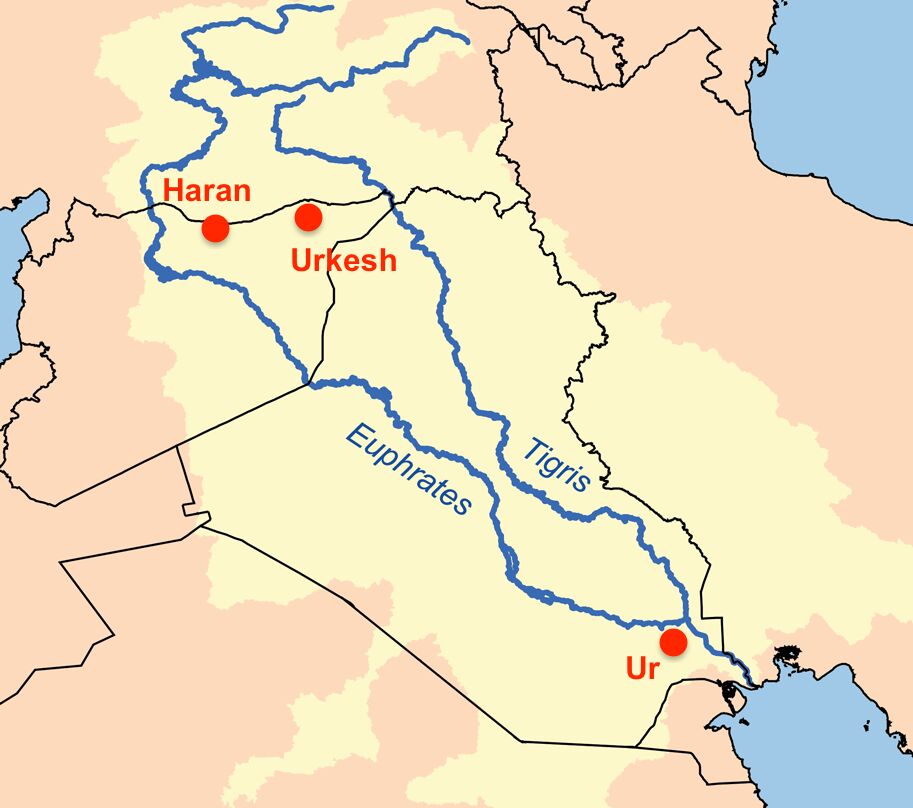 Image Caption: Location of Urkesh (Tell Mozan) beyond the river. Source: Christopher Eames, Has Abraham’s Father, Terah, Been Discovered? (Armstrong Institute of Biblical Archaeology, June 21, 2021) [https://armstronginstitute.org/349-has-abrahams-father-terah-been-discovered]
Tell Mozan (Urkesh/Urkish), Akkadian 𒌨𒆧𒆠 UR.KIŠKI, 𒌨𒋙𒀭𒄲𒆠 UR.KEŠ3KI, is located 'beyond the Euphrates'. Like Urfa, this site thus fits with the description of Joshua 24:2:
Long ago your forefathers — Terah, father of Abraham and father of Nahor — lived beyond the Euphrates and worshipped other gods. But I took your father Abraham from beyond the Euphrates and led him through the whole land of Canaan.
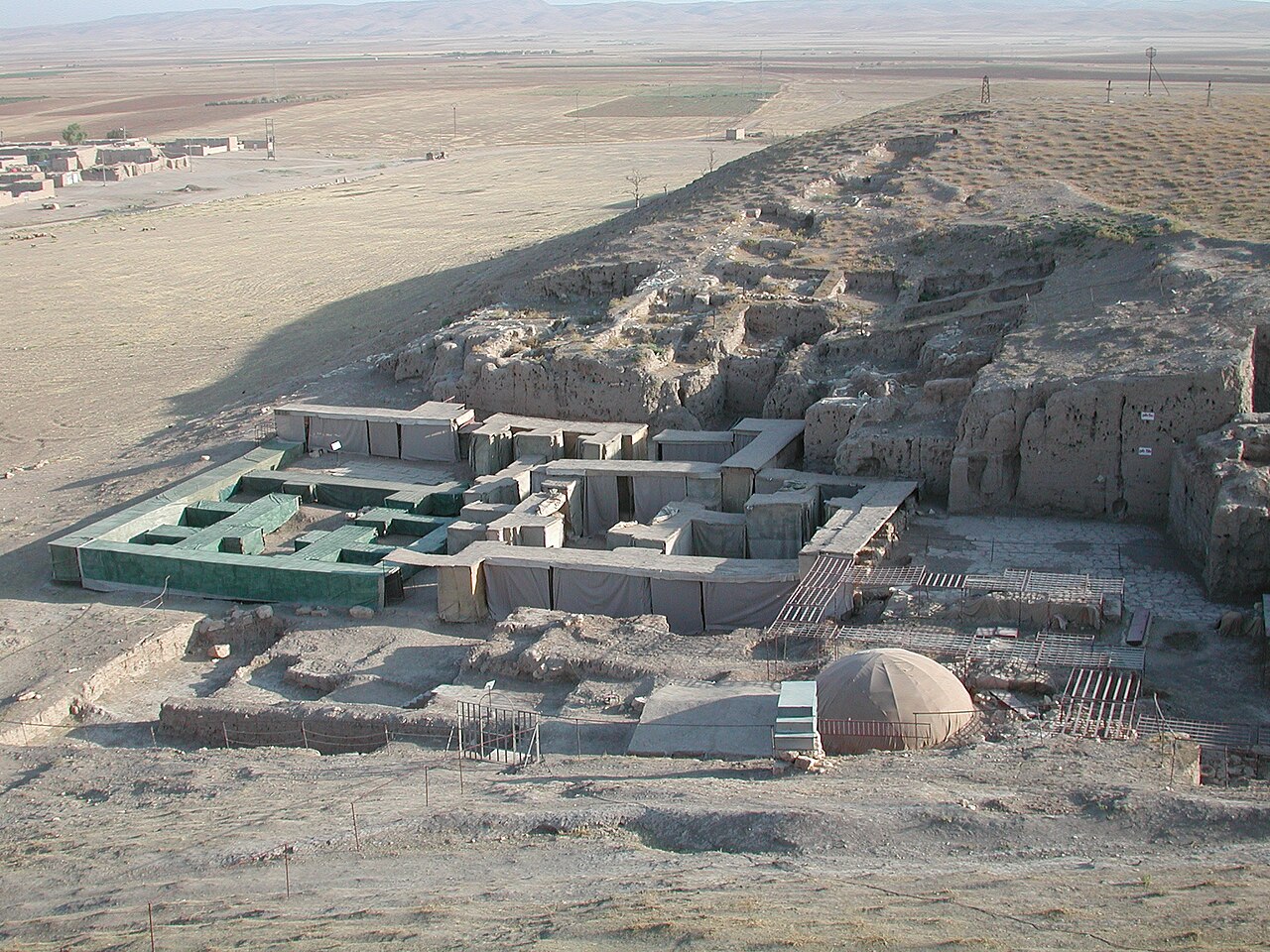 Image Caption: Overview of the Urkesh excavation. Source: Urkesh (Wikipedia) [https://en.wikipedia.org/wiki/Urkesh]
Archaeologists uncovered an ancient Hurrian city that stood on the uppermost arch of the Fertile Crescent, 100 miles east/northeast of Haran. It was a large and populous city, and the site has yielded epigraphic evidence that it was indeed Urkesh.
This city-state reached its zenith by the mid-third millennium BC. In the early second millennium BC it went into decline and became a vassal of Mari, though it remained affluent. By the mid-second millennium it disappeared from history.
Sources
- P. J. Berlyn, The Journey of Terah: To Ur-Kasdim or Urkesh? (Jewish Bible Quarterly) [https://www.jewishbible.org/articles/the-journey-of-terah-ur-kasdim-or-urkesh/]
- Christopher Eames, Has Abraham’s Father, Terah, Been Discovered? (Armstrong Institute of Biblical Archaeology, June 21, 2021) [https://armstronginstitute.org/349-has-abrahams-father-terah-been-discovered]
- Urkesh (Wikipedia) [https://en.wikipedia.org/wiki/Urkesh]
- Ur of the Chaldees (Wikipedia) [https://en.wikipedia.org/wiki/Ur_of_the_Chaldees]
- Serge Frolov, In Search of Abraham’s Birthplace: Between Urfa and Ur (The Torah) [https://www.thetorah.com/article/in-search-of-abrahams-birthplace-between-urfa-and-ur]
Cities of Abram — Nuzi
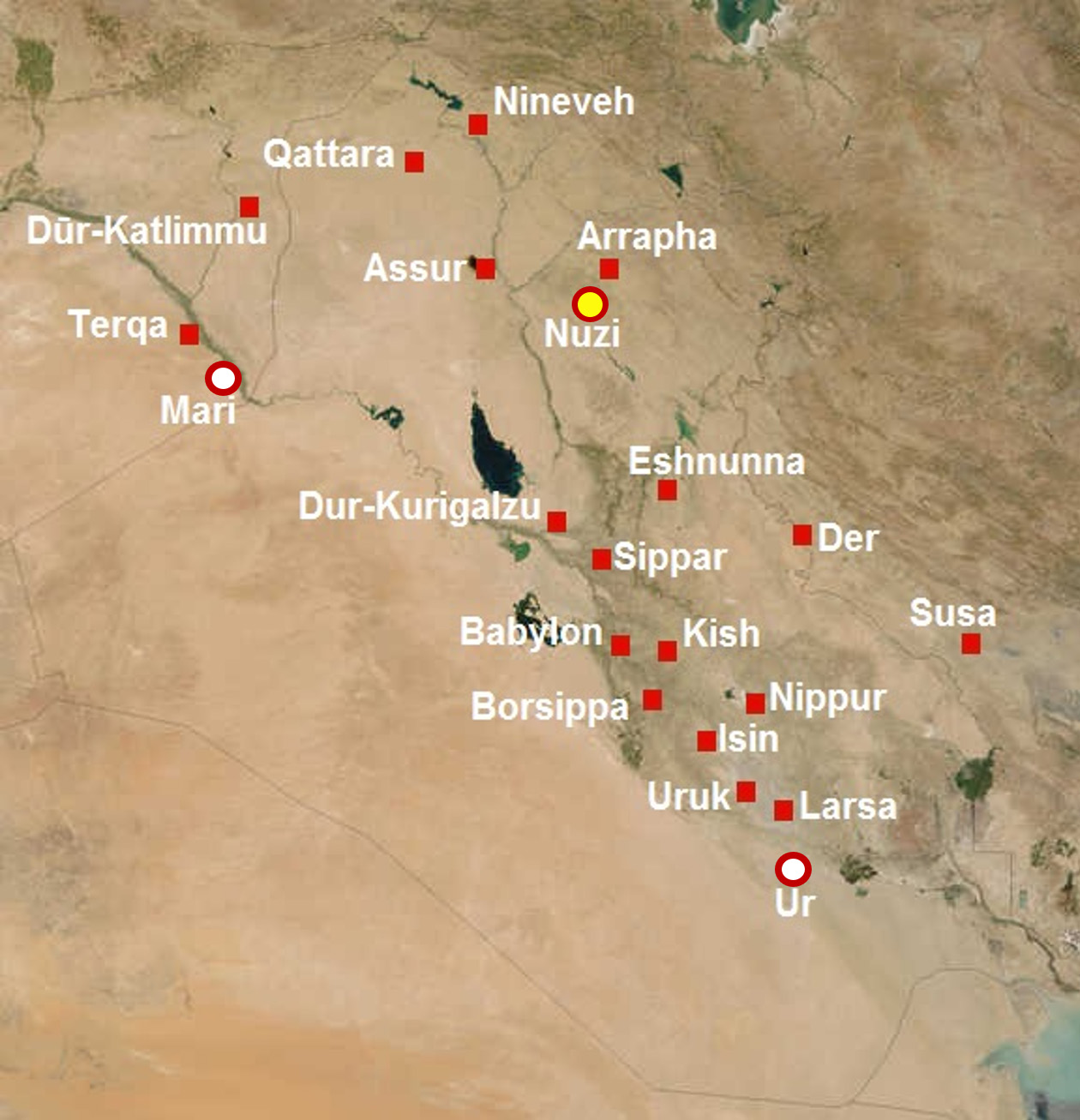 Image Caption: Cities of Abram: Nuzi
TEXT
Cities of Abram — Mari
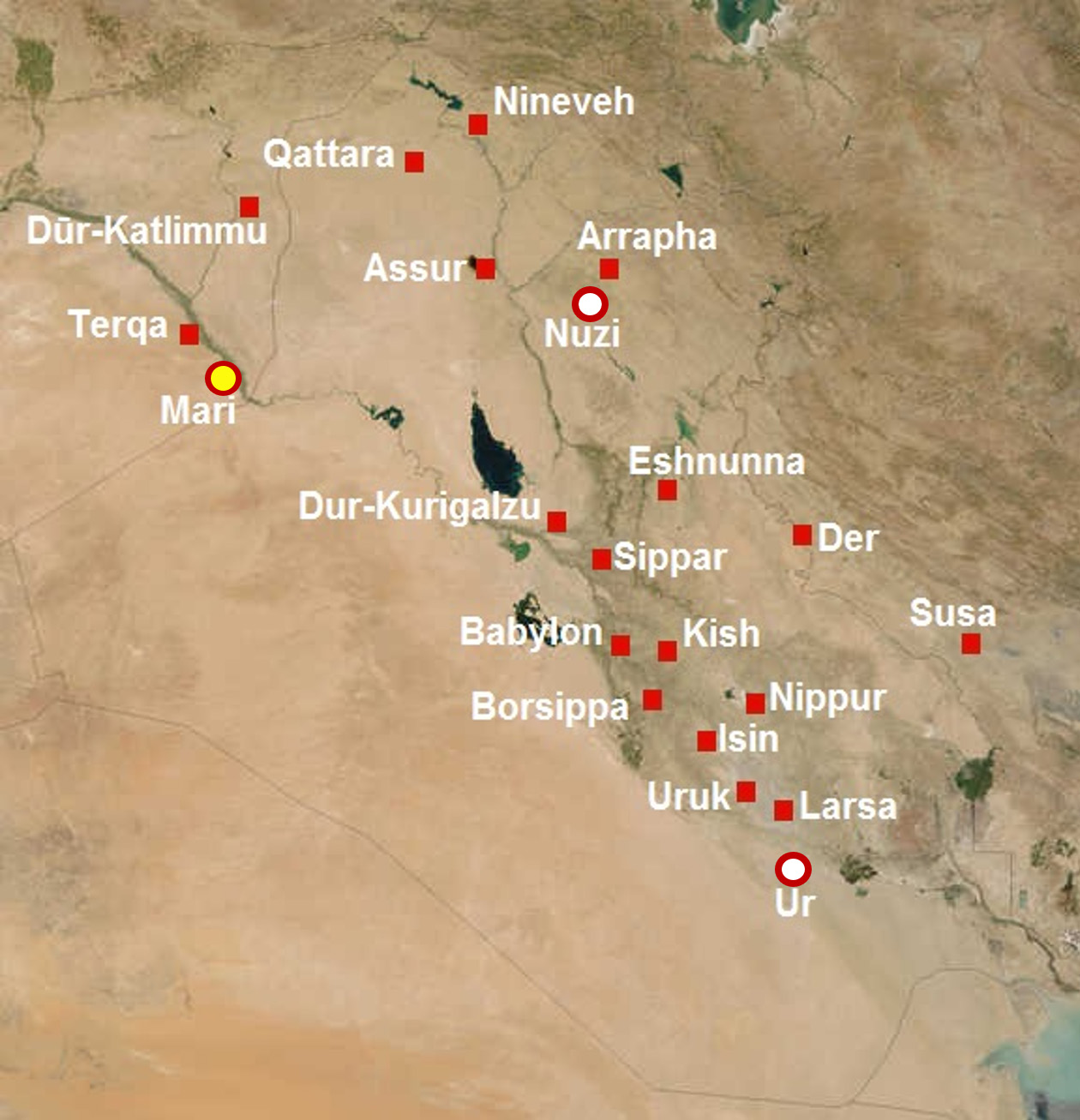 Image Caption: Cities of Abram: Mari
TEXT
Cities of Abram — Haran
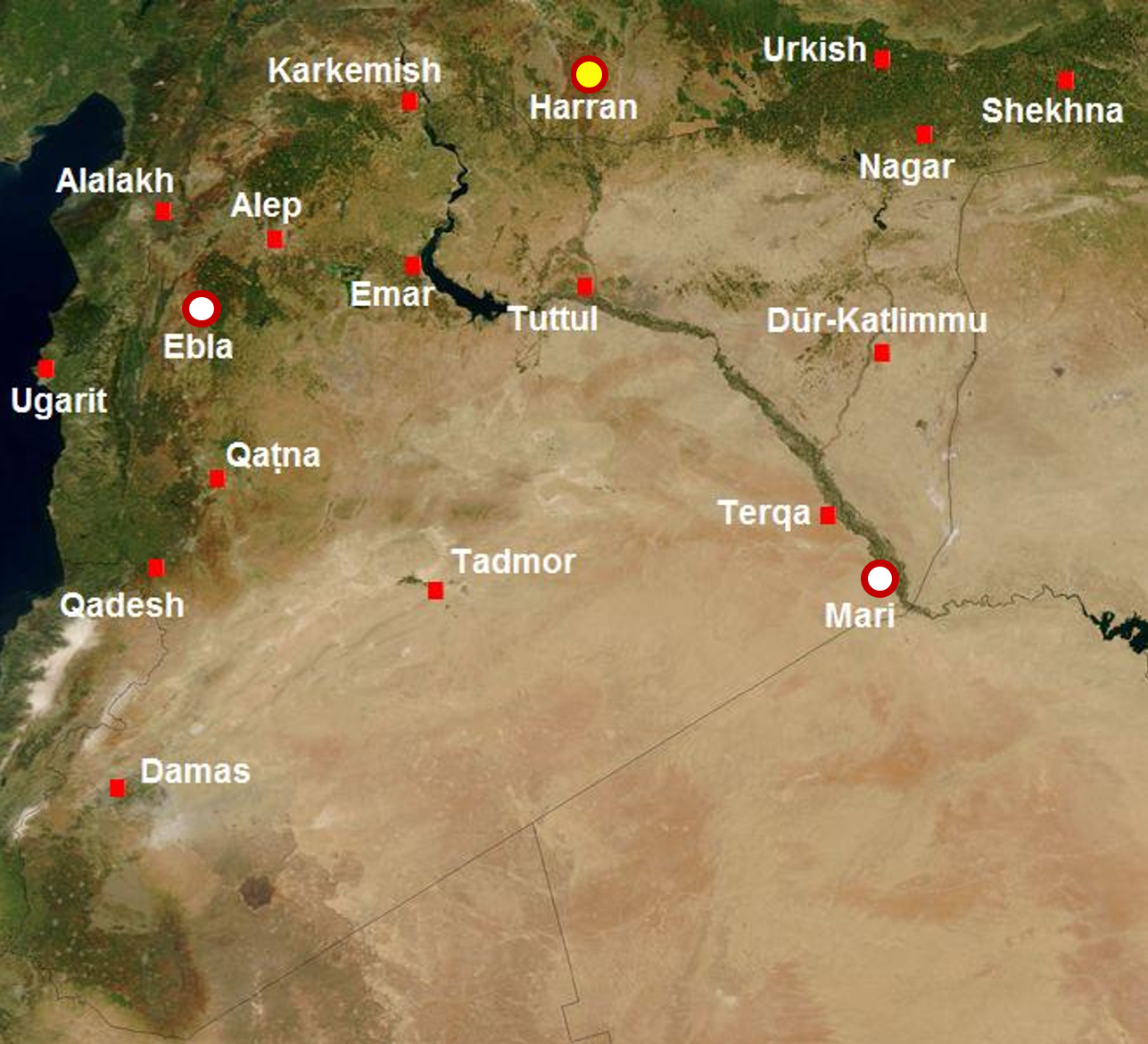 Image Caption: Cities of Abram: Haran
TEXT
Cities of Abram — Ebla
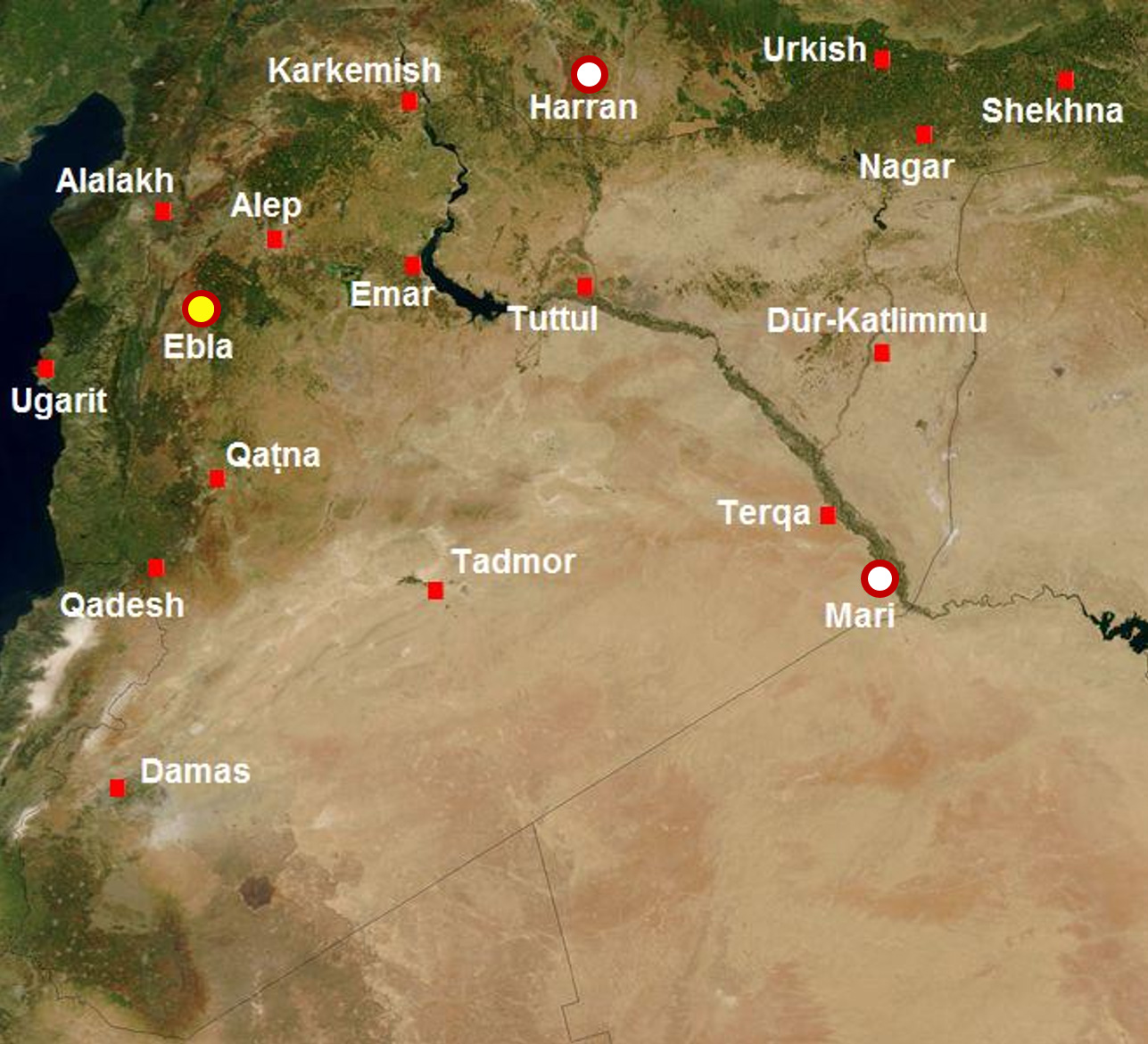 Image Caption: Cities of Abram: Ebla
In Ebla, a Semitic city-state just southwest of the Hurrian Ledge, the language was close to Hebrew and the onomasticon included such familiar personal names as Ebrium (Eber), Isma-il (Ishmael), E-sa-sum (Esau), Sha-u-lum (Saul) and Da-u-dum (David).
Sources
- P. J. Berlyn, The Journey of Terah: To Ur-Kasdim or Urkesh? (Jewish Bible Quarterly) [https://www.jewishbible.org/articles/the-journey-of-terah-ur-kasdim-or-urkesh/]
SECTIONTITLE8
TEXT
SECTIONTITLE9
TEXT
SECTIONTITLE10
TEXT
SECTIONTITLE11
TEXT
SECTIONTITLE12
TEXT