
Genesis 2:4–4:26
The Beginning of Culture
Biblical culture begins on Earth in a river-watered garden. Biblical Eden collocates essentially with Sumerian Dilmun (Telmun), at the confluence of four named rivers that once flowed into a lush delta at the Persian Gulf. Dilmun is described in the saga of the old gods Enki (Ea) and Ninhursag (Damgalnuna) as an ancient paradisiacal realm in which no predator killed, no pain, disease or cause of fear existed, and no one grew old or died. Cultural memory of the Sumerian garden of Dilmun may have inspired the Garden of Eden story in Genesis.

Image Caption: A tale of two trees and one fateful decision. Source: Firefly AI Generator (Adobe) [https://firefly.adobe.com/generate/image?promoid=TG8SL6TN&mv=other]
The Genesis garden account, in distinction, tells a deeply moral tale — an archetype of the origin of human marriage that leads to moral failure and alienation from YHWH God, then to the failure of fraternal love that inevitably ensues from envy. Through human independence from God, the blessing of life with God in a garden turns to banishment, a rift in Man's stewardship of soil, discomfort in Woman's role as childbearer, and eternal enmity with the serpent. By this archetypal account, God's agenda is set for all salvation history, namely, to raise up a human savior who will overcome every outcome of sin.
Ancient Paradise Accounts
Sumerian myths of a primordeal paradise attest an ancient belief that agriculture began in a garden of the gods, the birthplace of human culture.
- The myth of the Garden of the Gods (ca. 3000 BC) describes a divine paradise where the deified hero Utnapishtim was taken by the gods to live forever, featuring precious stones and an elusive "plant of life" that grants immortality.
- The myth of Enki and Ninhursag (ca. 2500 BC) portrays a garden where Enki obtains water to irrigate, emphasizing the connection between the divine and the fertility of the earth.
- The Debate between Sheep and Grain (late third millennium BC) (CSL 5.3.2) opens in a pastoral setting known as "the hill of heaven and earth," where agricultural developments occur, suggesting it was the dwelling place of the gods and the first habitat of mankind.
- The Atrahasis Epic survives in fragments dating back to the Old Babylonian period (around 1650–1600 BC), though the story itself was likely passed down through oral tradition over centuries. The Babylonian epic is rooted in Sumerian traditions, blending Sumerian myths of creation and the Great Flood.
Key themes of the Sumerian and later Mesopotamian paradise myths include the following:
- Division between Heaven and Earth — Many primordeal myths describe the separation of the heavens from earth, often by an old god, like Enlil. This division is crucial for establishing order in the world and among the newer gods.
- Existence of a Primordeal Paradise — Paradise myths frequently describe the pristine state of the world before chaos entered. Such narratives often include a divine garden of abundance and peace.
- Creation of Humanity — That humanity was created to serve the gods orders the relationship between mortals and deities. Often humans are seen as a means whereby the gods can escape the mundane burdens of agronomy.
- Disruption of Chaos — A marked transition from paradise to chaos is a common theme, illustrating how responsibility is tied to order. Such depictions often serve as cautionary tales about the consequences of neglecting cultic ritual and the divine will.
- Ritual Management of Nature — Paradise myths often emphasize how rituals manage the natural order, proving human dependence on the gods' control of the environment. Some deities are assigned specific responsibilities related to agriculture, especially water and vital resources.
Discovery of the Atrahasis Epic
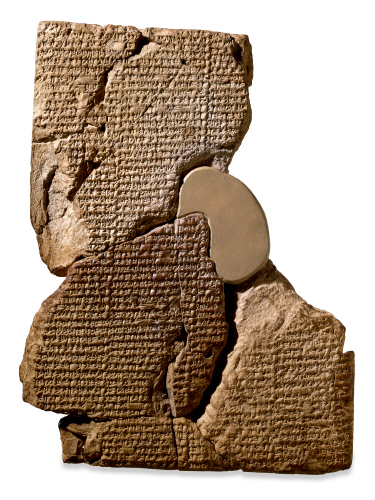 Image Caption: Cuneiform tablet of Atra-Hasis epic in the British Museum. Source: Cuneiform tablet with the Atrahasis Epic (British Museum Images) [https://www.bmimages.com/preview.asp?image=00032581001 and https://www.bmimages.com/pix/PRS/00032581_006.JPG]
An important discovery in the library of Ashurbanipal (668–627 BC) was that of the Atrahasis Epic. In the nineteenth century AD only fragments were found, but a more complete version was found in 1965, dated to the seventeenth century BC.
Image Caption: Cuneiform tablet of Atra-Hasis epic in the British Museum. Source: Cuneiform tablet with the Atrahasis Epic (British Museum Images) [https://www.bmimages.com/preview.asp?image=00032581001 and https://www.bmimages.com/pix/PRS/00032581_006.JPG]
An important discovery in the library of Ashurbanipal (668–627 BC) was that of the Atrahasis Epic. In the nineteenth century AD only fragments were found, but a more complete version was found in 1965, dated to the seventeenth century BC.
The royal name Atra-Hasis 'Exceeding wise', appears in the Sumerian king list as a king of Shuruppak in the time before the flood. The flood story character Atrahasis is an Akkadian/Babylonian epithet given the one the Sumerians called, Ziusudra 'Life of long days', their flood story hero.
While the Atrahasis epic is best known as an exemplar of the flood story, it also bears an account of the formation of man from clay and divine spirit to do the work of heavy labor.
Atrahasis Epic
AE Tablet I
[210] "Let Nintu mix clay with his flesh and blood.
Let that same god and man be thoroughly mixed in the clay.
Let us hear the drum for the rest of the time.
[215] From the flesh of the god let a spirit remain,
let it make the living know its sign,
lest he be allowed to be forgotten, let the spirit remain."
The great Anunna-gods, who administer destinies,
[220] answered "yes!" in the assembly. …
[225] Nintu mixed clay with his flesh and blood.
That same god and man were thoroughly mixed in the clay.
For the rest of the time they would hear the drum.
From the flesh of the god the spirit remained.
It would make the living know its sign.
[230] Lest he be allowed to be forgotten, the spirit remained.
After she had mixed the clay,
she summoned the Anunna, the great gods.
The Igigi, the great gods, spat upon the clay.
[235] Mami made ready to speak,
and said to the great gods:
"You ordered me the task and I have completed it!
You have slaughtered the god, along with his inspiration.
[240] I have done away with your heavy forced labor,
I have imposed your drudgery on man.
You have bestowed clamor upon mankind.
I have released the yoke, I have made restoration."
Atrahasis and Genesis
Atrahasis
The account of Atrahasis is important to biblical scholars because of it similarity to Genesis 2–9. Both stories have a similar storyline, including:
- plants watered by irrigation
- humans created from clay to work
- marriage & population growth
- humans rebel against gods/YHWH God
- god/YHWH God tells some hero to build an ark
- flood destroys all but those in the ark
- post-flood humans reconcile with gods/YHWH God
Atrahasis and Genesis 2–9 share Mesopotamian literary provenance and patterns.
Atrahasis and Genesis
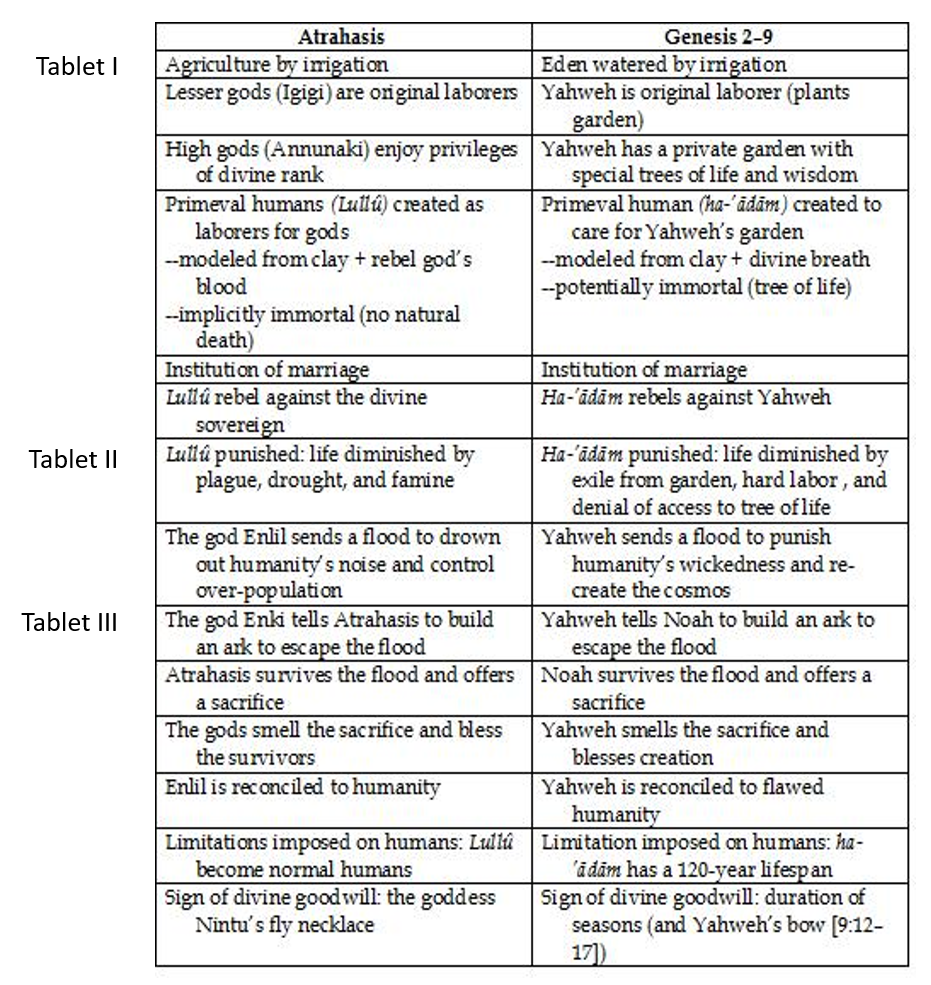
Image Caption: Atrahasis and Genesis 2 to 9 Comparison. Source: Pete Enns, The Second Creation Story and “Atrahasis” (BioLogos, May 25, 2010) [https://biologos.org/articles/the-second-creation-story-and-atrahasis/]
Genesis 2:4 to 4:26 ⟡ Creation of Culture
As the second of the four archetypal accounts of Genesis 1 through 11, Genesis 2:4 to 4:26 carries mutliple origin stories (etiologies) relating to human culture: the responsibilities of work, the compatibility of Man and Woman in marriage, the catastrophic outcome of moral independence from God, and the alienating effect of envy on brotherly love.
- Two portrayals of Dependence & Innocence show YHWH God assigning Man his responsibilities while ruling nature and designing for Man a compatibile helpmate. Man must tend with integrity the garden of God at Eden (2:4-16), for which the joining of the sexes, Man and Woman, in marriage should prove a help (2:18-25).
- The cause–effect relationship of Independence & Guilt are depicted in the human journey from moral disobedience (3:1-7) to YHWH God's inquiry and curses (3:8-13, 14-19) and finally to humanity's banishment from Eden (3:20-24).
- The ongoing effect of Alienation from God and the garden is scarcity, affecting the cost of offerings fit for sacrifice, and competition between brothers, which leads to envy, which leads to Fratricide (4:1-16).
This cultural origin account, which results in failure but also in hope through the coverings given by God (skins and a mark), is the archetype and legacy of humanity on Earth. Despite provisions from YHWH God of life, family, and food enough for all, earthly men and women consistently find ways to twist reason so to define for themselves what is right and wrong, and they continue to suffer the guilt, alienation, and envy from which they justify all manner of desires, lies, theft, and murder.
Dependence & Innocence
In Genesis, God alone pre-exists creation. Only God is self-existent. Only God is independent. Everything and everyone else in creation is otherwise. All things made are dependent. This is something we, as creatures, ought to remember. This is the first lesson to be learned from a biblical perspective on the origin of human culture. YHWH God, who assigned Man his duty to tend Eden's garden, and who made Woman to fit Man's form and nature, is the source. This was all they knew. This was all they needed to know. The couple while naked had not learned to be ashamed. They had no reason to be ashamed. They were innocent.
The first experience of human beings, from childhood, is one of dependence and innocence. The archetypal couple in Eden live out, in fact, what is relived by every human who remembers a time before the first time we defied the truth of our dependence and embarked on a path to choose for ourselves what is right or wrong.
Genesis 2:4-6
| ד אֵלֶּה תוֹלְדוֹת הַשָּׁמַיִם וְהָאָרֶץ, בְּהִבָּרְאָם: בְּיוֹם, עֲשׂוֹת יְהוָה אֱלֹהִים--אֶרֶץ וְשָׁמָיִם׃ | 4 These are the generations of the heavens and the earth when they were created, in the day that YHWH God made earth and heaven. |
| ה וְכֹל שִׂיחַ הַשָּׂדֶה, טֶרֶם יִהְיֶה בָאָרֶץ, וְכָל-עֵשֶׂב הַשָּׂדֶה, טֶרֶם יִצְמָח: כִּי לֹא הִמְטִיר יְהוָה אֱלֹהִים, עַל-הָאָרֶץ, וְאָדָם אַיִן, לַעֲבֹד אֶת-הָאֲדָמָה׃ | 5 No shrub of the field was yet in the earth, and no herb of the field had yet sprung up; for YHWH God had not caused it to rain upon the earth, and there was not a man to till the ground; |
| ו וְאֵד, יַעֲלֶה מִן-הָאָרֶץ, וְהִשְׁקָה, אֶת-כָּל-פְּנֵי הָאֲדָמָה׃ | 6 but there went up a mist from the earth, and watered the whole surface of the ground. |
Genesis 2:7-9
| ז וַיִּיצֶר יְהוָה אֱלֹהִים אֶת-הָאָדָם, עָפָר מִן-הָאֲדָמָה, וַיִּפַּח בְּאַפָּיו, נִשְׁמַת חַיִּים; וַיְהִי הָאָדָם, לְנֶפֶשׁ חַיָּה׃ | 7 Then YHWH God formed man of the dust of the ground, and breathed into his nostrils the breath of life; and man became a living soul. |
| ח וַיִּטַּע יְהוָה אֱלֹהִים, גַּן-בְּעֵדֶן--מִקֶּדֶם; וַיָּשֶׂם שָׁם, אֶת-הָאָדָם אֲשֶׁר יָצָר׃ | 8 And YHWH God planted a garden to the east, in Eden; and there He put the man whom He had formed. |
| ט וַיַּצְמַח יְהוָה אֱלֹהִים, מִן-הָאֲדָמָה, כָּל-עֵץ נֶחְמָד לְמַרְאֶה, וְטוֹב לְמַאֲכָל--וְעֵץ הַחַיִּים, בְּתוֹךְ הַגָּן, וְעֵץ, הַדַּעַת טוֹב וָרָע׃ | 9 And out of the ground made YHWH God to grow every tree that is pleasant to the sight, and good for food; the tree of life also in the midst of the garden, and the tree of the knowledge of good and evil. |
Ancient Ideas of Sacred Space
Some believe the Hebrew term עֵדֶן 'Eden' may derive from Sumerian Edin (𒀀𒇉𒂔 ÍDEDIN, 'steppe' or 'plain'; Akkadian: 𒉌𒋾𒈝 i3-ti-num2), a toponym for a channel-fed region featured on two cylinders of Gudea of Lagash (ca. 2125 BC).
In Genesis, Eden is a sacred space. In biblical Eden mankind would daily meet with YHWH God. There, where Heaven and Earth conjoin, there is life, represented by the tree of life. In Genesis, Eden is the axis of the world and the source of its life.
Celestial Axis Mundi
According to modern natural science, the north and south celestial poles are opposite extensions of one centripetal axis of the Earth’s rotation. Over time, because of the precession of the equinoxes, the poles trace circles on the celestial background. But ancient Israel offers no indication that they were aware of the Earth’s axis of rotation.
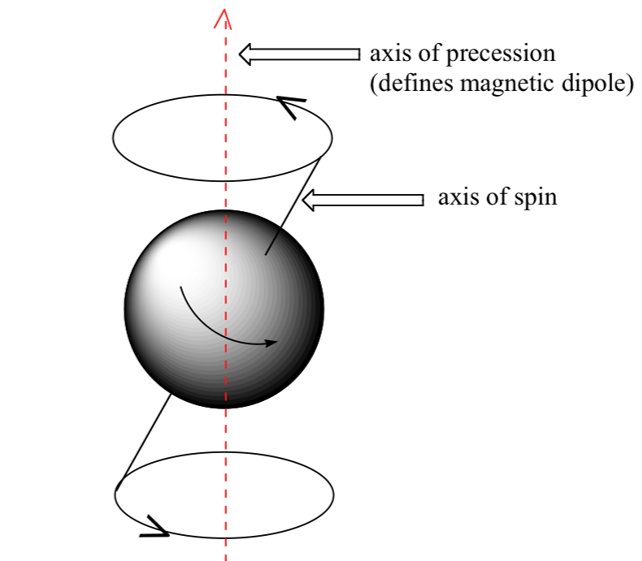
Image Caption: Precession of Earth's rotation. Source: The Nature of NMR Absorptions (Libre Texts) [https://chem.libretexts.org/Bookshelves/Organic_Chemistry/Organic_Chemistry_%28Morsch_et_al.%29/13%3A_Structure_Determination_-_Nuclear_Magnetic_Resonance_Spectroscopy/13.01%3A_The_Nature_of_NMR_Absorptions]
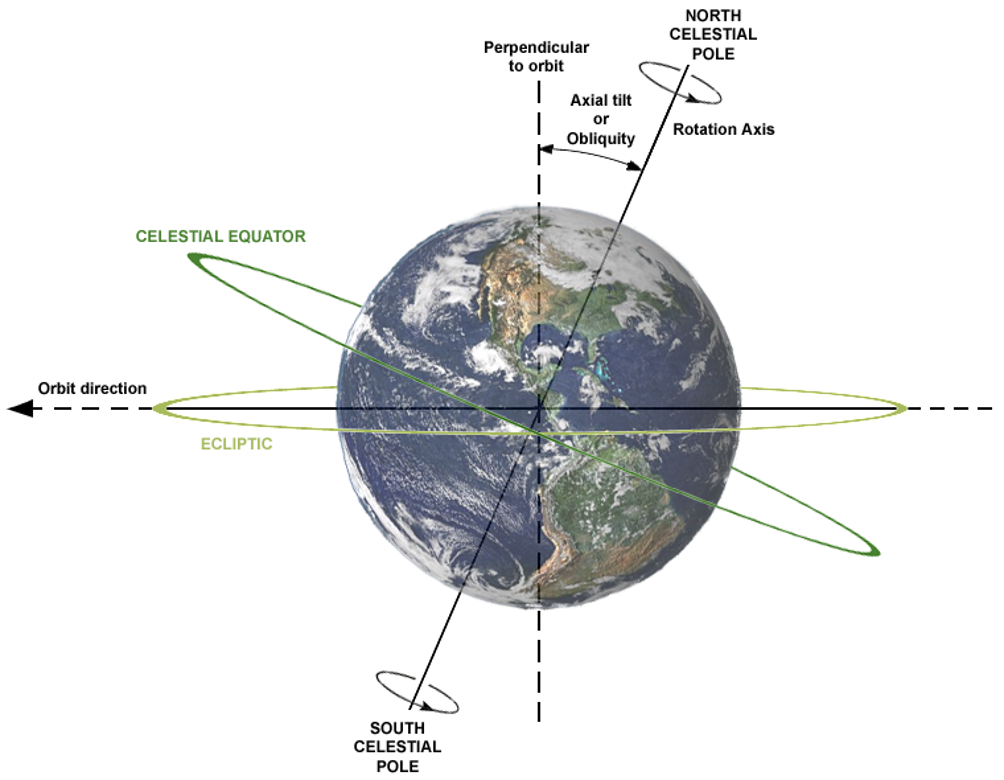
Image Caption: Precessional movement of Earth with equator and ecliptic. Source: Eight Motions of the Earth (Earth Science Australia) [https://earthsci.org/space/space/earth8/earth8.html]
To understand the world view of Genesis, we need to frame an understanding of how the ancients understood the axis of the world, not with a celestial but with a terrestrial frame of reference.
Terrestrial Axis Mundi
Before awareness of the celestial poles as the centripetal axis of the Earth’s rotation, the ancient Sumerians surmised that the source of the Earth’s fresh waters flowed from the base of a sacred tree.
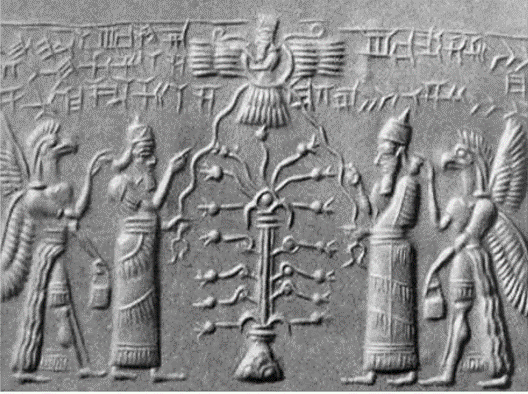
Image Caption: Sumerian cylinder seal impression showing divine tree of life. Source: Cylinder seal 89135 (British Museum) [https://www.britishmuseum.org/collection/object/W_1983-0101-210]
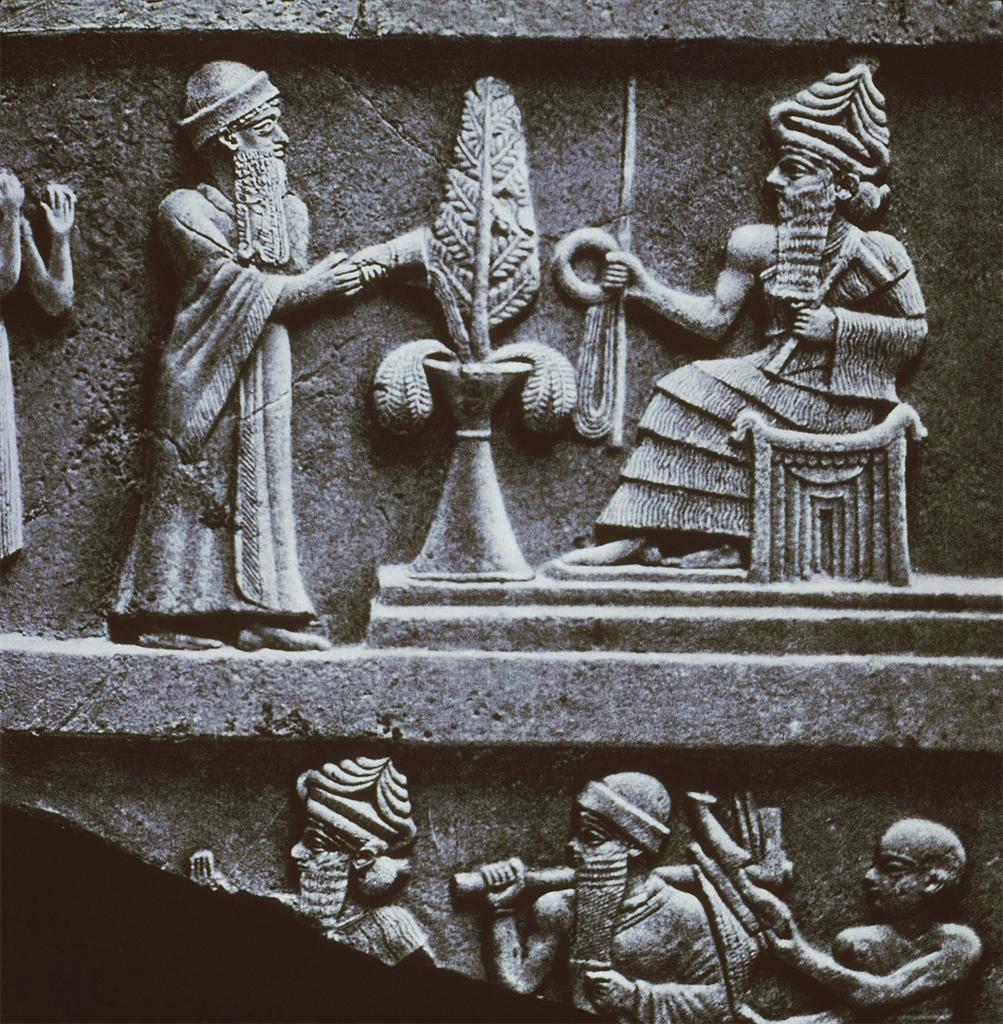
Image Caption: Ur-Nammu (r. 2047–2030 BC) founder of Ur III Dynasty, Sumer (left) before Enlil, with the Tree of Life between them. Source: TITLE (Wikipedia) [https://lh6.googleusercontent.com/-xgOQridCR6w/TXUZ1dmD6kI/AAAAAAAAABg/sNzIsDQeS24/s1600/stele-of-Ur-Nammu-watering-plant-for-god.jpg]
Over a millennium later, the Assyrians still sustained the idea that the source of all earthly life and blessing flowed from the sacred tree.
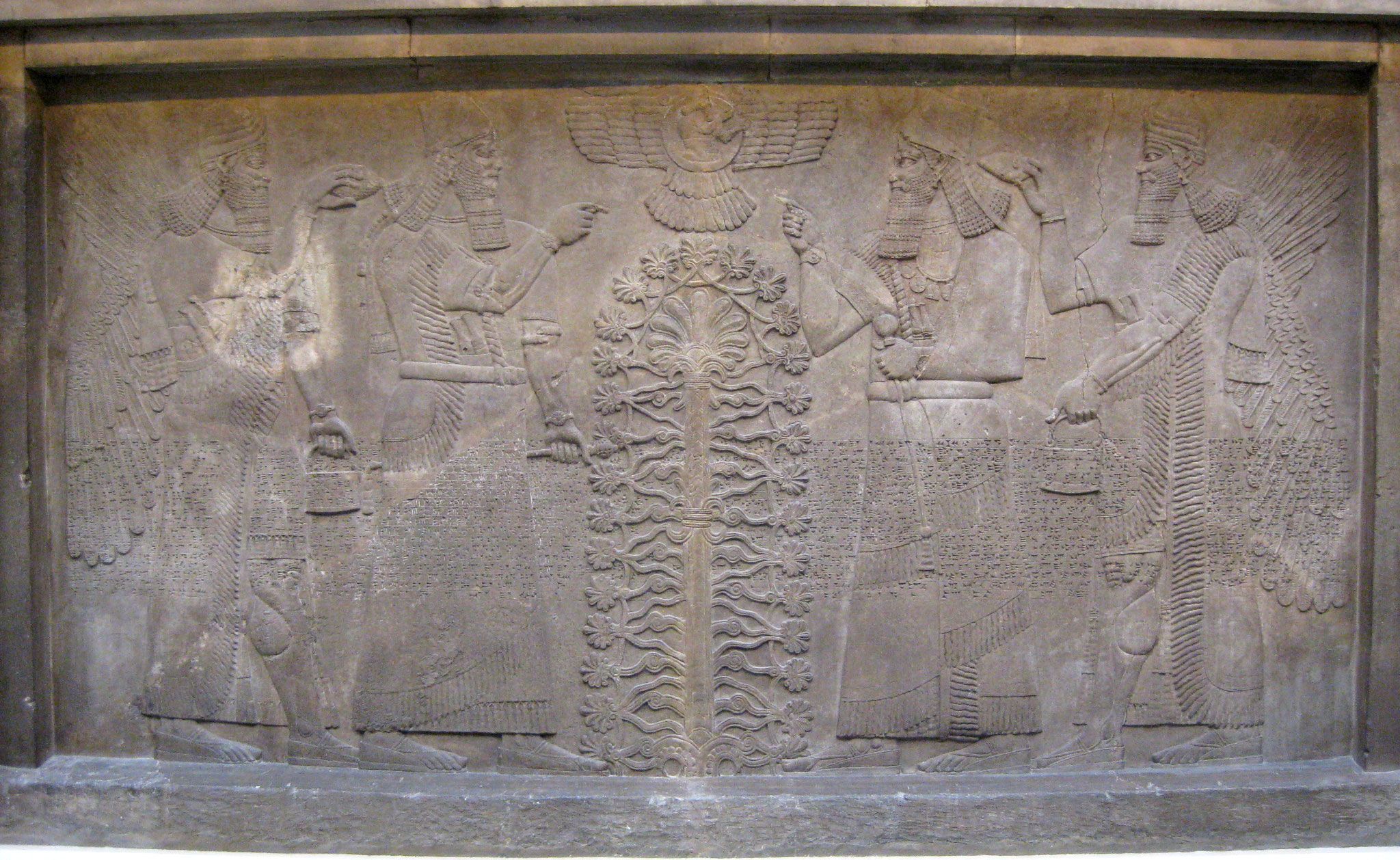
Image Caption: Assyrian tree of life. Stone relief from throne room of Ashurnasirpal II, Nimrud (ancient Kalhu), northern Iraq. Neo-Assyrian, 870–860 BC. British Museum. Source: Wall panel; relief 124531 (British Museum) and Ashurnasirpal II performs religious rituals before the sacred tree. From Nimrud, Iraq. 865-860 BCE (Wikimedia) [https://www.britishmuseum.org/collection/object/W_1849-0502-15] and [https://upload.wikimedia.org/wikipedia/commons/6/60/Ashurnasirpal_II_performs_religious_rituals_before_the_sacred_tree._From_Nimrud%2C_Iraq._865-860_BCE._British_Museum.jpg]
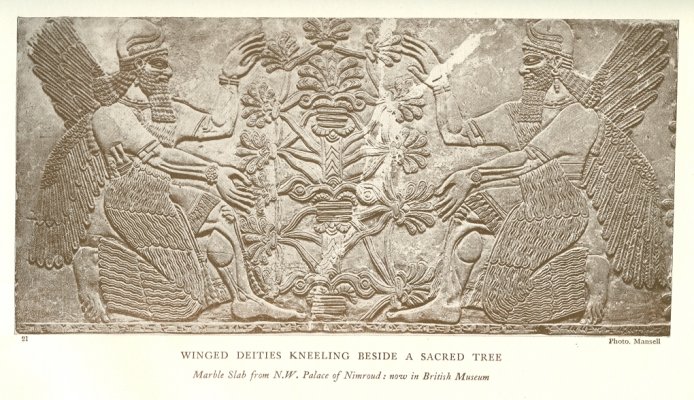
Image Caption: Tree of Life from Assyrian Court, Nimrud (ancient Kalhu), Neo-Assyrian, ca. 883–859 B.C. Gypsum alabaster. Source: The Tree of Life = The Tree of Knowledge (Samizdat) [https://therealsamizdat.com/wp-content/uploads/2015/05/34000.jpg]
Two millennia later, Norse, Gaelic, and British lore all sustain myths that venerate the Ash tree as protecting the world and purifying its waters.
The tree of life is an abiding archetype among cultures of the world through time, and it remains a perennial symbol of divine providence to humans.
Its depictions frame the biblical corpus, in Genesis 2‒3 and Revelation 22. Every living tree by which the ancients worshipped stood as a witness to the true Tree of Life, the source of life everlasting for every living thing on Earth.
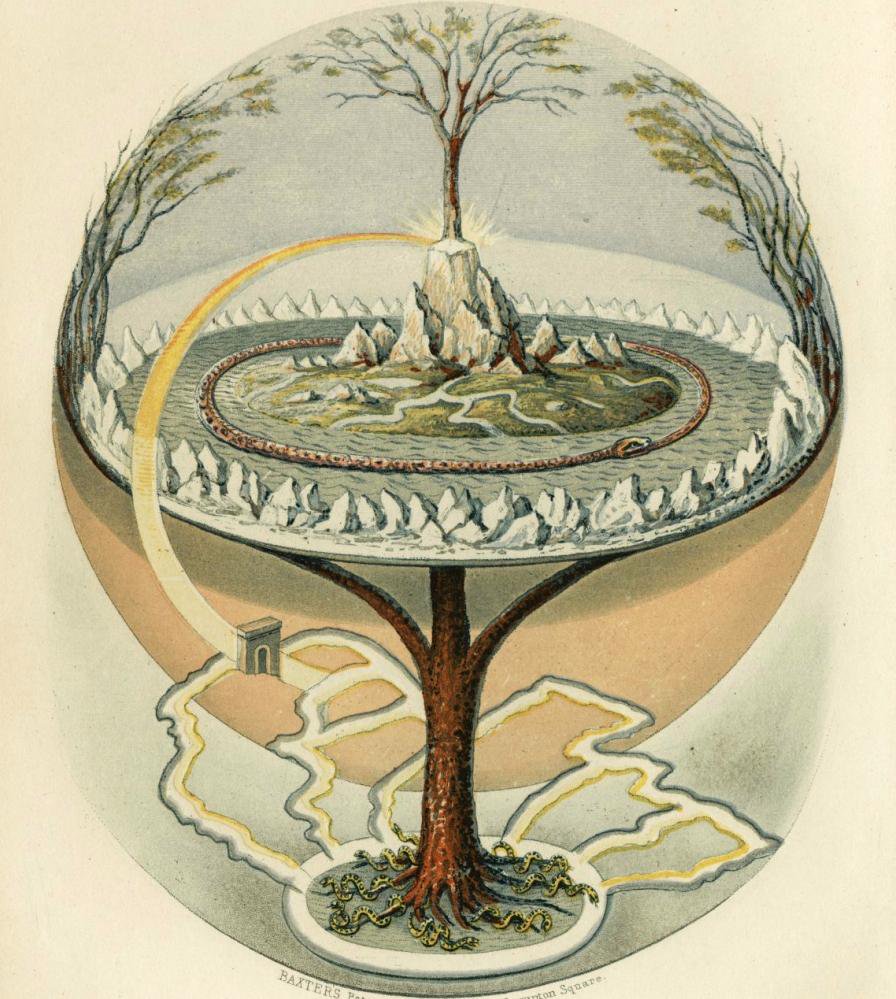
Image Caption: Yggdrasil, the Sacred World Ash of Norse Viking myths. Source: Axis mundi (Wikipedia) [https://upload.wikimedia.org/wikipedia/commons/b/b9/Yggdrasil.jpg]
Genesis 2:10-15
| י וְנָהָר יֹצֵא מֵעֵדֶן, לְהַשְׁקוֹת אֶת-הַגָּן; וּמִשָּׁם, יִפָּרֵד, וְהָיָה, לְאַרְבָּעָה רָאשִׁים׃ | 10 And a river went out of Eden to water the garden; and from there it was parted, and became four heads. |
| יא שֵׁם הָאֶחָד, פִּישׁוֹן--הוּא הַסֹּבֵב, אֵת כָּל-אֶרֶץ הַחֲוִילָה, אֲשֶׁר-שָׁם, הַזָּהָב׃ | 11 The name of the first is Pishon; is it that which encompasses the whole land of Havilah, where there is gold; |
| יב וּזְהַב הָאָרֶץ הַהִוא, טוֹב; שָׁם הַבְּדֹלַח, וְאֶבֶן הַשֹּׁהַם׃ | 12 and the gold of that land is good; there is bdellium and the onyx stone. |
| יג וְשֵׁם-הַנָּהָר הַשֵּׁנִי, גִּיחוֹן--הוּא הַסּוֹבֵב, אֵת כָּל-אֶרֶץ כּוּשׁ׃ | 13 And the name of the second river is Gihon; it is that which encompasses the whole land of Kush [cf. 𒂵𒅆𒄿, ka₃-ši-i, kašši, 'Kassite']. |
| יד וְשֵׁם הַנָּהָר הַשְּׁלִישִׁי חִדֶּקֶל, הוּא הַהֹלֵךְ קִדְמַת אַשּׁוּר; וְהַנָּהָר הָרְבִיעִי, הוּא פְרָת׃ | 14 And the name of the third river is Tigris; that is it which goes toward the east of Asshur. And the fourth river is the Euphrates. |
| טו וַיִּקַּח יְהוָה אֱלֹהִים, אֶת-הָאָדָם; וַיַּנִּחֵהוּ בְגַן-עֵדֶן, לְעָבְדָהּ וּלְשָׁמְרָהּ׃ | 15 And YHWH God took the man, and put him into the garden of Eden to dress it and to keep it. |
City States of Ancient Sumer
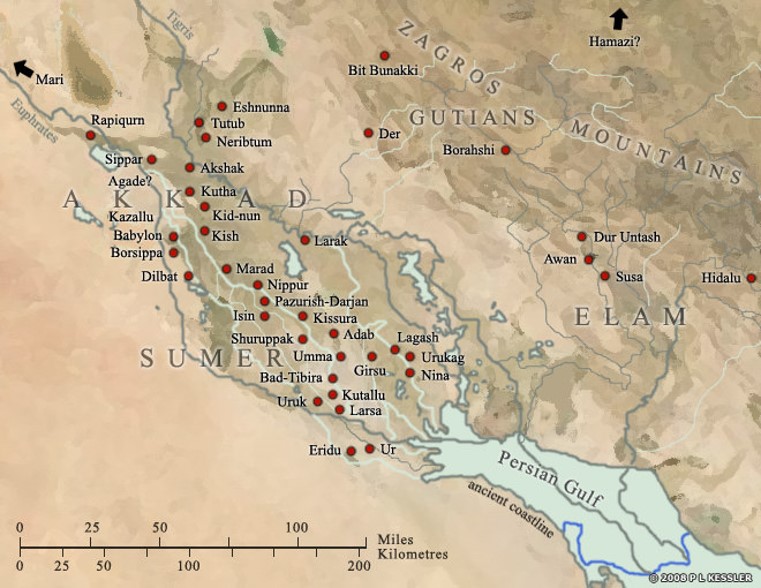
Image Caption: City States of Ancient Sumer. Source: Map of Sumer (World History Encyclopedia) [https://www.ancient.eu/image/1352/map-of-sumer/]
For the author or editor of Genesis 2, the city-state system of ancient Sumer and the verdant estuary of the four rivers would have been a distant memory, likely preserved in tribal lore. The fact that such a memory was retold with names of identifiable river channels is a testament to the tenacity of oral and written traditions and to the relevance of historical geography.
Four Rivers of Ancient Sumer
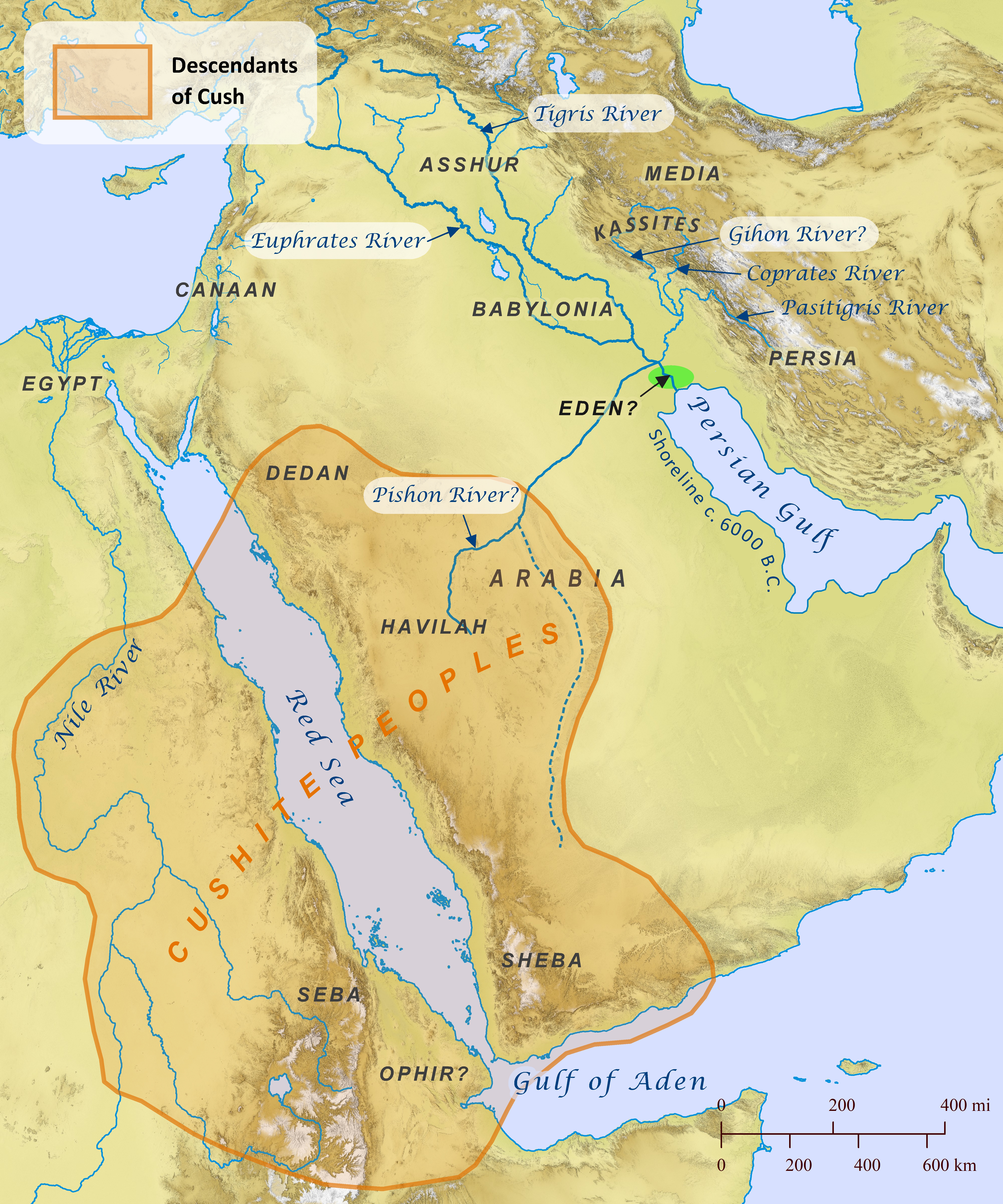 Image Caption: The Four Rivers of Eden Source: The Garden of Eden (Bible Mapper Atlas) [https://biblemapper.com/blog/index.php/2022/04/04/the-garden-of-eden/]
The location of Eden is at the confluence of four ancient rivers, two of which still flow steadily (Tigris and Euphrates) and two of which only before 2000 BC flowed with seasonal regularity (Pishon and Gihon).
Image Caption: The Four Rivers of Eden Source: The Garden of Eden (Bible Mapper Atlas) [https://biblemapper.com/blog/index.php/2022/04/04/the-garden-of-eden/]
The location of Eden is at the confluence of four ancient rivers, two of which still flow steadily (Tigris and Euphrates) and two of which only before 2000 BC flowed with seasonal regularity (Pishon and Gihon).
Pishon
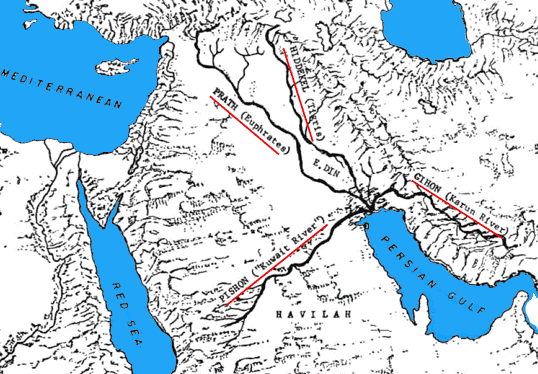
Image Caption: The Pishon (Wadi al-Batin) has not flowed since 2000 BC. Source: The Lost River Of Eden (LeeDuigon, December 20, 2015) [https://leeduigon.com/2015/12/20/the-lost-river-of-eden/]
The Pishon (Wadi al-Batin) has not flowed for 4000 years. Its source north of Medina is in the most auriferous (gold-bearing) area of Saudi Arabia. Before 3500 BC, in wet season, it flowed from the Arabian Peninsula into the Euphrates south of the Gihon (Karun) confluence. It dried up ca. 2000 BC.
James A. Sauer, former curator of the Harvard Semitic Museum, argued from geology and history that Pishon referred to what is now the Wadi al-Batin, a dry channel which begins in the Hijaz Mountains near Medina to run northeast to Kuwait. With the aid of satellite photos, Farouk El-Baz of Boston University traced the dry channel from Kuwait up the Wadi Al-Batin and the Wadi Al-Rummah system originating near Medina.
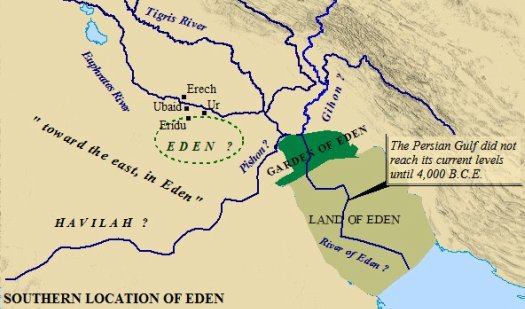
Image Caption: Location of Garden of Eden. Source: Learn Biblical Hebrew (learn-biblical-hebrew.com) [http://learn-biblical-hebrew.com/hebrew-scripture/garden-of-eden-story/genesis-28/gardend-of-eden-location-2/]
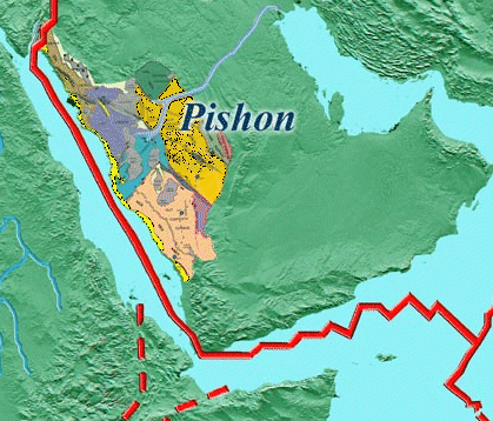
Image Caption: The Pishon (Wadi al-Batin) flowed in rainy season from the elevated auriferous hills north of Medina eastward to the Euphrates. Source: Pishon (Oodegr) [https://www.oodegr.com/english/ag_grafi/eikones/Historical%20maps/pishonriver.gif]
As for the land of Havilah, Juris Zarins comments: "the Hijaz mountains appear to satisfactorily meet the description [in Genesis]. The Hejaz includes both the Cradle of Gold at Mahd adh Dhahab and a possible source of the Pishon River". (Wikipedia)
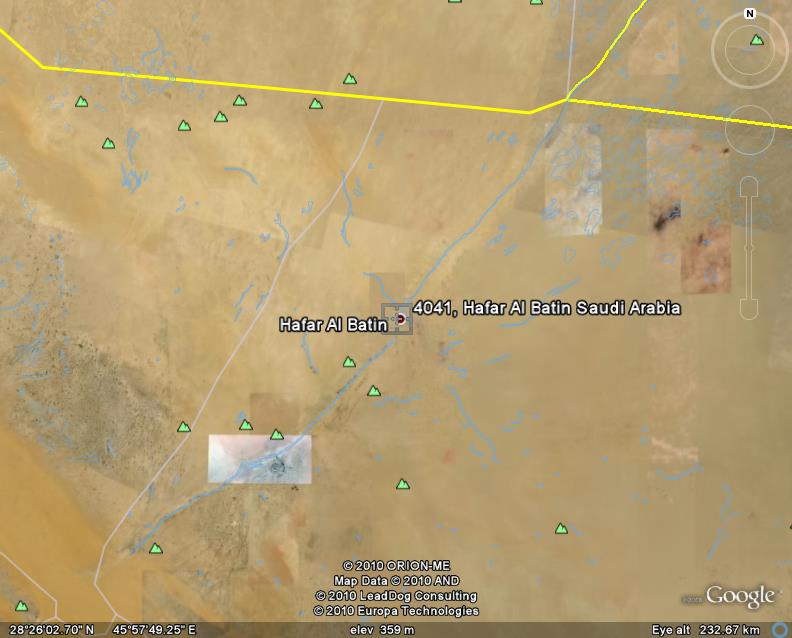
Image Caption: Satellite image of the town of Hafar Al-Batin, situated on the Wadi (river) Al Batin. Source: The historical place and time of Paradise (Orthodox Outlet for Dogmatic Enquiries) [https://www.oodegr.com/english/ag_grafi/pd/genesis/adam4.htm]
Gihon
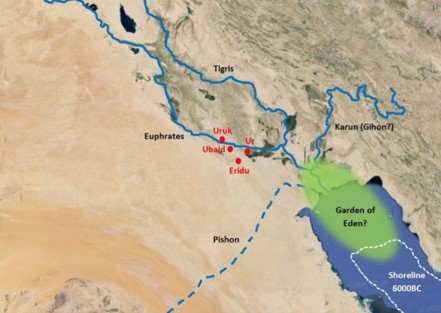
Image Caption: The Gihon (Karun) flowed from the mountains of Iran, east of the Persian Gulf. The Gihon flowed from the Land of Kush, namely the land of the ancient Cassites who were in the region between the mountains of Iran and the land of Assyria. Source: Giant steps for mankind (Phillip Kay, August 31, 2018) [https://phillipkay.wordpress.com/2018/08/31/giant-steps-for-mankind/]
The period of the Garden may have been the late Pleistocene, the end of the most recent Ice Age, ca. 10,000 BC. In this interglacial period sea levels were lower, and the Persian Gulf area was watered by an extensive river irrigation system, a very fertile area. This Persian Gulf area, called Eden in Genesis, may be identical to Sumerian Dilmun. The Garden story may recall the loss of the hunter–gatherer way of life with the rise of settlements that practise agriculture.
The Karun river is 450 miles long, emerging from the Zard Kuh mountains of the Bakhtiari district of the Zagros Range, receiving tributaries, such as the Dez and Kuhrang, and passing through the capital of the Khuzestan Province of Iran, the city of Ahwaz.
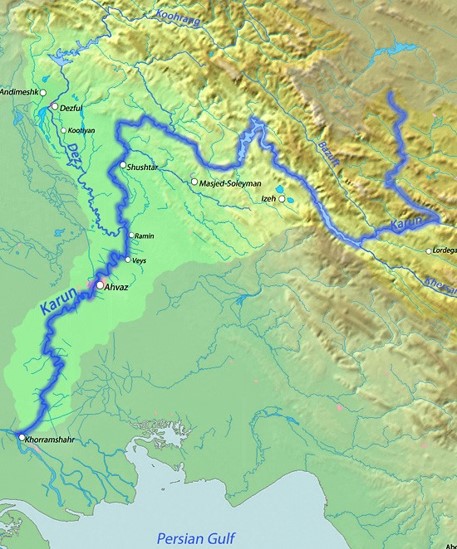
Image Caption: The Karun forks into two branches on its delta, the Bahmanshir and the Haffar, which joins the Arvand Rud before emptying into the Persian Gulf. Source: Karun river suffering a gradual death (Payvand: Iran News) [http://www.payvand.com/news/10/oct/1226.html]
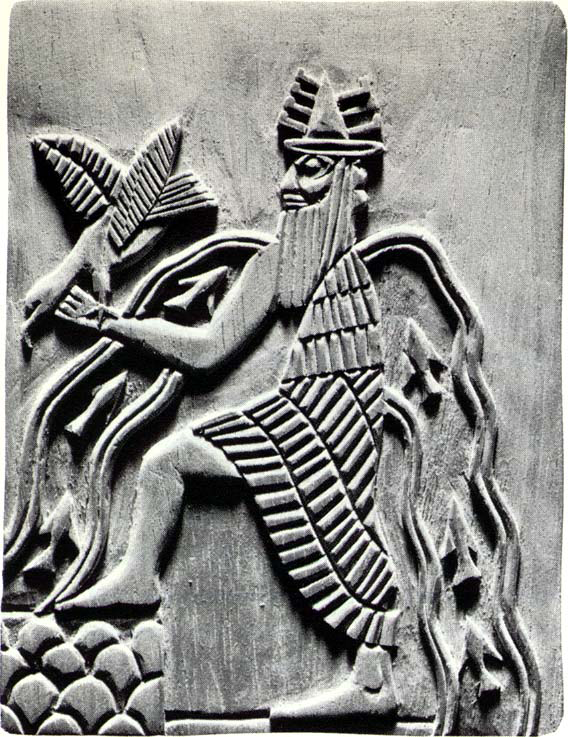
Image Caption: Enki (Lord of the Earth) was the Sumerian god of fresh water, wisdom, magic, exorcism, healing, virility, fertility, crafts, and art. Source: Mesopotamian Gods & Kings (Mesopotamian Gods) [http://www.mesopotamiangods.com/wp-content/uploads/2014/07/3d-Enki-god-of-the-waters1.jpg]
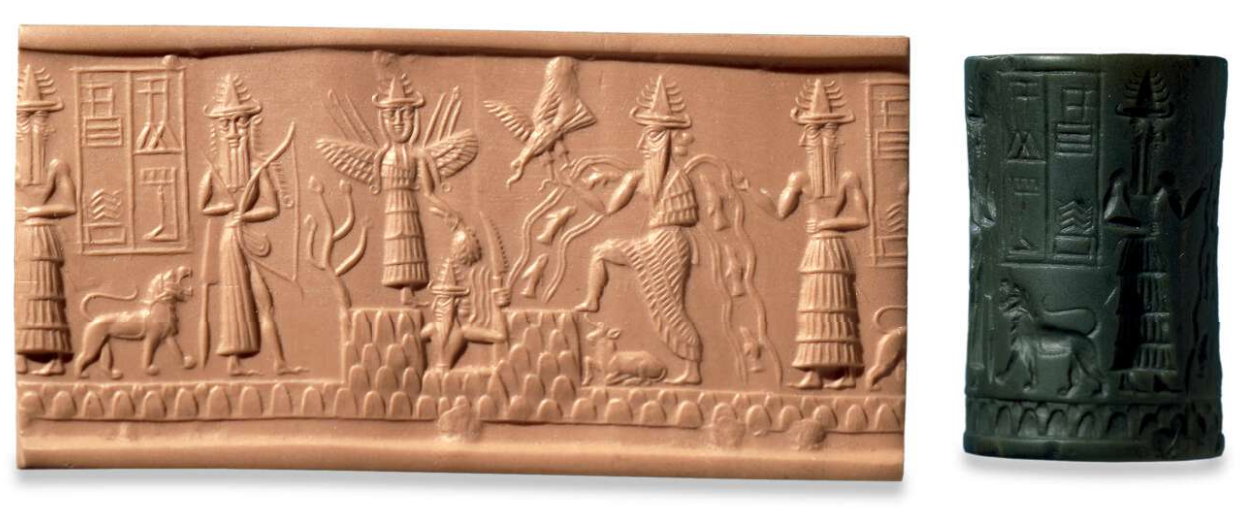
Image Caption: Greenstone cylinder seal of the scribe Adda, showing Enki depicted with a flowing stream full of fish; ca. 2300–2200 BC. Enki's two-faced minister Isimu stands to his right. (BM 89115). Source: Adda Seal (British Museum) [https://www.britishmuseum.org/collection/object/W_1891-0509-2553]
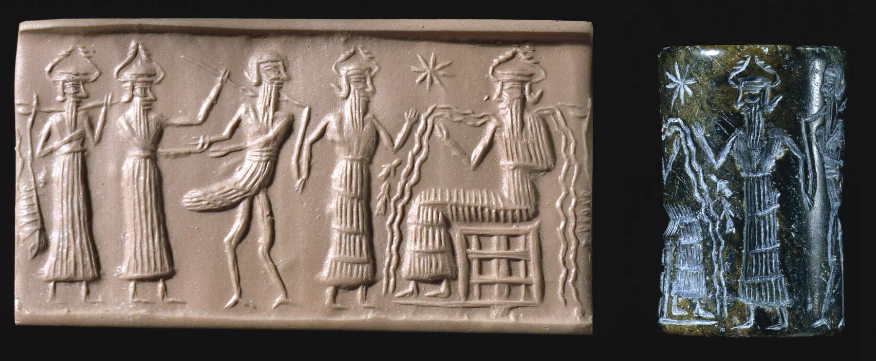
Image Caption: Cylinder seal; mottled green and black serpentine; A bearded god, wearing a multiple-horned head-dress and a striped skirt, carries a branch of vegetation (possibly symbolising the tablets of destiny stolen by the Zu bird) in a cleft stick or plough over his shoulder. A similarly attired god is grasping the captive bird-man (possibly the Zu-bird) with one hand while threatening him with a dart. The bird-man has his hands tied behind his back and has a rope around his neck which is held by a bearded god who wears a multiple-horned head-dress and a flounced skirt. They are standing before the seated water-god and patron of crafts Ea who also wears a multiple-horned head-dress, is clad in a flounched robe and has double streams of water flowing from his shoulders on either side, with two small fish leaping before him. Above is a star. 2250 BC (BM 103317). Source: Cylinder Seal 103317 (British Museum) [https://www.britishmuseum.org/collection/object/W_1911-0408-7]
Genesis 2:16-17
| טז וַיְצַו יְהוָה אֱלֹהִים, עַל-הָאָדָם לֵאמֹר: מִכֹּל עֵץ-הַגָּן, אָכֹל תֹּאכֵל׃ | 16 And YHWH God commanded the man, saying: 'Of every tree of the garden you may freely eat; |
| יז וּמֵעֵץ, הַדַּעַת טוֹב וָרָע--לֹא תֹאכַל, מִמֶּנּוּ: כִּי, בְּיוֹם אֲכָלְךָ מִמֶּנּוּ--מוֹת תָּמוּת׃ | 17 but of the tree of the knowledge of good and evil, you shall not eat of it; for in the day that you eat thereof you shall surely die.' |
Genesis 2:18-25
| יח וַיֹּאמֶר יְהוָה אֱלֹהִים, לֹא-טוֹב הֱיוֹת הָאָדָם לְבַדּוֹ; אֶעֱשֶׂה-לּוֹ עֵזֶר, כְּנֶגְדּוֹ׃ | 18 And YHWH God said: 'It is not good that the man should be alone; I will make him a help meet for him.' |
| יט וַיִּצֶר יְהוָה אֱלֹהִים מִן-הָאֲדָמָה, כָּל-חַיַּת הַשָּׂדֶה וְאֵת כָּל-עוֹף הַשָּׁמַיִם, וַיָּבֵא אֶל-הָאָדָם, לִרְאוֹת מַה-יִּקְרָא-לוֹ; וְכֹל אֲשֶׁר יִקְרָא-לוֹ הָאָדָם נֶפֶשׁ חַיָּה, הוּא שְׁמוֹ׃ | 19 And out of the ground YHWH God formed every beast of the field, and every fowl of the air; and brought them to the man to see what he would call them; and whatsoever the man would call every living creature, that was to be the name thereof. |
| כ וַיִּקְרָא הָאָדָם שֵׁמוֹת, לְכָל-הַבְּהֵמָה וּלְעוֹף הַשָּׁמַיִם, וּלְכֹל, חַיַּת הַשָּׂדֶה; וּלְאָדָם, לֹא-מָצָא עֵזֶר כְּנֶגְדּוֹת׃ | 20 And the man gave names to all cattle, and to the fowl of the air, and to every beast of the field; but for Adam there was not found a help meet for him. |
| כא וַיַּפֵּל יְהוָה אֱלֹהִים תַּרְדֵּמָה עַל-הָאָדָם, וַיִּישָׁן; וַיִּקַּח, אַחַת מִצַּלְעֹתָיו, וַיִּסְגֹּר בָּשָׂר, תַּחְתֶּנָּה׃ | 21 And YHWH God caused a deep sleep to fall upon the man, and he slept; and He took one of his ribs, and closed up the flesh in place of it. |
| כב וַיִּבֶן יְהוָה אֱלֹהִים אֶת-הַצֵּלָע אֲשֶׁר-לָקַח מִן-הָאָדָם, לְאִשָּׁה; וַיְבִאֶהָ, אֶל-הָאָדָם׃ | 22 And the rib, which YHWH God had taken from the man, made He a woman, and brought her to the man. |
| כג וַיֹּאמֶר, הָאָדָם, זֹאת הַפַּעַם עֶצֶם מֵעֲצָמַי, וּבָשָׂר מִבְּשָׂרִי; לְזֹאת יִקָּרֵא אִשָּׁה, כִּי מֵאִישׁ לֻקְחָה-זֹּאת׃ |
23
And the man said: 'This is now bone of my bones and flesh of my flesh; |
| כד עַל-כֵּן, יַעֲזָב-אִישׁ, אֶת-אָבִיו, וְאֶת-אִמּוֹ; וְדָבַק בְּאִשְׁתּוֹ, וְהָיוּ לְבָשָׂר אֶחָד׃ | 24 Therefore shall a man leave his father and his mother, and cleave to his wife, and they shall be one flesh. |
| כה וַיִּהְיוּ שְׁנֵיהֶם עֲרוּמִּים, הָאָדָם וְאִשְׁתּוֹ; וְלֹא, יִתְבֹּשָׁשׁוּ׃ | 25 And they were both naked, the man and his wife, and were not ashamed |
Independence & Guilt
Every human being has sometime chosen to venture off from God to explore what it means to be independent, to experience for oneself the world, the flesh, or to follow the impulse of some spirit from an unseen order. The adventure that leads away from love of God and obedience to his word ever leads to trouble and unfavorable consequences. And should we persist in wrongdoing, oblivious of wisdom and the voice of our own conscience, our way will continue finally to perpetual banishment from God's love and the beauty of his holiness.
This is the story of all humanity. It begins with a choice to ignore and depart from God's word, and Genesis will show that the larger part of people will never return, never repent — yet a lesser number will. And for all who learn regret and admit their shame to God, God has made a covering for their cause of shame that they may be restored.
Genesis 3:1-7
| א וְהַנָּחָשׁ, הָיָה עָרוּם, מִכֹּל חַיַּת הַשָּׂדֶה, אֲשֶׁר עָשָׂה יְהוָה אֱלֹהִים; וַיֹּאמֶר, אֶל-הָאִשָּׁה, אַף כִּי-אָמַר אֱלֹהִים, לֹא תֹאכְלוּ מִכֹּל עֵץ הַגָּן׃ | 1 Now the serpent was more cunning than any beast of the field that YHWH God had made. And he said to the woman: 'Yea, has God said: You (pl) shall not eat of any tree of the garden?' |
| ב וַתֹּאמֶר הָאִשָּׁה, אֶל-הַנָּחָשׁ: מִפְּרִי עֵץ-הַגָּן, נֹאכֵל׃ | 2 And the woman said to the serpent: 'Of the fruit of the trees of the garden we may eat; |
| ג וּמִפְּרִי הָעֵץ, אֲשֶׁר בְּתוֹךְ-הַגָּן--אָמַר אֱלֹהִים לֹא תֹאכְלוּ מִמֶּנּוּ, וְלֹא תִגְּעוּ בּוֹ: פֶּן-תְּמֻתוּן׃ | 3 but of the fruit of the tree that is in the midst of the garden, God has said: You (pl) shall not eat of it, nor shall you (pl) touch it, lest you (pl) die.' |
| ד וַיֹּאמֶר הַנָּחָשׁ, אֶל-הָאִשָּׁה: לֹא-מוֹת תְּמֻתוּן׃ | 4 And the serpent said to the woman: ‘You (pl) shall not surely die; |
| ה כִּי, יֹדֵעַ אֱלֹהִים, כִּי בְּיוֹם אֲכָלְכֶם מִמֶּנּוּ, וְנִפְקְחוּ עֵינֵיכֶם; וִהְיִיתֶם, כֵּאלֹהִים, יֹדְעֵי, טוֹב וָרָע׃ | 5 for God knows that in the day you (pl) eat thereof, your eyes shall be opened, and you (pl) shall be as God, knowing good and evil.' |
| ו וַתֵּרֶא הָאִשָּׁה כִּי טוֹב הָעֵץ לְמַאֲכָל וְכִי תַאֲוָה-הוּא לָעֵינַיִם, וְנֶחְמָד הָעֵץ לְהַשְׂכִּיל, וַתִּקַּח מִפִּרְיוֹ, וַתֹּאכַל; וַתִּתֵּן גַּם-לְאִישָׁהּ עִמָּהּ, וַיֹּאכַל׃ | 6 And when the woman saw that the tree was good for food, and that it was a delight to the eyes, and that the tree was to be desired to make one wise, she took of the fruit, and she ate; and she gave also to her husband with her, and he ate. |
| ז וַתִּפָּקַחְנָה עֵינֵי שְׁנֵיהֶם, וַיֵּדְעוּ, כִּי עֵירֻמִּם הֵם; וַיִּתְפְּרוּ עֲלֵה תְאֵנָה, וַיַּעֲשׂוּ לָהֶם חֲגֹרֹת׃ | 7 And the eyes of them both were opened, and they knew that they were naked; and they sewed fig-leaves together, and made themselves girdles. |
All have sinned
Genesis 3:6 contains all the ingredients of worldly temptation. 1 John 2:16 says, "For all that is in the world, the lust of the flesh, and the lust of the eyes and the boastful pride of life, is not from the Father but is from the world."
| Genesis 3:6 | 1 John 2:16 | |
|---|---|---|
| appetite | good for food | the lust of the flesh |
| avarice | a delight to the eyes | the lust of the eyes |
| ambition | to be desired to make one wise | and the boastful pride of life |
Note that all the trees in the garden were ‘pleasant to the sight’ and ‘good for food’ (Gen. 2:9). This would include the tree of knowledge, which was off limits. The only other respect in which the tree of the knowledge of good and evil differed from other trees is that it was, from a serpentine and human perspective, ‘desirable to make one wise’. It was not God who said it was desirable to make one wise; it was the serpent who planted this idea in the mind of humanity. It’s also open to inference that it wasn't the fruit per se that transformed humanity's relationship to God, but the act of disobedience itself.
Genesis 3:8-13
| ה וַיִּשְׁמְעוּ אֶת-קוֹל יְהוָה אֱלֹהִים, מִתְהַלֵּךְ בַּגָּן--לְרוּחַ הַיּוֹם; וַיִּתְחַבֵּא הָאָדָם וְאִשְׁתּוֹ, מִפְּנֵי יְהוָה אֱלֹהִים, בְּתוֹךְ, עֵץ הַגָּן׃ | 8 And they heard the voice of YHWH God walking in the garden toward the cool of the day; and the man and his wife hid themselves from the face of YHWH God among the trees of the garden. |
| ט וַיִּקְרָא יְהוָה אֱלֹהִים, אֶל-הָאָדָם; וַיֹּאמֶר לוֹ, אַיֶּכָּה׃ | 9 And YHWH God called to the man, and said to him: 'Where are you?' |
| י וַיֹּאמֶר, אֶת-קֹלְךָ שָׁמַעְתִּי בַּגָּן; וָאִירָא כִּי-עֵירֹם אָנֹכִי, וָאֵחָבֵא׃ | 10 And he said: 'I heard Thy voice in the garden, and I was afraid, because I was naked; and I hid myself.' |
| יא וַיֹּאמֶר--מִי הִגִּיד לְךָ, כִּי עֵירֹם אָתָּה; הֲמִן-הָעֵץ, אֲשֶׁר צִוִּיתִיךָ לְבִלְתִּי אֲכָל-מִמֶּנּוּ--אָכָלְתָּ׃ | 11 And He said: 'Who told you that you were naked? Have you eaten of the tree, whereof I commanded you that you should not eat?' |
| יב וַיֹּאמֶר, הָאָדָם: הָאִשָּׁה אֲשֶׁר נָתַתָּה עִמָּדִי, הִוא נָתְנָה-לִּי מִן-הָעֵץ וָאֹכֵל׃ | 12 And the man said: 'The woman whom You gave to be with me, she gave me of the tree, and I ate.' |
| יג וַיֹּאמֶר יְהוָה אֱלֹהִים לָאִשָּׁה, מַה-זֹּאת עָשִׂית; וַתֹּאמֶר, הָאִשָּׁה, הַנָּחָשׁ הִשִּׁיאַנִי, וָאֹכֵל׃ | 13 And YHWH God said to the woman: 'What is this you have done?' And the woman said: 'The serpent beguiled me, and I ate.' |
Where are you?
Genesis 3:9-24 presents a series of questions from YHWH God, which lead to confessions of wrongdoing by Man and Woman, and to YHWH God’s curses and symbolic provisions for guilt and shame. These provisions would later be more fully disclosed in God's covenants and acts of world redemption. What we learn from these archetypes of the first Man and Woman is that only humble contrition and confession of sin will lead to God’s covering for guilt and shame.
1 John 1:6-10 says, "6 if we say that we have fellowship with him, and walk in darkness, we lie, and do not the truth: 7 but if we walk in the light, as he is in the light, we have fellowship one with another, and the blood of Jesus Christ his son cleanses us from all sin. 8 If we say we have no sin, we deceive ourselves, and the truth is not in us. 9 If we confess our sins, He is faithful and just to forgive us our sins and to cleanse us from all unrighteousness. 10 If we say we have not sinned, we make Him out to be a liar, and His word is not in us."
The question of God for each of us remains the same since the dawn of human moral accountability: Where are you? In whose paradigm of truth are you walking? Do you continue to hide from God, or have you humbled yourself by admitting your personal guilt before God? God stands ready to judge or to forgive, depending on your denial or admission of guilt. The counsel of priests, prophets, and apostles has consistently been: Don't plead 'Not guilty', since God holds you accountable to all the evidence of your sins. Rather, humble yourself, plead 'Guilty', and seek cleansing through the blood of His son, Messiah Yeshua, who is faithful and just to forgive your sins.
Genesis 3:14-19
| יד וַיֹּאמֶר יְהוָה אֱלֹהִים אֶל-הַנָּחָשׁ, כִּי עָשִׂיתָ זֹּאת, אָרוּר אַתָּה מִכָּל-הַבְּהֵמָה, וּמִכֹּל חַיַּת הַשָּׂדֶה; עַל-גְּחֹנְךָ תֵלֵךְ, וְעָפָר תֹּאכַל כָּל-יְמֵי חַיֶּיךָ׃ | 14 And YHWH God said to the serpent: 'Because you have done this, cursed are you from among all cattle, and from among all beasts of the field; upon your belly shall you go, and dust shall you eat all the days of your life. |
| טו וְאֵיבָה אָשִׁית, בֵּינְךָ וּבֵין הָאִשָּׁה, וּבֵין זַרְעֲךָ, וּבֵין זַרְעָהּ: הוּא יְשׁוּפְךָ רֹאשׁ, וְאַתָּה תְּשׁוּפֶנּוּ עָקֵב׃ {ס} | 15 And I will put enmity between you and the woman, and between your seed and her seed; he shall bruise your head, and you shall bruise his heel.' {S} |
| טז אֶל-הָאִשָּׁה אָמַר, הַרְבָּה אַרְבֶּה עִצְּבוֹנֵךְ וְהֵרֹנֵךְ--בְּעֶצֶב, תֵּלְדִי בָנִים; וְאֶל-אִישֵׁךְ, תְּשׁוּקָתֵךְ, וְהוּא, יִמְשָׁל-בָּךְ׃ {ס} | 16 To the woman He said: 'I will greatly multiply your pain and your travail; in pain you shall bring forth children; and your desire shall be for your husband, but he shall rule over you.' {S} |
| יז וּלְאָדָם אָמַר, כִּי-שָׁמַעְתָּ לְקוֹל אִשְׁתֶּךָ, וַתֹּאכַל מִן-הָעֵץ, אֲשֶׁר צִוִּיתִיךָ לֵאמֹר לֹא תֹאכַל מִמֶּנּוּ--אֲרוּרָה הָאֲדָמָה, בַּעֲבוּרֶךָ, בְּעִצָּבוֹן תֹּאכְלֶנָּה, כֹּל יְמֵי חַיֶּיךָ׃ | 17 And to Adam He said: 'Because you have hearkened to the voice of your wife, and have eaten of the tree, of which I commanded you, saying: You shall not eat of it; cursed is the ground for your sake; in toil shall you eat of it all the days of your life. |
| יח וְקוֹץ וְדַרְדַּר, תַּצְמִיחַ לָךְ; וְאָכַלְתָּ, אֶת-עֵשֶׂב הַשָּׂדֶה׃ | 18 Thorns also and thistles shall it bring forth for you; and you shall eat the herb of the field. |
| יט בְּזֵעַת אַפֶּיךָ, תֹּאכַל לֶחֶם, עַד שׁוּבְךָ אֶל-הָאֲדָמָה, כִּי מִמֶּנָּה לֻקָּחְתָּ: כִּי-עָפָר אַתָּה, וְאֶל-עָפָר תָּשׁוּב׃ | 19 By the sweat of your face shall you eat bread, till you return to the ground; for out of it were you taken; for dust you are, and to dust shall you return.' |
Genesis 3:20-24
| כ וַיִּקְרָא הָאָדָם שֵׁם אִשְׁתּוֹ, חַוָּה: כִּי הִוא הָיְתָה, אֵם כָּל-חָי׃ |
20
And the man called his wife's name Eve; because she was the mother of all living. |
| כא וַיַּעַשׂ יְהוָה אֱלֹהִים לְאָדָם וּלְאִשְׁתּוֹ, כָּתְנוֹת עוֹר--וַיַּלְבִּשֵׁם׃ {פ} | 21 And YHWH God made for Adam and for his wife garments of skins, and he clothed them. {P} |
| כב וַיֹּאמֶר יְהוָה אֱלֹהִים, הֵן הָאָדָם הָיָה כְּאַחַד מִמֶּנּוּ, לָדַעַת טוֹב וָרָע; וְעַתָּה פֶּן-יִשְׁלַח יָדוֹ, וְלָקַח גַּם מֵעֵץ הַחַיִּים, וְאָכַל, וָחַי לְעֹלָם׃ | 22 And YHWH God said: 'Behold, the man has become as one of us, to know good and evil; and now, lest he put forth his hand, and take also of the tree of life, and eat, and live for ever … ' |
| כג וַיְשַׁלְּחֵהוּ יְהוָה אֱלֹהִים, מִגַּן-עֵדֶן--לַעֲבֹד, אֶת-הָאֲדָמָה, אֲשֶׁר לֻקַּח, מִשָּׁם׃ | 23 So YHWH God sent him forth from the garden of Eden, to till the ground from which he was taken. |
| כד וַיְגָרֶשׁ אֶת-הָאָדָם; וַיַּשְׁכֵּן מִקֶּדֶם לְגַן-עֵדֶן אֶת-הַכְּרֻבִים, וְאֵת לַהַט הַחֶרֶב הַמִּתְהַפֶּכֶת, לִשְׁמֹר, אֶת-דֶּרֶךְ עֵץ הַחַיִּים׃ {ס} | 24 So He drove out the man; and He placed in front of the garden of Eden the cherubim, and the flaming sword which turned every way, to keep the way to the tree of life. {S} |
Blessing & Cursing: Thematic Parallelism
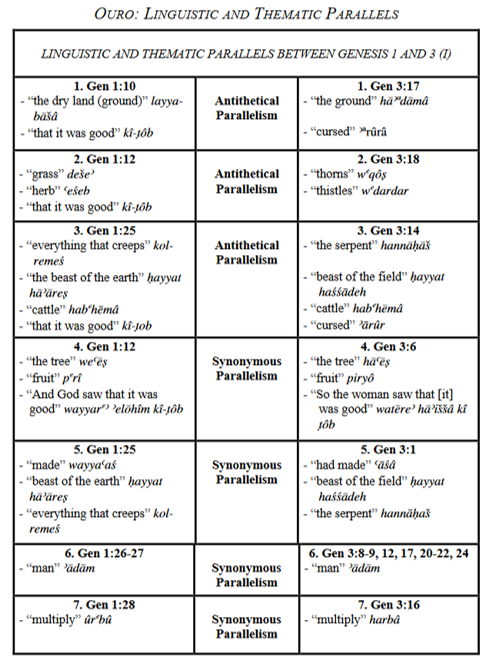
Image Caption: Parallels between Genesis 1 & 3. Source: Roberto Ouro, "Linguistic and Thematic Parallels BetweenGenesis 1 and 3", Journal of the Adventist Theological Society, 13/1 (Spring 2002): 44–54 [https://digitalcommons.andrews.edu/cgi/viewcontent.cgi?article=1262&context=jats]
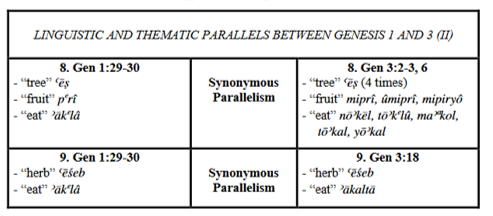
Image Caption: Parallels between Genesis 1 & 3. Source: Roberto Ouro, "Linguistic and Thematic Parallels BetweenGenesis 1 and 3", Journal of the Adventist Theological Society, 13/1 (Spring 2002): 44–54 [https://digitalcommons.andrews.edu/cgi/viewcontent.cgi?article=1262&context=jats]
Nine collocations of theme and vocabulary suggest that Genesis 1 was intended to serve as a foil to the events of Genesis 3. The three actions of Serpent, Woman, and Man reverse God’s threefold blessing on animals, humans, and Sabbath. God curses both Serpent and the ground of Man’s making – but the last of God’s three curses waits for Cain.
Alienation & Fratricide
The account of Cain and Abel, the sons of Man and Woman, is frought with symbolism. It resonates with cultural echoes of competition between two agrarian occupations of early civilization, that of the shepherd and that of the grain-farmer. Obviously, these could never share the same land space — one relies on natural grasslands, the other tills grasslands to cultivate grain — each encroaches on the other. Grain farmers needed granaries to store seed, which required permanent buildings and the protection of cities. Shepherds necessarily lived on the untilled fringes of cities and required migration to follow annual patterns of rainfall.
Ancient tales of competition between shepherd and farmer are couched in competition, and understandably, the earliest ancient tales, preserved by city-dwellers, would tend to favor grain-farmers. Nonetheless, it is often the case that the shepherd-god succeeds in forming a marriage to the goddess of fertility, so his line may continue. The tales of competition that end in reconciliation serve as cautions against competition that might otherwise result in violence.
In the storied competition between shepherd and grain-farmer, the outcome of the competition depends on the specific purpose of each tale:
- In the Sumerian Debate between Sheep and Grain (ca. 3000 to 2500 BC), the role of grain-farmer wins: In this cosmological competition, personifications of sheep-herder, Lahar, and the grain-goddess, Ashan, argue over who is more vital to the world. The farmer's product (Grain) is declared the winner by the gods. The grain-farmer goddess successfully argues that shepherds are actually dependent on agriculture to feed their flocks, whereas grain requires nothing from the sheep.
- In the Old Babylonian Courtship of Inanna (1800 to 1600 BC), the shepherd-god (Dumuzi) wins: The shepherd-god Dumuzi and the farmer-god Enkimdu compete for the love of the goddess Inanna. Though at first she favors the farmer-god (Enkimdu), the shepherd eventually emerges as the victor, winning Inanna's hand by arguing that the shepherd is the ultimate provider.
- Reconciliation: Most ancient agricultural competition tales that survive end in reconciliation. Rather than one being proven entirely superior, the two figures share gifts and acknowledge that civil society needs both agriculture and animal husbandry to survive and thrive.
Sumerian Myth: Winter-god (Enten) versus Summer-god (Emesh): Enlil Favors the Farmer God
The Sumerian myth of Enten and Emesh (also known as the Debate between Winter and Summer) dates back to the mid-to-late third millennium BC (ca. 2600 to 2400 BC).
The Sumerian myth of Enten and Emesh parallels the biblical story of Cain and Abel, though the former ends with reconciliation rather than murder. It has over three hundred lines, about half of which are incomplete. Because of numerous breaks, the meaning of the text is difficult to construe. From what can be discerned, the poem may be reconstructed as follows.
Enlil, the air-god, sets his mind to bringing forth trees and grain and to establish abundance and prosperity in the land. For this purpose two cultural beings, the brothers Emesh and Enten, are created, and Enlil assigns to each specific duties. The text is so badly damaged at this point that it's impossible to make out the nature of their duties; the following intelligible passages indicate their direction:
Enten caused the ewe to give birth to the lamb, the goat to give birth to the kid,
Cow and calf he caused to multiply, much fat and milk he caused to be produced,
In the plain, the heart of the wild goat, the sheep, and the donkey he made to rejoice,
The birds of the heaven, in the wide earth he had them set up their nests
The fish of the sea, in the swampland he had them lay their eggs,
In the palm-grove and vineyard he made to abound honey and wine,
The trees, wherever planted, he caused to bear fruit,
The furrows …,
Grain and crops he caused to multiply,
Like Ashnan (the grain goddess), the kindly maid, he caused strength to appear.
Emesh brought into existence the trees and the fields, he made wide the stables and sheepfolds,
In the farms he multiplied the produce,
The … he caused to cover the earth,
The abundant harvest he caused to be brought into the houses, he caused the granaries to be heaped high.
Translation Source: Enten and Emesh: Enlil Chooses the Farmer-god (Opens New Window) (Biblioteca Pleyades) [https://www.bibliotecapleyades.net/sitchin/emesh_enten.htm]
Reference: Enten and Emesh: Enlil Chooses the Farmer-god (Opens New Window) (Sacred Texts: Myths and Origins) [https://www.sacred-texts.com/ane/sum/sum07.htm]
Sumerian Myth: Shepherd-god (Lahar) versus Grain-goddess (Ashnan)
The myth of cattle-god Lahar and grain-goddess Ashnan represents a variation of the Cain and Abel motif.
Lahar and Ashnan were created in the chamber of the gods so the Annunnaki, the children of the heaven-god An, might have food and clothes. But the Anunnaki were unable to make effective use of the products from Lahar and Ashnan. To remedy this, man was created.
The following passage describes the descent of Lahar and Ashnan from heaven to earth and the cultural benefits they bestow on mankind.
In those days Enki says to Enlil:
"Father Enlil, Lahar and Ashnan,
They who have been created in the Dulkug,
Let us cause them to descend from the Dulkug."
At the pure word of Enki and Enlil,
Lahar and Ashnan descended from the Dulkug.
For Lahar they (Enlil and Enki) set up the sheepfold,
Plants, herbs, and–… they present to him
For Ashnan they establish a house,
Plow and yoke they present to her.
Lahar standing in his sheepfold,
A shepherd increasing the bounty of the sheepfold is he;
Ashnan standing among the crops,
A maid kindly and bountiful is she.
Abundance of heaven–… ,
Lahar and Ashnan caused to appear,
In the assembly they brought abundance,
In the land they brought the breath of life,
The decrees of the god they direct,
The contents of the warehouses they multiply,
The storehouses they fill full.
In the house of the poor, hugging the dust,
Entering they bring abundance;
The pair of them, wherever they stand,
Bring heavy increase into the house;
The place where they stand they sate, the place where they sit they supply,
They made good the heart of An and Enlil.
But Lahar and Ashnan drank much wine and began to quarrel in the farms and fields. Each extolled personal achievements and belittled those of the opponent. Finally Enlil and Enki intervened, but the end of the poem that contains their decision is still wanting.
Reference: Debate between sheep and grain (Opens New Window) (Wikipedia), dated to late 3rd millennium BC. [https://en.wikipedia.org/wiki/Debate_between_sheep_and_grain]
Translation Source: Samuel Noah Kramer, Ancient Near Eastern Texts Relating To The Old Testament. Edited by J. B. Pritchard, 3d edn. with Supplement, 1969. Pp. 41-42.
Sumerian Myth: Shepherd-god (Dumuzid) versus Grain-farmer-god (Enkimdu) (c.4.08.33)
He was cheerful, he was cheerful,
at the edge of the riverbank, he was cheerful.
On the riverbank, the shepherd on the riverbank,
now the shepherd was even pasturing the sheep on the riverbank.
The farmer approached the shepherd there,
the shepherd pasturing the sheep on the riverbank;
the farmer, Enkimdu, approached him there.
Dumuzid …, [approached] the farmer, the king of dyke and canal.
From the plain where he was, the shepherd,
from the plain where he was, provoked a quarrel with him;
the shepherd, Dumuzid
from the plain where he was, provoked a quarrel with him.
In this text, it is the shepherd, Dumuzi, that provokes a quarrel with the farmer, Enkimdu. However, unlike the Cain and Abel dispute, these resolve as friends:
As for me, I am a shepherd: when I am married,
farmer, you are going to be counted as my friend.
Farmer, Enkimdu, you are going to be counted as my friend,
farmer, as my friend.
Translation Source: Dumuzid and Enkimdu: c.4.08.33 in Electronic Text Corpus of Sumerian Literature (Opens New Window) (Faculty of Oriental Studies, Univ. of Oxford)[https://etcsl.orinst.ox.ac.uk/]
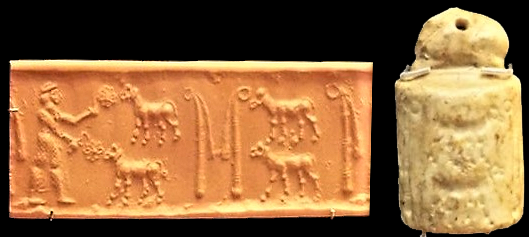
Image Caption: Dumuzi the Shepherd tends his herd. Source: Dumuzi the Shepherd (Mesopotamian Gods) [http://www.mesopotamiangods.com/wp-content/uploads/2014/08/5c-Dunuzi-the-Shepherd-attentively-tending-to-his-herds.jpg]
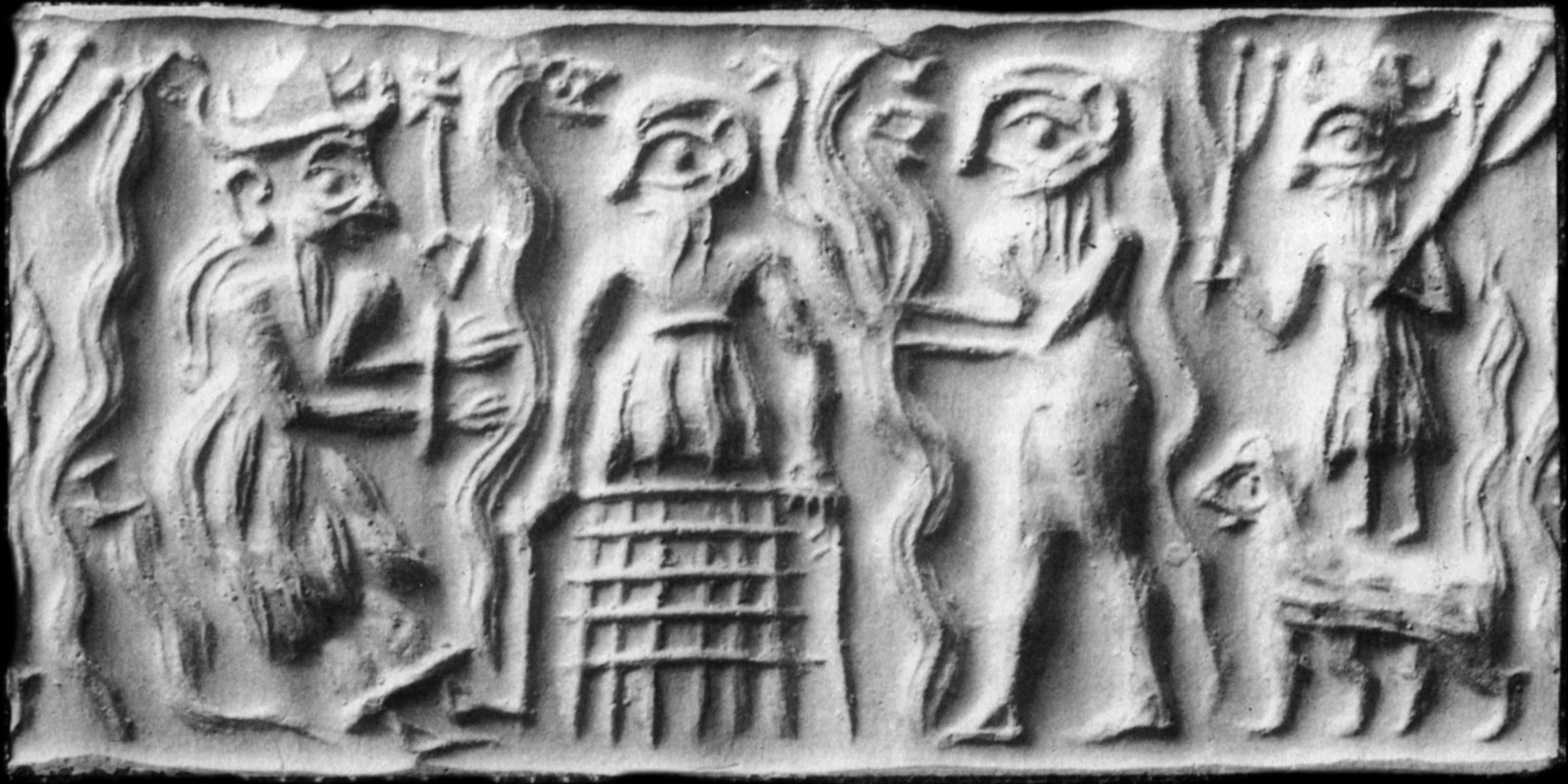
Image Caption: A depiction taken from an ancient Sumerian cylinder seal showing the god Dumuzid being tortured in the Underworld by gallas. Source: Gallu (Wikipedia) [https://en.wikipedia.org/wiki/Gallu and https://upload.wikimedia.org/wikipedia/commons/f/f5/Dumuzi_aux_enfers.jpg]
Sumerian Myth: The Courtship of Inanna and Dumuzid
The Sumerian poem, the Courtship of Inanna (ETCSL 4.0.8.3.3), begins with a playful conversation between Inanna and her brother Utu, who incrementally reveals to her that it is time for her to marry. Dumuzid comes to court her, along with a farmer named Enkimdu. At first, Inanna prefers the farmer, but Utu and Dumuzid gradually persuade her that Dumuzid is the better choice for a husband, arguing that, for every gift the farmer can give to her, the shepherd can give her something even better. In the end, Inanna marries Dumuzid. The shepherd and the farmer reconcile their differences, offering each other gifts.
Samuel Noah Kramer compares the myth to the Biblical story of Cain and Abel because both accounts center around a farmer and a shepherd competing for divine favor and, in both stories, the deity in question ultimately chooses the shepherd.
Source: Dumuzid (Opens New Window) (Wikipedia) [https://en.wikipedia.org/wiki/Dumuzid]
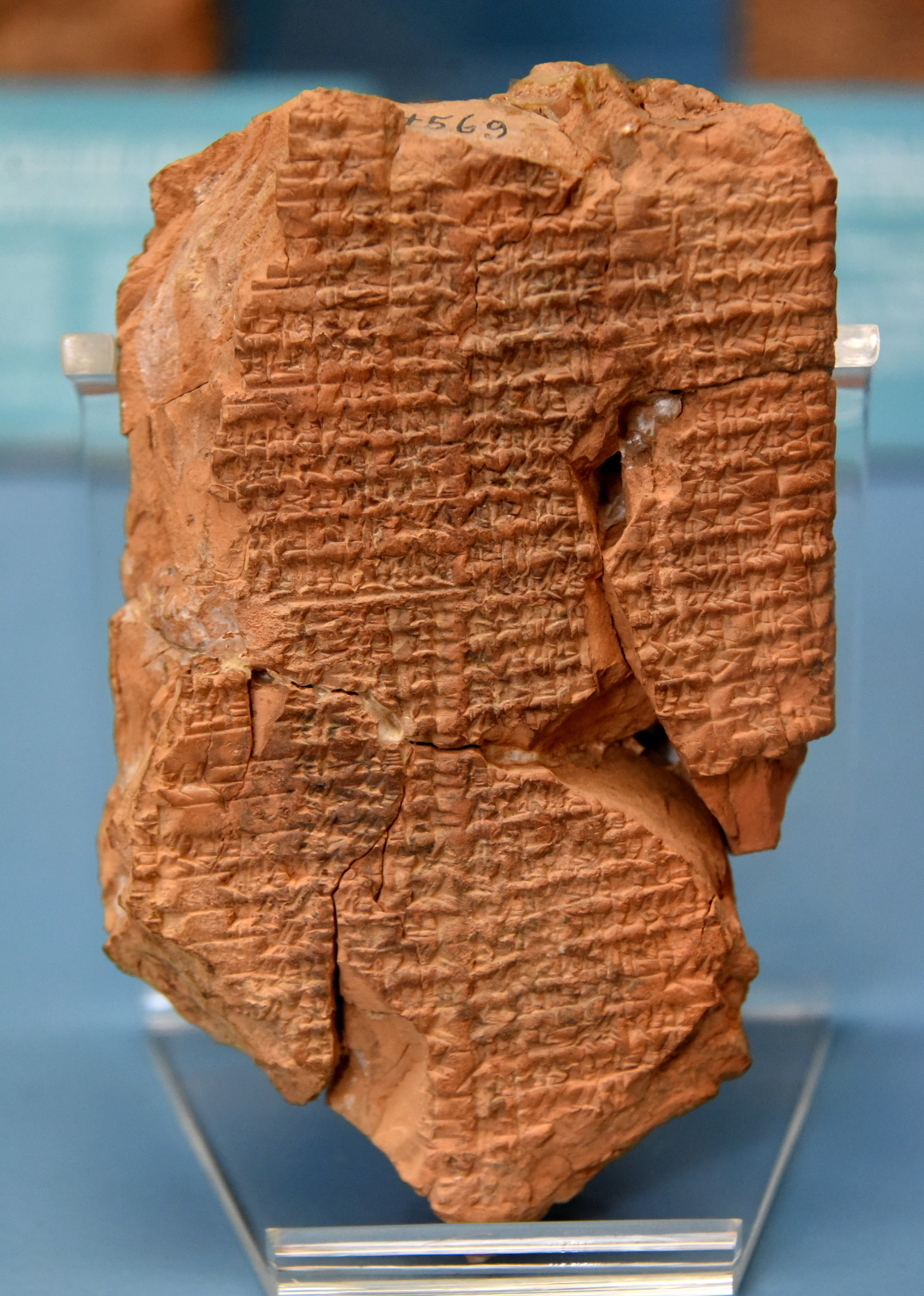
Image Caption: Courtship of Inanna and Dumuzid: Terracotta Tablet, Nippur, Iraq.1st Half 2nd Millennium BC. Ancient Orient Museum, Istanbul. Source: Dumuzid (Wikipedia) [https://en.wikipedia.org/wiki/Dumuzid]
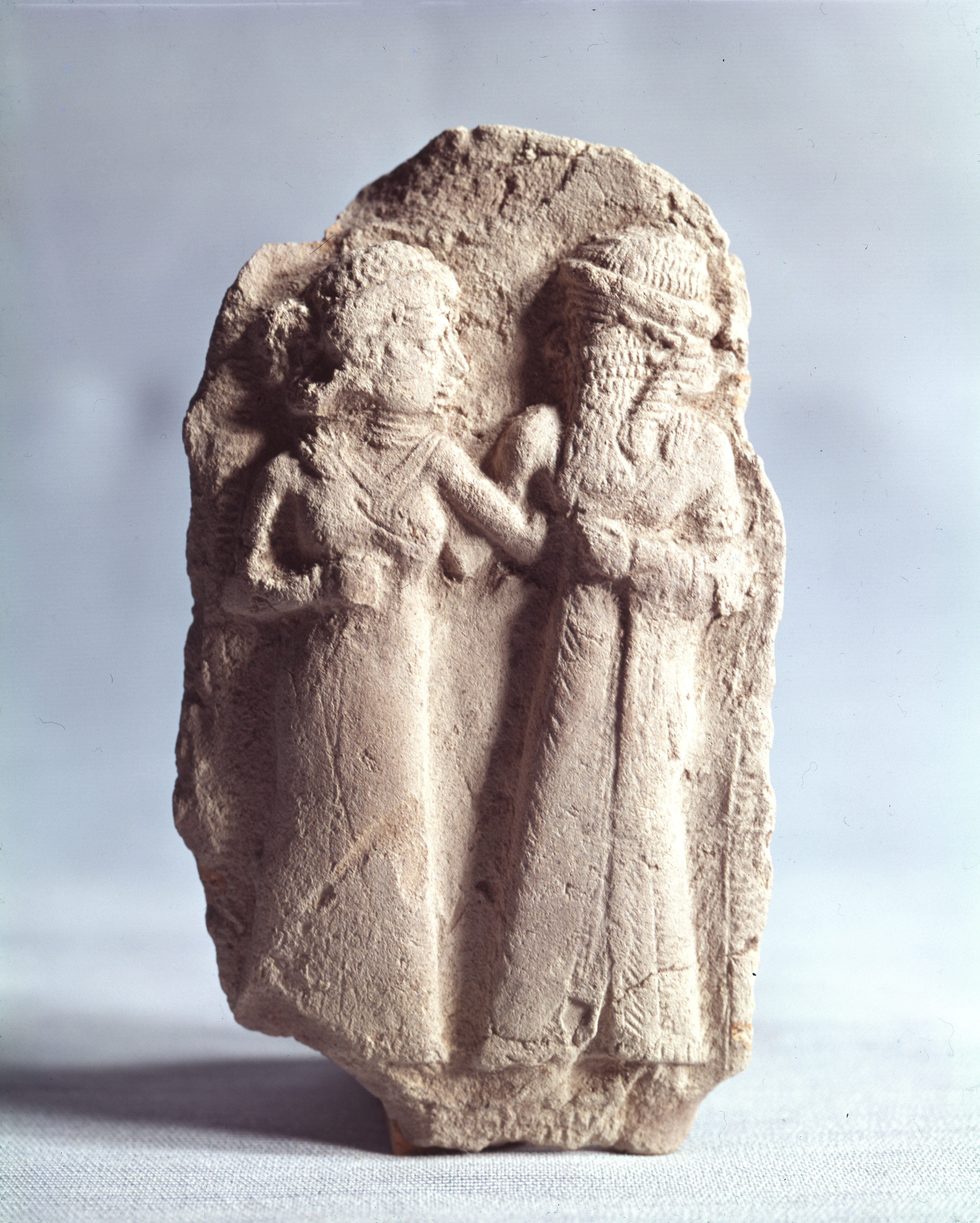
Image Caption: Ancient Sumerian depiction of the marriage of Inanna and Dumuzid. Source: Dumuzid (Wikipedia) [https://en.wikipedia.org/wiki/Dumuzid]
Genesis 4: A Tale of Two Brothers
In the account of Genesis 4, the cautionary story leans in a direction decidedly more moral than agrarian. The offering of the firstlings of the flock by the shepherd (Abel) YHWH regards, whereas the offering of some fruit of the ground by the farmer (Cain) YHWH disregards. The jealousy of the farmer festers and eventually moves him to murder his brother. In this version of the shepherd–farmer type scene, we find a prophetic, albeit ironic forecast of two ways in life:
- one way honors God yet leads to fatal persecution, requiring a substitute (Seth) to bear the seed that leads to life;
- the other way triumphs by violence yet ends in extinction.
This bears wisdom for those who understand:
Better to please God despite offending man
than to offend God with what pleases man.
Genesis 4:1-7
| א וְהָאָדָם, יָדַע אֶת-חַוָּה אִשְׁתּוֹ; וַתַּהַר, וַתֵּלֶד אֶת-קַיִן, וַתֹּאמֶר, קָנִיתִי אִישׁ אֶת-יְהוָה׃ | 1 And the man knew Eve his wife; and she conceived and bore Cain, and said: 'I have gotten a man with [the help of] YHWH.' |
| ב וַתֹּסֶף לָלֶדֶת, אֶת-אָחִיו אֶת-הָבֶל; וַיְהִי-הֶבֶל, רֹעֵה צֹאן, וְקַיִן, הָיָה עֹבֵד אֲדָמָה׃ | 2 And again she bore his brother Abel. And Abel was a keeper of sheep, but Cain was a tiller of the ground. |
| ג וַיְהִי, מִקֵּץ יָמִים; וַיָּבֵא קַיִן מִפְּרִי הָאֲדָמָה, מִנְחָה--לַיהוָה׃ | 3 And in process of time it came to pass, that Cain brought of the fruit of the ground an offering to YHWH. |
| ד וְהֶבֶל הֵבִיא גַם-הוּא מִבְּכֹרוֹת צֹאנוֹ, וּמֵחֶלְבֵהֶן; וַיִּשַׁע יְהוָה, אֶל-הֶבֶל וְאֶל-מִנְחָתוֹ׃ | 4 And Abel, he also brought of the firstlings of his flock and of the fat thereof. And YHWH had respect to Abel and to his offering; |
| ה וְאֶל-קַיִן וְאֶל-מִנְחָתוֹ, לֹא שָׁעָה; וַיִּחַר לְקַיִן מְאֹד, וַיִּפְּלוּ פָּנָיו׃ | 5 but to Cain and to his offering He had not respect. And Cain was very wroth, and his countenance fell. |
|
ו
וַיֹּאמֶר יְהוָה אֶל-קָיִן לָמָּה חָרָה לָךְ וְלָמָּה נָפְלוּ פָנֶיךָ׃ |
6
And YHWH said to Cain: 'Why are you wroth? |
|
ז
הֲלוֹא אִם-תֵּיטִיב, שְׂאֵת, וְאִם לֹא תֵיטִיב, לַפֶּתַח חַטָּאת רֹבֵץ; וְאֵלֶיךָ תְּשׁוּקָתוֹ, וְאַתָּה תִּמְשָׁל-בּוֹ׃ |
7
If you do well, shall it not be lifted up? |
Genesis 4:8-12
| ח וַיֹּאמֶר קַיִן, אֶל-הֶבֶל אָחִיו; וַיְהִי בִּהְיוֹתָם בַּשָּׂדֶה, וַיָּקָם קַיִן אֶל-הֶבֶל אָחִיו וַיַּהַרְגֵהוּ׃ | 8 And Cain spoke to Abel his brother. And it came to pass, when they were in the field, that Cain rose up against Abel his brother, and slew him. |
| ט וַיֹּאמֶר יְהוָה אֶל-קַיִן, אֵי הֶבֶל אָחִיךָ; וַיֹּאמֶר לֹא יָדַעְתִּי, הֲשֹׁמֵר אָחִי אָנֹכִי׃ | 9 And YHWH said to Cain: 'Where is Abel your brother?' And he said: 'I know not; am I my brother's keeper?' |
| י וַיֹּאמֶר, מֶה עָשִׂיתָ; קוֹל דְּמֵי אָחִיךָ, צֹעֲקִים אֵלַי מִן-הָאֲדָמָה׃ | 10 And He said: 'What have you done? the voice of your brother's blood cries to Me from the ground. |
| יא וְעַתָּה, אָרוּר אָתָּה, מִן-הָאֲדָמָה אֲשֶׁר פָּצְתָה אֶת-פִּיהָ, לָקַחַת אֶת-דְּמֵי אָחִיךָ מִיָּדֶךָ׃ | 11 And now cursed are you from the ground, which has opened her mouth to receive your brother's blood from your hand. |
| יב כִּי תַעֲבֹד אֶת-הָאֲדָמָה, לֹא-תֹסֵף תֵּת-כֹּחָהּ לָךְ; נָע וָנָד, תִּהְיֶה בָאָרֶץ׃ | 12 When you till the ground, it shall not henceforth yield to you her strength; a fugitive and a wanderer shall you be on the earth.' |
Hebrew Tale: Farmer versus Shepherd
Against a background of Mesopotamian parallels that result in the shepherd garnering divine favor over the gardener, the account of Cain and Abel presents a tale of two brothers that begins with divine favor for the shepherd’s offering, which then leads to envy, fratricide, banishment, and a state of alienation.
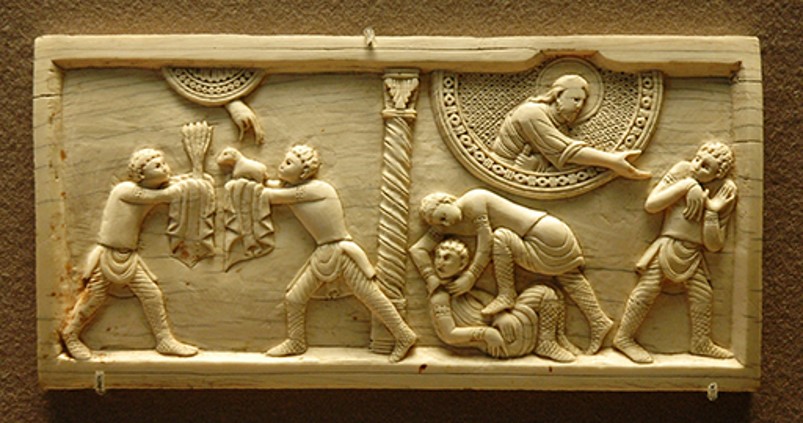
Image Caption: Cain and Abel, circa 1084. Ivory panel from the Cathedral of Salerno, Italy. Louvre Museum, Paris. Photograph by Marie-Lan Nguyen. Source: Cain and Abel (Bible Odyssey) [https://www.bibleodyssey.org/en/tools/image-gallery/c/cain-and-abel-ivory]
Genesis 4:13-16
| יג וַיֹּאמֶר קַיִן, אֶל-יְהוָה: גָּדוֹל עֲוֺנִי, מִנְּשֹׂא׃ |
13
And Cain said to YHWH: 'My punishment is greater than I can bear. |
| יד הֵן גֵּרַשְׁתָּ אֹתִי הַיּוֹם, מֵעַל פְּנֵי הָאֲדָמָה, וּמִפָּנֶיךָ, אֶסָּתֵר; וְהָיִיתִי נָע וָנָד, בָּאָרֶץ, וְהָיָה כָל-מֹצְאִי, יַהַרְגֵנִי׃ |
14
Behold, You have driven me out this day from the surface of the ground; and from Your face shall I be hid; and I shall be a fugitive and a wanderer in the earth; and it will come to pass, that whoever finds me will slay me.' |
| טו וַיֹּאמֶר לוֹ יְהוָה, לָכֵן כָּל-הֹרֵג קַיִן, שִׁבְעָתַיִם, יֻקָּם; וַיָּשֶׂם יְהוָה לְקַיִן אוֹת, לְבִלְתִּי הַכּוֹת-אֹתוֹ כָּל-מֹצְאוֹ׃ |
15
And YHWH said to him:'Therefore whosoever slays Cain,And YHWH set a sign for Cain, lest any finding him should smite him. |
| טז וַיֵּצֵא קַיִן, מִלִּפְנֵי יְהוָה; וַיֵּשֶׁב בְּאֶרֶץ-נוֹד, קִדְמַת-עֵדֶן׃ | 16 And Cain went out from the presence of YHWH, and settled in the land of Nod, east of Eden. |
The Sign of Cain
Many have speculated about the form of the mark (אוֹת) YHWH put on Cain. Some have supposed that it took the paleo-Hebrew form of the letter taw (x), though Hebrew writing would not yet have been invented prior to the date of the flood by any dating proposal. Indeed, not even a sign from the earliest form of cuneiform writing (e.g., a divinity ideogram, , four crossing wedges to signify a star) would have been known before the flood.
Since Cain's sign is not described, and because it would not have been derived from any formal writing system, it is unlikely that we will be able to discern its form. Even though commodity tokens or their graphic symbols were used widely for Sumerian trade contracts from 10,000 BC until cuneiform writing was invented ca. 3300 to 3200 BC, there is no way of knowing which mark the writer understood YHWH to have applied to Cain.
Two Prediluvian Genealogies Two Ways Diverge
According to the Bible, two ways diverge in the course of human history: one leads to the life God promises all who call upon his name; the other leads to an end shared by all who build on earthly ambitions. One way leads to an eternal city whose builder and maker is God; the other way leads to a material city built by engineers. One way leads to life despite perilous persecution; the other way, while seeming safe, leads finally to complete and final separation from God.
The divergence of the two ways, the way that leads to life and the way that leads to death, is nascent in Genesis 4. It's a theme that is evident in how Cain's line ends in history, yet Seth's line continues. It's also made apparent from contrasting characterizations of each line: whereas Lamech, the seventh in Seth's line, boasts of violent retaliation (4:23-24), in the time of Enosh, the second in Seth's line, men began to call on the name of YHWH (4:26).
Prediluvian Horizontal Genealogy The Way of the World
Genesis 4:17-24
| יז וַיֵּדַע קַיִן אֶת-אִשְׁתּוֹ, וַתַּהַר וַתֵּלֶד אֶת-חֲנוֹךְ; וַיְהִי, בֹּנֶה עִיר, וַיִּקְרָא שֵׁם הָעִיר, כְּשֵׁם בְּנוֹ חֲנוֹךְ׃ | 17 And Cain knew his wife; and she conceived, and bore Enoch; and he built a city, and called the name of the city after the name of his son Enoch. |
| יח וַיִּוָּלֵד לַחֲנוֹךְ, אֶת-עִירָד, וְעִירָד, יָלַד אֶת-מְחוּיָאֵל; וּמְחִיָּיאֵל, יָלַד אֶת-מְתוּשָׁאֵל, וּמְתוּשָׁאֵל, יָלַד אֶת-לָמֶךְ׃ | 18 And to Enoch was born Irad; and Irad bore Mehujael; and Mehujael bore Methushael; and Methushael bore Lamech. |
| יט וַיִּקַּח-לוֹ לֶמֶךְ, שְׁתֵּי נָשִׁים: שֵׁם הָאַחַת עָדָה, וְשֵׁם הַשֵּׁנִית צִלָּה׃ | 19 And Lamech took to him two wives; the name of one was Adah, and the name of the other Zillah. |
| כ וַתֵּלֶד עָדָה, אֶת-יָבָל: הוּא הָיָה--אֲבִי, יֹשֵׁב אֹהֶל וּמִקְנֶה׃ | 20 And Adah bore Jabal; he was the father of such as dwell in tents and have cattle. |
| כא וְשֵׁם אָחִיו, יוּבָל: הוּא הָיָה--אֲבִי, כָּל-תֹּפֵשׂ כִּנּוֹר וְעוּגָב׃ | 21 And his brother's name was Jubal; he was the father of all such as handle the harp and pipe. |
| כב וְצִלָּה גַם-הִוא, יָלְדָה אֶת-תּוּבַל קַיִן--לֹטֵשׁ, כָּל-חֹרֵשׁ נְחֹשֶׁת וּבַרְזֶל; וַאֲחוֹת תּוּבַל-קַיִן, נַעֲמָה׃ | 22 And Zillah, she also bore Tubal-cain, the forger of every cutting instrument of brass and iron; and the sister of Tubal-cain was Naamah. |
| כג וַיֹּאמֶר לֶמֶךְ לְנָשָׁיו, עָדָה וְצִלָּה שְׁמַעַן קוֹלִי--נְשֵׁי לֶמֶךְ, הַאְזֵנָּה אִמְרָתִי: כִּי אִישׁ הָרַגְתִּי לְפִצְעִי, וְיֶלֶד לְחַבֻּרָתִי׃ |
23
And Lamech said to his wives:Adah and Zillah, hear my voice; |
| כד כִּי שִׁבְעָתַיִם, יֻקַּם-קָיִן; וְלֶמֶךְ, שִׁבְעִים וְשִׁבְעָה׃ |
24
If Cain shall be avenged sevenfold, |
The City of Cain
L.A. Waddell writes, "The City of Enoch, we have seen, is admitted by all the leading Biblical experts to be identical with the City Unug or Unuk and latterly Uruk, of the Sumerians, and identical with 'Erech' of the later Hebrew Old Testament texts."
Source: Cain's City (Genesis for Ordinary People) [https://www.genesisforordinarypeople.com/faq/cain-s-city]
In myth and literature, Uruk was famous as the capital city of Gilgamesh, hero of the Epic of Gilgamesh. Scholars identify Uruk as the biblical Erech (Genesis 10:10), the second city founded by Nimrod in Shinar.
Source: Uruk (Wikipedia) [https://en.wikipedia.org/wiki/Uruk]
William Kennett Loftus visited the site of Uruk in 1849, identifying it as 'Erech', known as 'the second city of Nimrod', and led the first excavations from 1850 to 1854.
Source: Uruk (Wikipedia) [https://en.wikipedia.org/wiki/Uruk]. William Kennett Loftus (1857). Travels and researches in Chaldaea and Susiana: with an account of excavations at Warka, the "Erech" of Nimrod, and Shush, "Shushan the Palace" of Esther, in 1849-52. Robert Carter & Brothers. "Of the primeval cities founded by Nimrod, the son of Gush, four are represented, in Genesis x. 10, as giving origin to the rest : — 'And the beginning of his kingdom was Babel, and Erech, and Accad, and Galneh, in the land of Shinar.' …let us see if there be any site which will correspond with the biblical Erech — the second city of Nimrod. About 120 miles southeast of Babylon, are some enormous piles of mounds, which, from their name and importance, appear at once to justify their claim to consideration. The name of Warka is derivable from Erech without unnecessary contortion. The original Hebrew word 'Erk,' or 'Ark,' is transformed into 'Warka,' either by changing the aleph into vau, or by simply prefixing the vau for the sake of euphony, as is customary in the conversion of Hebrew names to Arabic. If any dependence can be placed upon the derivation of modern from ancient names, this is more worthy of credence than most others of like nature …. Sir Henry Rawlinson states his belief that Warka is Erech, and in this he is supported by concurrent testimony …. [Footnote: See page xvi. of the Twenty-ninth Annual Report of the Royal Asiatic Society, 1852 ; and Proceedings of the Royal Geogr. Society, vol. i., page 47]"
Prediluvian Vertical Genealogy The Way of YHWH
Genesis 4:25-26
| כה וַיֵּדַע אָדָם עוֹד, אֶת-אִשְׁתּוֹ, וַתֵּלֶד בֵּן, וַתִּקְרָא אֶת-שְׁמוֹ שֵׁת: כִּי שָׁת-לִי אֱלֹהִים, זֶרַע אַחֵר--תַּחַת הֶבֶל, כִּי הֲרָגוֹ קָיִן׃ |
25
And Adam knew his wife again; and she bore a son, and called his name Seth: 'for God has set me another seed |
| כו וּלְשֵׁת גַּם-הוּא יֻלַּד-בֵּן, וַיִּקְרָא אֶת-שְׁמוֹ אֱנוֹשׁ; אָז הוּחַל, לִקְרֹא בְּשֵׁם יְהוָה׃ {ס} | 26 And to Seth also there was born a son; and he called his name Enosh; then men began to call on the name of YHWH. {S} |
The name שֵׁת 'Seth' is an epithet for the role of Seth as a 'replacement' for his murdered older brother, Abel. Comparing the juxtaposed genealogies that follow, the line of Cain (a horizontal genealogy) ends with the flood, whereas the line of Seth continues through the sons of Jacob until the Son of David, the Messiah, who is God's replacement for Man who died in and was banned from the garden. All who by faith live in Yeshua (Jesus) are the offspring of Yeshua (Isaiah 53:10; John 12:24) and will escape God's judgment that will destroy all who are not (1 Corinthians 15:22).
Genealogies of Cain & Seth
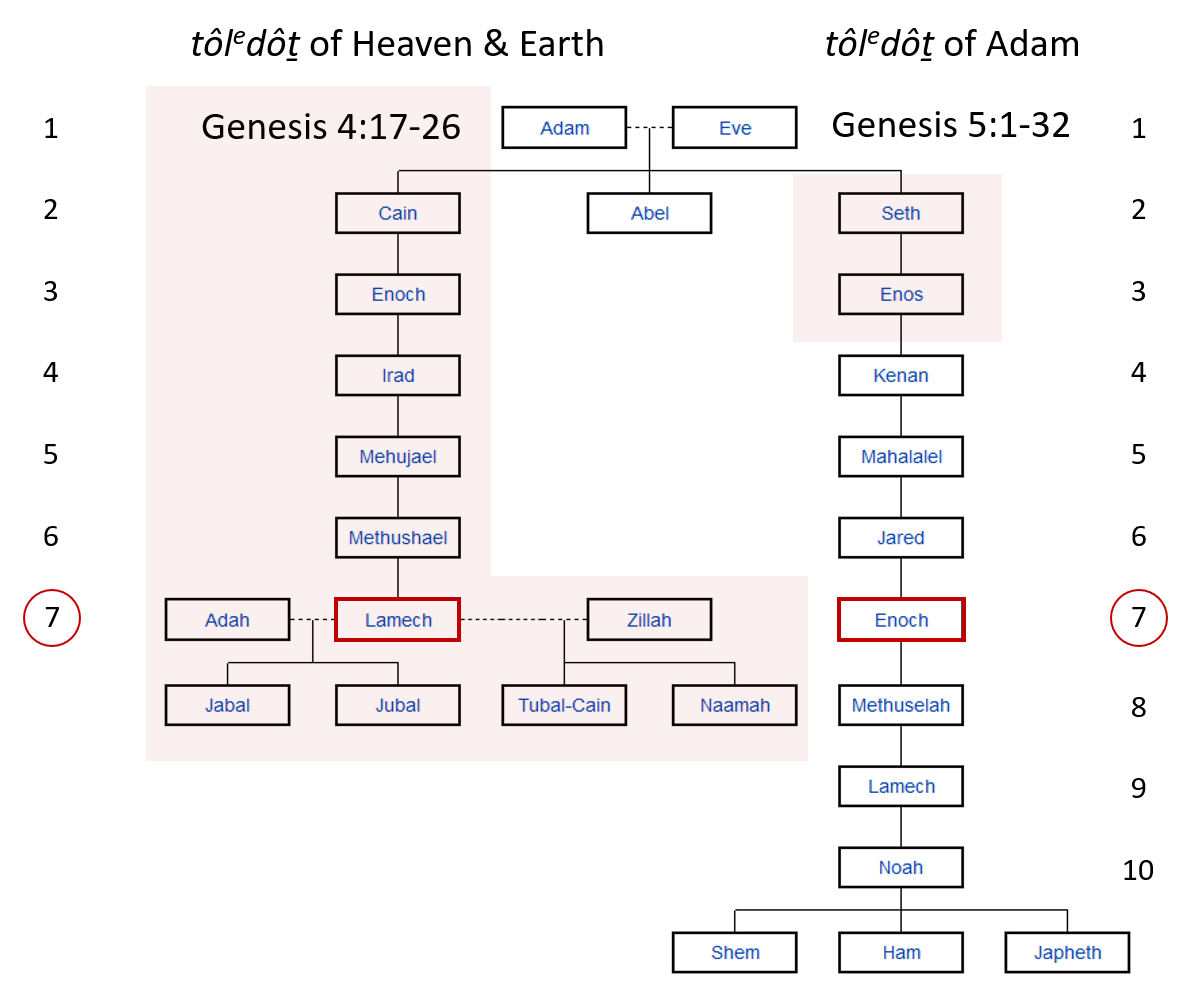 Image Caption: Genealogies of Cain and Seth. Source: Cain and Abel (Wikipedia) [https://en.wikipedia.org/wiki/Cain_and_Abel]
Genesis 4:17-24 presents the whole genealogy of Cain until the end of that line ostensibly at the flood of Noah. Cain's genealogy is horizontal, in that it does not continue in Genesis. Indeed, it ends in extinction.
Image Caption: Genealogies of Cain and Seth. Source: Cain and Abel (Wikipedia) [https://en.wikipedia.org/wiki/Cain_and_Abel]
Genesis 4:17-24 presents the whole genealogy of Cain until the end of that line ostensibly at the flood of Noah. Cain's genealogy is horizontal, in that it does not continue in Genesis. Indeed, it ends in extinction.
The introduction of Seth in Genesis 4:25-26 comes with only the introduction of the first of his line, Enosh. Seth's full genealogy is found in Genesis 5:1-32. Seth's genealogy is vertical, in that it continues.
The point of introducing Seth at this point is to offer a foil to Cain. In contrast to Cain's line, which begins and ends with presumption of vindication for violence, Seth's line begins merely, 'then men began to call on the name of YHWH' (4:26). This is a theological claim, that men began to worship the one true god, rather than a historical claim, that they then referred to him by the name 'YHWH', since the name 'YHWH' would first be revealed to Moses centuries later at the burning bush (Exodus 6:3).
Sources
Mesopotamian Names & Places
- Dilmun (Wikipedia) [https://en.wikipedia.org/wiki/Dilmun]
- Edin (Sumerian term) (Wikipedia) [https://en.wikipedia.org/wiki/Edin_(Sumerian_term)]
- Enki (Wikipedia) [https://en.wikipedia.org/wiki/Enki]
- The Garden of Eden (Bible Mapper Atlas) [https://biblemapper.com/blog/index.php/2022/04/04/the-garden-of-eden/]
- Kassites (Wikipedia) [https://en.wikipedia.org/wiki/Kassites]
- Pishon (Wikipedia) [https://en.wikipedia.org/wiki/Pishon]
Mesopotamian Tokens & Writing
- Schmandt-Besserat, Denise. 1977. "An Archaic Recording System and the Origin of Writing." Syria 54 (1/2): 31–44.
- Schmandt-Besserat, Denise. 1977. "An Archaic Recording System and the Origin of Writing." Syro-Mesopotamian Studies 112 (July 1977): 1–32.
- Schmandt-Besserat, Denise. 1978. "The Earliest Precursor of Writing." Scientific American 238 (6): 50–59.
- Schmandt-Besserat, Denise. 1979. "Reckoning Before Writing." Archaeology 32 (3): 22–31.
- Schmandt-Besserat, Denise. 1980. "The Earliest Uses of Clay in Syria." Expedition 22 (3): 28–42.
- Schmandt-Besserat, Denise. 1982. "The Emergence of Recording." American Anthropologist 84 (4): 871–878.
- Schmandt-Besserat, Denise. 1983. "Tokens and Counting." In The Hilly Flanks and Beyond: Essays on the Near Eastern Prehistory in Honor of Robert J. Braidwood, edited by T. Cuyler Young Jr., Philip E. L. Smith, and P. Mortensen, 337–348. Chicago: Oriental Institute of the University of Chicago.
- Schmandt-Besserat, Denise. 1986. "Tokens at Susa." Oriens Antiquus 25 (1-2): 93–125.
- Schmandt-Besserat, Denise. 1987. "Oneness, Twoness, Threeness: How Ancient Accountants Invented Numbers." The Sciences 27 (4): 44–48.
- Schmandt-Besserat, Denise. 1992. "The Token System: Its Significance for the Origin of Counting and Writing." In The Followers of Horus: Studies Dedicated to Michael Allen Hoffman, edited by Renée Friedman and Barbara Adams, 363–373. Oxford: Oxbow Books.
- Schmandt-Besserat, Denise. 1992a. Before Writing. Vol. 1, From Counting to Cuneiform. Austin: University of Texas Press.
- Schmandt-Besserat, Denise. 1992b. Before Writing. Vol. 2, A Catalog of Near Eastern Tokens. Austin: University of Texas Press.
- Schmandt-Besserat, Denise. 1996. How Writing Came About. Austin: University of Texas Press.
- Schmandt-Besserat, Denise. 1997. "Animal Figurines, Tokens, and Seals." In The Prehistory of Jordan, II: Perspectives from 1997, edited by Hans Georg Gebel, Zeidan Kafafi, and Gary O. Rollefson, 375–384. Berlin: Ex Oriente.
- Schmandt-Besserat, Denise. 1999. "Accounting in the Prehistoric Near East." In Civilization before Writing and State Formation, edited by Hans J. Nissen and Johannes Renger, 15–23. Berlin: Dietrich Reimer Verlag.
- Schmandt-Besserat, Denise. 2007. "The Token System." In The Arslantepe Excavations, edited by Marcella Frangipane, 209–220. Roma: Università degli studi di Roma "La Sapienza".
- Schmandt-Besserat, Denise. 2009. "Tokens and Writing: The Cognitive Development." In The Cradle of Human Language, edited by Rudolf Botha and Chris Knight, 114–132. Oxford: Oxford University Press.
- Schmandt-Besserat, Denise. 2010. "The First Accounting." In The Oxford Handbook of the History of Mathematics, edited by Eleanor Robson and Jacqueline Stedall, 23–35. Oxford: Oxford University Press.
- Schmandt-Besserat, Denise. 2016. "How Prehistoric Tokens Led to Writing." In A Companion to the Ancient Near East, edited by Daniel C. Snell, 33–45. Chichester, UK: John Wiley & Sons.
- Schmandt-Besserat, Denise. 2018. "Accounting with Tokens in the Ancient Near East." In The Oxford Handbook of the Archaeology and Anthropology of Hunter-Gatherers, edited by Vicki Cummings, Peter Jordan, and Marek Zvelebil, 369–384. Oxford: Oxford University Press.