
Genesis 5:1 to 6:8
Of Angels & Men
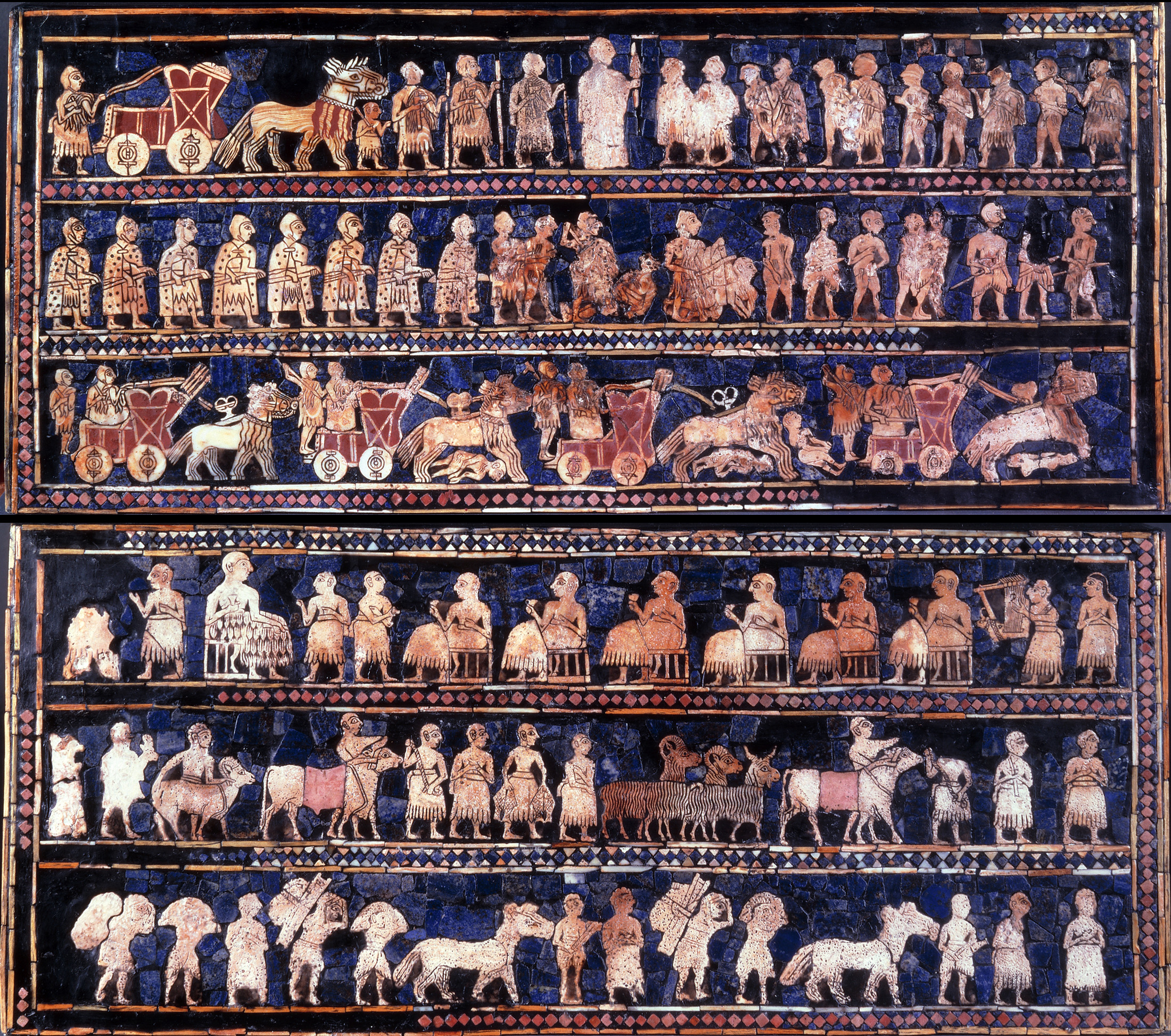
Image Caption: War and Peace panels on the Standard of Ur (ca 2550 BC). Source: Standard of Ur (Wikipedia) [https://en.wikipedia.org/wiki/Standard_of_Ur] and [https://upload.wikimedia.org/wikipedia/commons/f/f9/Standard_of_Ur_-_War.jpg] and [https://upload.wikimedia.org/wikipedia/commons/7/7f/Standard_of_Ur_-_peace_side.jpg]
Long before Abram, a Sumerian city-state culture had arisen through economic competition and enforced peace. The Sumerian cities like Uruk, Ur, Kish, and Lagash vyed for regional hegemony through centuries-long dynastic stretches that would end at the fall of the Ur III Dynasty (2112 to 2004 BC).
Prediluvian Vertical Genealogy Noah's Way of Redemption
Perhaps recalling accounts of long-lived pre-flood Sumerian kings, Genesis 5 preserves a genealogy of long-lived ancestors of the hero who saved the world from catastrophe by building a boat. As in the Sumero-Babylonian traditions, in which Sumerian Atrahasis or Babylonian Utnapishtim bridged the pre- and post-flood worlds, Noah is the Hebrew name given this transitional figure in Genesis.
Noah is that ancient figure without whom no one of the old world would have been saved. As savior of those who survived God's judgment on the old world, Noah becomes a type of that savior who will rescue the world from a judgment to come, the one promised in Genesis 3:15 who will ultimately destroy the works of the ancient serpent.
Hence, regardless of one's predilections regarding ancestral lifetimes, of biblical chronologies, or of the extent or dating of the great biblical flood, all should agree that Noah is an archetype of the righteous savior of the world.
- Ezekiel 14:14, 20 regards Noah (alongside Danel and Job) as a paragon of righteousness
- 1 Peter 3:20 says God waited patiently in the days of Noah while the ark was being built (120 years)
- 2 Peter 2:5 describes Noah as a "preacher of righteousness" who warned the ungodly of impending judgment
- Hebrews 11:7 describes Noah’s obedience in building the ark as an act of faith by which he not only saved his household but condemned the unbelief of the old world
It is for these reasons that Noah is the culminating figure of the old world genealogy of Genesis 5.
Pre- & Post-Diluvian Patriarchs
Noah is the transition figure between two worlds, those of the pre- and post-diluvian patriarchs of all humanity. If one follows the chronology of Genesis, the birth years and lifetimes of the ancestors add up to spans that are measurable. If one were to track this prehistoric chronology in Genesis and synchronize it with other measurable biblical dates (e.g., Genesis 12:4; 21:5; 25:26; Exodus 12:40; 1 Kings 6:1; Galatians 3:16–17), it would seem that one should be able to form a 'closed biblical chronology', an unbroken chronology from Man's creation to the present. Many have proposed to do just that.
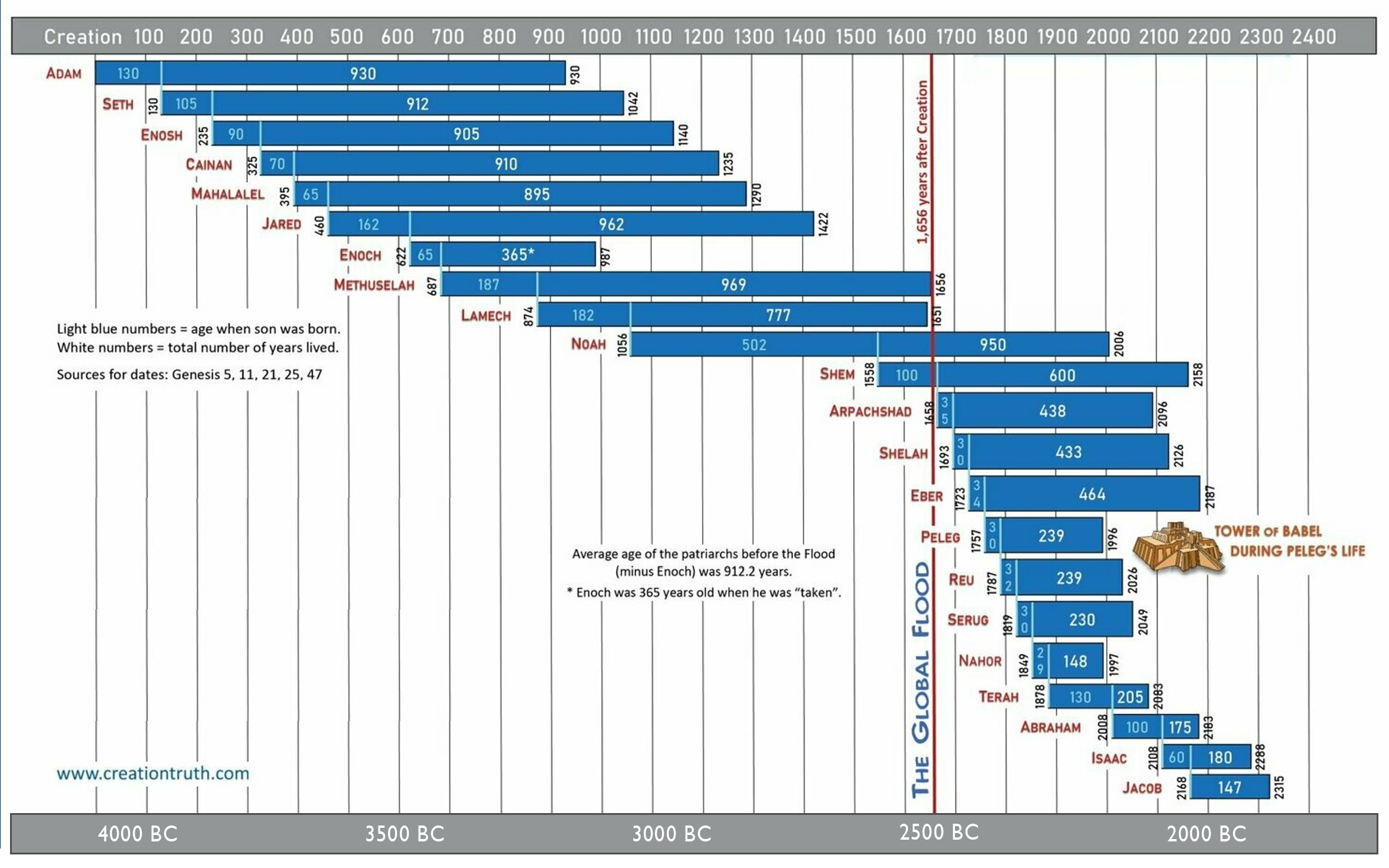
Image Caption: Biblical Chronology of Pre- and Post-Diluvian Patriarchs. Source: Ages of the Patriarchs (Creation Truth Foundation) [https://www.creationtruth.com/] and [https://s3.amazonaws.com/images.ecwid.com/images/51635246/2235032172.jpg]
Proposed reasons as to why the habitation of humanity on Earth is so relatively short (when compared to archaeological or paleontological observations), yet the lifetimes are so long for prediluvian ancestors, and to a lesser extent for postdiluvian ancestors, are reasons drawn from speculation. The Bible does not expressly say. Some of the many proposed theories are as follows.
Biological Environment Theories
- Genetic Purity: Traditional creationist perspectives argue that humans were first created with a pure genetic code. Over generations, sin and environmental degradation led to an accumulation of genetic mutations and genetic entropy, which progressively shortened life expectancies.
- Canopy Theory: A popular theory among creation scientists proposes that a protective canopy of water surrounded the earth before the great flood. This canopy created a greenhouse effect that shielded humanity from harmful radiation, contributing to longer lifetimes.
Theological Narrative Theories
- Diminishing Mercy: Some interpret the extended lifespans as a gradual effect of departure from Eden, serving to display God's gradually diminishing mercy after humanity's fall into sin.
- Outcome of Sin: Others argue the long lifetimes demonstrate a theological rather than a biological outcome: sin ultimately kills. Lifetimes were originally intended to be long, but as human wickedness grew, lifespans gradually diminished.
Cultural Symbolism Theories
- Ancient Numerology: Because the numbers consistently fall into mathematical patterns (e.g., divisibility by 5; multiples of 5 plus 7), some argue that long lifetimes bear numerological significance, such as wholeness or peace, rather than literal historical significance.
- Mesopotamian Influence: Some compare the Genesis 4 and 5 genealogies to ancient Sumerian king lists, which record pre-Flood kings ruling for tens of thousands of years. Perhaps, assigning long ages to these ancients was only a literary way of indicating the divine favor they enjoyed.
The Lifespan Shift
Whatever the reason, Genesis records a downward trend in the length of human lifetimes following the great flood. Some infer from God's edict in Genesis 6:3 not a forecast of the flood in 120 years but intent to shorten human lifetimes to 120 years: "My Spirit will not contend with humans forever, for they are mortal; their days will be a hundred and twenty years." Admittedly, Moses's lifetime was precisely 120 years (Deuteronomy 34:7), though even before Moses died, he avered that lifespans would steadily decrease to "seventy or eighty years" (Psalm 90:10). As we consider carefully the chronology of the Noah account, there may be space for 120 years from prediction to fulfillment. Note the sequence.
- Genesis 5:32 reports: "After Noah was five hundred years old, he became the father of Shem, Ham, and Japheth."
- Genesis 6:3 predicts: "My Spirit will not contend with humans forever, for they are mortal; their days will be a hundred and twenty years."
- Genesis 7:6 says: "Noah was six hundred years old when the floodwaters came on the earth."
- Genesis 7:11 says, "In the six hundredth year of Noah’s life, on the seventeenth day of the second month — on that day all the springs of the great deep burst forth, and the floodgates of the heavens were opened."
- Genesis 8:13 says: "By the first day of the first month of Noah’s six hundred and first year, the water had dried up from the earth."
Genesis 7:11 offers a precise date — 17th day, 2nd month of 600th year — and Genesis 8:13 is equally precise — 1st day, 1st month of 601st year. To the author of these verses, the date of the flood is precise, albeit relative to the lifetime of Noah. So we can infer likewise that Genesis 7:6 was intended to be precise: it was in Noah's 600th year that the flood came.
The question is, how can YHWH's forecast of 120 years fit within the 100 years between Noah's 500th year (when he became the father of Shem, Ham, and Japeth) and his 600th year (when the flood came). Answer: it can't. Nor should we infer that it should. If YHWH's forecast to Noah were to have come to Noah 120 years before the flood, it would have to have been in Noah's 480th year, 20 years before he became the father of Shem, Ham, and Japheth.
So Genesis 5:32, referring to Noah's 500th year, should not be understood to precede the date of YHWH's forecast in Genesis 6:3. Chronologically, the report of the birth of Noah's sons, in Genesis 5:32, must follow YHWH's forecast of 120 years, in Genesis 6:3. But the report of Genesis 5:32 needs clarification. Genesis 11:10 clarifies: "Two years after the flood, when Shem was 100 years old, he became the father of Arphaxad." That would mean Shem was 98 years old during the flood. Depending on how one understands 'after the flood [came or subsided?]', that would mean Shem was born in Noah's 502nd or 503rd year, not his 500th year. Since we can infer from Genesis 9:4 that Ham was Noah's 'younger' son in relation to his other sons — "Noah awoke from his wine, and knew what his younger son [Ham] had done to him," — Ham would have been born after Shem, leaving only Japheth, Noah's firstborn, to be born in Noah's 500th year.
Genealogies of Cain & Seth

Image Caption: Genealogies of Cain and Seth by Type. Source: Cain and Abel (Wikipedia) [https://en.wikipedia.org/wiki/Cain_and_Abel]
There is a pattern of rhyming among the names of descendents in the parallel genealogies of Cain and Seth. This rhyme scheme invites comparison between these parallel lines of pre-flood descendency. Of key significance are the parallelisms formed by the names of the third, seventh, and tenth generations, since these names apply to patriarchs whose depictions contrastively characterize each genealogy:
- the seventh from Adam in Cain's line, Lamech, is as violent as his forebear Cain yet presumes God's manifold vindication (4:23-24)
- the third from Adam in Seth's line, Enosh, marks a time when men began to call on YHWH's name (4:26)
- the seventh from Adam in Seth's line, Enoch, walked with God (5:24)
- the tenth from Adam in Seth's line, Noah, would restore the earth and renew peace with God
| Generation | Genesis 4 | Genesis 5 |
|---|---|---|
| 1 | Adam | Adam |
| 2 ∥ 2/4 | Cain | Seth / Kenan |
| 3 ∥ 3/7 | Enoch | Enosh / Enoch |
| 4 ∥ 6 | Irad | Jared |
| 5 ∥ 5 | Mehujael | Mehalalel |
| 6 ∥ 8 | Methushael | Methuselah |
| 7 ∥ 7/9 | Lamech | Enoch / Lamech |
| 10 | — | Noah |
Age Discrepancies in Transmission
Below are the main numerical divergences in Genesis 5 in the Masoretic Text (MT), Septuagint (LXX), and Samaritan Pentateuch (SP). Numbers in ( ) are calculations derived from other texts. Brackets [ ] are proposed reconstructions for the original text of the MT.
| Patriarch | Genesis | Masoretic Text | Septuagint | Samaritan Pentateuch | ||||||
|---|---|---|---|---|---|---|---|---|---|---|
| Siring Age | Later Years | Lifespan | Siring Age | Later Years | Lifespan | Siring Age | Later Years | Lifespan | ||
| Adam | 5:3-5 | 130 | 800 | 930 | 230 | 700 | 930 | 130 | 800 | 930 |
| Seth | 5:6-8 | 105 | 807 | 912 | 205 | 707 | 912 | 105 | 807 | 912 |
| Enosh | 5:9-11 | 90 | 815 | 905 | 190 | 715 | 905 | 90 | 815 | 905 |
| Kenan | 5:12-14 | 70 | 840 | 910 | 170 | 740 | 910 | 70 | 840 | 910 |
| Mahalalel | 5:15-17 | 65 | 830 | 895 | 165 | 730 | 895 | 65 | 830 | 895 |
| Jared | 5:18-20 | 162 | 800 | 962 | 162 | 800 | 962 | 62 | 785 | 847 |
| Enoch | 5:21-23 | 65 | 300 | 365 | 165 | 200 | 365 | 65 | 300 | 365 |
| Methuselah | 5:25-27 | 187 | 782 | 969 | 187 | 782 | 969 | 67 | 653 | 720 |
| Lamech | 5:28-31 | 182 | 595 | 777 | 188 | 565 | 753 | 53 | 600 | 653 |
| Noah | 5:32; 7:11; 8:13-14; 9:28-29; 10:21; 11:10 | 500/(502) | 350 | 950 | 500/(502) | 350 | 950 | 500/(502) | 350 | 950 |
Source: Henry B. Smith, Jr. 2018. "The case for the Septuagint’s chronology in Genesis 5 and 11." In Proceedings of the Eighth International Conference on Creationism, ed. J.H. Whitmore, pp. 117–132. Pittsburgh, Pennsylvania: Creation Science Fellowship. [https://biblearchaeology.org/images/Genesis-5-and-11/Smith-Henry-The-Case-for-the-Septuagints-Chronology-in-Gen-5-and-11-ICC.pdf]
Total lifespans in Genesis 5 are seven times identical across LXX, MT, and Samaritan Pentateuch (SP), though in six of these the LXX "Siring Age" is 100 years greater than that of the MT.
Since the MT and SP have for the 'Siring Age' of 6 patriarchs an age reduced by 100 years each, the reduction was likely deliberate to bring about a reduction of the period of the prediluvian patriarchs by 600 years. This 600-year reduction entered the text tradition before the divergence of MT and SP traditions.
At a later time, in three cases, the SP deliberately reduced all ages for Jared (62), Methuselah (67) and Lamech (53), likely to conform with Jubilees (ca. 160–140 BC).
Sumerian King List
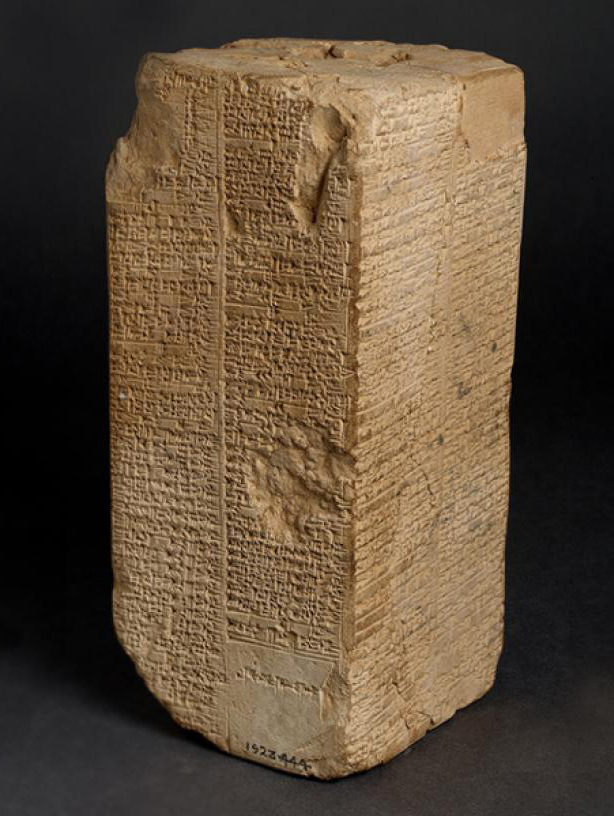
Image Caption: Clay Tablet: Sumerian King List. Source: Sumerian King List (Ashmolean Museum, Oxford) [https://www.ashmolean.org/sites/default/files/styles/listing_image_gallery_image/public/ashmolean/images/media/1800full1_0.jpg?itok=w2mV5UL2]
The Sumerian King List is preserved in several recensions. The list seems sequential, though many were contemporaries. Ancients believed kingship was bestowed by the gods but could be transferred from city to city, thereby establishing a hegemony. The final version (2100 –1600 BC) legitimates Isin's claim to hegemony against Larsa and neighboring city-states in southern Mesopotamia.
The list is lengthy, extending through 21 ‘dynasties’.
- Antediluvian rulers
- First dynasty of Kish
- First rulers of Uruk
- First dynasty of Ur
- Dynasty of Awan
- Second dynasty of Kish
- Dynasty of Hamazi
- Second dynasty of Uruk
- Second dynasty of Ur
- Dynasty of Adab
- Dynasty of Mari
- Third dynasty of Kish
- Dynasty of Akshak
- Fourth dynasty of Kish
- Third dynasty of Uruk
- Dynasty of Akkad
- Fourth dynasty of Uruk
- Gutian rule
- Fifth dynasty of Uruk
- Third dynasty of Ur
- Dynasty of Isin
.jpg)
Image Caption: Sumerian King List: Weld-Blundell Prism with transcription by Stephen Herbert Langdon (1876-1937). Source: Sumerian King List (Wikipedia) [https://en.wikipedia.org/wiki/Sumerian_King_List]
Only the predynastic antediluvian list of eight kings parallels Genesis 5.
None of the predynastic antediluvian rulers have been verified historically. The Sumerians purported them to have lived in the mythical era before the great deluge.
Antediluvian reigns are also lengthy, measured in Sumerian sexagesimal numerical units:
sars (units of 3,600)
ners (units of 600)
sosses (units of 60)
Sexagesimal notation is the technique of expressing numbers in base 60.
Sumerian Antediluvian Kings
After the kingship descended from heaven, the kingship was in Eridug. In Eridug, Alulim became king; he ruled for 28800 years.
| Alulim | 8 sars (28,800 years) |
|---|---|
| Alalngar | 10 sars (36,000 years) |
Then Eridug fell and the kingship was taken to Bad-tibira.
| En-men-lu-ana | 12 sars (43,200 years) |
|---|---|
| En-men-gal-ana | 8 sars (28,800 years) |
| Dumuzid, the shepherd | 10 sars (36,000 years) |
Then Bad-tibira fell and the kingship was taken to Larag.
| En-sipad-zid-ana | 8 sars (28,800 years) |
|---|
Then Larag fell and the kingship was taken to Zimbir.
| En-men-dur-ana | 5 sars and 5 ners (21,000 years) |
|---|
Then Zimbir fell and the kingship was taken to Shuruppag.
| Ubara-Tutu | 5 sars and 1 ner (18,600 years) |
|---|
Then the flood swept over.
Interestingly, Ubartutu, the last king in the Sumerian King List before the flood, is named as the father of Ziusudra in the Gilgamesh Epic flood account.
Sumerian King List versus Genesis 5
| Antediluvian King List | Genealogy of Adam |
|---|---|
| a king list: kingship succession | a genealogy: kinship succession |
| records lengths of reigns | records length of lifespans |
| scope: Sumerian national interest | scope: human universal interest |
| rhetoric: implicitly political | rhetoric: implicitly ideological |
| legitimates one city-state: Isin | legitimates one ancestry: Noah |
| extant copies list 7 to 10 kings | lists 10 ancestors |
Genesis Prediluvian Ancestor List
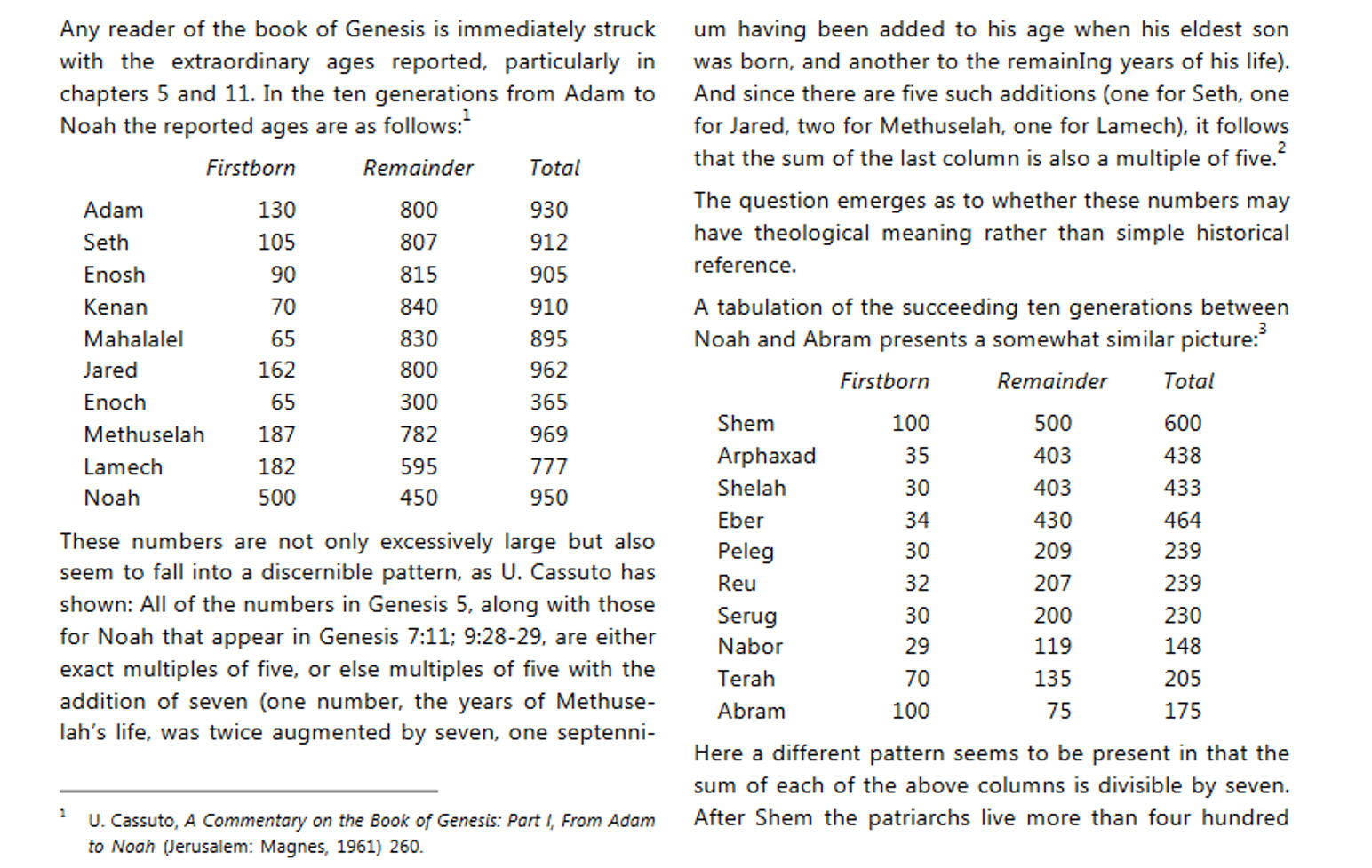 Image Caption: Genesis Prediluvian and Postdiluvian Ancestor Lists. Source: Duane L. Christiensen, Mysterious Numbers of the Ages of the Patriarchs [https://jbburnett.com/resources/ot/christensen-patr-ages.pdf]
U. Cassuto (1961) said each number in Gen 5 (except Methuselah's 969 years) ends in 0, 5, 2, or 7, which can be thought of as factors of 5 (0 or 5) adding 7 (e.g. 5 + 7 = 12).
Image Caption: Genesis Prediluvian and Postdiluvian Ancestor Lists. Source: Duane L. Christiensen, Mysterious Numbers of the Ages of the Patriarchs [https://jbburnett.com/resources/ot/christensen-patr-ages.pdf]
U. Cassuto (1961) said each number in Gen 5 (except Methuselah's 969 years) ends in 0, 5, 2, or 7, which can be thought of as factors of 5 (0 or 5) adding 7 (e.g. 5 + 7 = 12).
Based on Babylonian sexagesimal algebra, Dwight Wayne Young (1988) said one could account for all but three figures in both genealogies of Gen 5 and 11: those figures being 777 (Lamech), 365 (Enoch), and 110, which, have been solved by other methods.
Donald V. Etz (1993) explained that the author of Genesis 5 began with "a set of [invented] plausible numbers." From there, "each lifespan (except Enoch's) was increased by 300 years," and Enoch's by only 100 years. Then all numbers were multiplied by 10, then divided by 4, and "rounded down to whole numbers if necessary."
Jim Stump (2017) noted that all 30 numbers end with the digits 0, 2, 5, 7, or 9. All 30 numbers can be expressed as combinations of the two 'sacred' numbers 60 and 7 in terms of years and months.
Manuscripts differ as to the the sums of ages in the MT, LXX, and SP, which are 1,556 (MT), 2,142 (LXX), and 1,207 (SP) years.
Prediluvian Patriarchs
Prediluvian ('before the Flood') is also prehistoric ('before written recording'). Whatever knowledge of names, ages, and deeds of the ancestors who preceded the great flood could only have been conveyed by oral tradition. Writing would not be invented until about 3200 BC. So, the genre of prehistoric genealogies (or king lists) prior to writing must be defined as a part of the widespread oral lore that preserved a wide range of cultural myths, tribal ancestries, and ritual traditions. Many names in Genesis 5 seem role based (and some are explicitly paronomastic).
Role Names in Genesis 5
- Adam (אָדָם)
- Derivation: Derived from the Hebrew root אֲדָמָה (ʾăd̲āmāh), "ground, soil". It may also be tied to אָדֹם (ʾād̲ōm), "red, ruddy."
- Interpretation: "Man, Human, Earthling". It names humanity by its physical source and destination: the material of the earth.
- Seth (שֵׁת)
- Derivation: Derived from the Hebrew verb שִׁית (šît̲), "to put, place, appoint".
- Interpretation: "Replacer, Appointed one, Compensation." Eve declared at his birth, "God appointed another seed in place of Abel".
- Enosh (אֱנוֹשׁ)
- Derivation: From אָנַשׁ (ʾānaš), "to be weak, frail, or incurable".
- Interpretation: "Mortal one, Frail one, Human". It emphasizes the weakness and mortality of mankind compared to the divine.
- Kenan / Cainan (קֵינָן)
- Derivation: From קֵן (qēn), "nest, dwelling".
- Interpretation: "Possessing one, Dwelling one." Some interpret it as denoting a lament or dirge, while others tie it to acquiring or dwelling.
- Mahalalel (מַהֲלַלְאֵל)
- Derivation: A compound of two parts: מַהֲלָל (mahălāl), "praise, blessing," and אֵל (ʾēl), a Hebrew designation 'god'.
- Interpretation: "Blessed by God, Praise of God, Shining of God".
- Jared (יֶרֶד)
- Derivation: From the verb יָרַד (yārad̲), which translates to "shall come down, descend".
- Interpretation: "Descending one, He who goes down".
- Enoch (חֲנוֹךְ)
- Derivation: From the verb חָנַךְ (ḥānak̲), "to dedicate, train up, commence".
- Interpretation: "Dedicated, Trained up".
- Methuselah (מְתוּשֶׁלַח)
- Derivation: A compound of מוּת (mût̲), meaning "death," and שָׁלַח (šālaḥ), "to bring forth, send".
- Interpretation: "Man of the dart, His death brings". In the biblical narrative, the year Methuselah died was that of the great flood.
- Lamech (לֶמֶךְ)
- Derivation: The etymology is uncertain in biblical Hebrew, but it may be tied either to a Semitic root preserved
- in Akkadian lmg (lumakku, a type of priest) or lmgʾ (Lamga, an epithet of the Babylonian moon god, Sin)
- in Arabic alloforms ylmk // ylmq "strong, robust, mighty man"
- in Hebrew מוּךְ (mûk̲) "to be low, be humble", and hence, "to despair, lament"
- Interpretation: Either "Strong one" or "Humble one, Despairing one".
- Derivation: The etymology is uncertain in biblical Hebrew, but it may be tied either to a Semitic root preserved
- Noah (נֹחַ)
- Derivation: Derived from the Hebrew verb נוּחַ (nûaḥ), "to rest, to settle," and connected to נָחַם (nāḥam), "to comfort".
- Interpretation: "Giving rest, Comforting one, Relieving one".
Introductory Summary — Genesis 5:1-2
|
א
זֶה סֵפֶר תּוֹלְדֹת אָדָם: בְּיוֹם בְּרֹא אֱלֹהִים אָדָם, בִּדְמוּת אֱלֹהִים עָשָׂה אֹתוֹ׃ |
1
This is the book of the generations of Adam. In the day that God created Man, in the likeness of God he made him; |
|
ב
זָכָר וּנְקֵבָה בְּרָאָם; וַיְבָרֶךְ אֹתָם וַיִּקְרָא אֶת-שְׁמָם אָדָם, בְּיוֹם הִבָּרְאָם׃ |
2
male and female he created them, and he blessed them and called their name Man, in the day when they were created. |
Generation 1: Adam — Genesis 5:3-5
| ג וַיְחִי אָדָם, שְׁלֹשִׁים וּמְאַת שָׁנָה, וַיּוֹלֶד בִּדְמוּתוֹ, כְּצַלְמוֹ; וַיִּקְרָא אֶת-שְׁמוֹ, שֵׁת׃ | 3 And Adam lived a hundred and thirty years, and bore a son in his own likeness, according to his image; and called his name Seth. |
| ד וַיִּהְיוּ יְמֵי-אָדָם, אַחֲרֵי הוֹלִידוֹ אֶת-שֵׁת, שְׁמֹנֶה מֵאֹת, שָׁנָה; וַיּוֹלֶד בָּנִים, וּבָנוֹת׃ | 4 And the days of Adam after he bore Seth were eight hundred years; and he bore sons and daughters. |
| ה וַיִּהְיוּ כָּל-יְמֵי אָדָם, אֲשֶׁר-חַי, תְּשַׁע מֵאוֹת שָׁנָה, וּשְׁלֹשִׁים שָׁנָה; וַיָּמֹת׃ {ס} | 5 And all the days that Adam lived were nine hundred and thirty years; and he died. {S} |
130 is a multiple of 13 (prime) and 2 and 5 or as 19 (prime) plus 7 times 5:
- 13 x 2 x 5 = 130 (prime factors)
- (19 + 7) x 5 = 130
800 is a multiple of 2 and 5:
- 25 x 52 = 800 (prime factors)
- (52 + 7) x 52 = 800
Dwight Wayne Young said the number 800 could also be resolved by understanding the importance of the numbers 30 and 20 in Mesopotamia. Its resolution is (30 + (30 − 20)) x 20 = 800.
930 could be calculated as x2 + ax = b where (for Adam) x = 30 and, in this case, a = 1. After computing, the result is 930 years.
930 is a multiple of the following primes:
- 31 x 2 x 3 x 5 = 930 (prime factors)
Generation 2: Seth — Genesis 5:6-8
| ו וַיְחִי-שֵׁת, חָמֵשׁ שָׁנִים וּמְאַת שָׁנָה; וַיּוֹלֶד, אֶת-אֱנוֹשׁ׃ | 6 And Seth lived a hundred and five years, and bore Enosh. |
| ז וַיְחִי-שֵׁת, אַחֲרֵי הוֹלִידוֹ אֶת-אֱנוֹשׁ, שֶׁבַע שָׁנִים, וּשְׁמֹנֶה מֵאוֹת שָׁנָה; וַיּוֹלֶד בָּנִים, וּבָנוֹת׃ | 7 And Seth lived after he bore Enosh eight hundred and seven years, and bore sons and daughters. |
| ח וַיִּהְיוּ, כָּל-יְמֵי-שֵׁת, שְׁתֵּים עֶשְׂרֵה שָׁנָה, וּתְשַׁע מֵאוֹת שָׁנָה; וַיָּמֹת׃ {ס} | 8 And all the days of Seth were nine hundred and twelve years; and he died. {S} |
105 is a multiple of 7 and 5 and 3:
- 7 x 5 x 3 = 105 (prime factors)
- (7 x 7 x 2) + 7 = 105
807 is a multiple of 269 (prime) and 3:
- 269 x 3 = 807 (prime factors)
- (32 x 5 x 5) + 7 = 807
Their sum is 912:
- (7 x 5 x 3) + (269 x 3) = 912
- 24 × 3 × 19 = 912 (prime factors)
912 is the sum of the 10 primes from 71 to 109:
- 71 + 73 + 79 + 83 + 89 + 97 + 101 + 103 + 107 + 109 = 912
912 is also the sum of four consecutive primes:
- 223 + 227 + 229 + 233 = 912
Generation 3: Enosh — Genesis 5:9-11
| ט וַיְחִי אֱנוֹשׁ, תִּשְׁעִים שָׁנָה; וַיּוֹלֶד, אֶת-קֵינָן׃ | 9 And Enosh lived ninety years, and bore Kenan. |
| י וַיְחִי אֱנוֹשׁ, אַחֲרֵי הוֹלִידוֹ אֶת-קֵינָן, חֲמֵשׁ עֶשְׂרֵה שָׁנָה, וּשְׁמֹנֶה מֵאוֹת שָׁנָה; וַיּוֹלֶד בָּנִים, וּבָנוֹת׃ | 10 And Enosh lived after he bore Kenan eight hundred and fifteen years, and bore sons and daughters. |
| יא וַיִּהְיוּ, כָּל-יְמֵי אֱנוֹשׁ, חָמֵשׁ שָׁנִים, וּתְשַׁע מֵאוֹת שָׁנָה; וַיָּמֹת׃ {ס} | 11 And all the days of Enosh were nine hundred and five years; and he died. {S} |
90 is a multiple of 3 primes:
- 2 x 32 x 5 = 90 (prime factors)
90 is also a multiple of the sum of 11 (prime) plus 7 times 5:
- (11 + 7) x 5 = 90
815 is a multiple of 163 (prime) x 5:
- 163 x 5 = 815 (prime factors)
Their sum is 905:
- ((11 + 7) x 5) + (163 x 5) = 905
The primes 11 + 7 + 163 = 181 (prime)
So 905 is also a multiple of 181 (prime) and 5:
- 181 x 5 = 905 (prime factors)
Generation 4: Kenan — Genesis 5:12-14
| יב וַיְחִי קֵינָן, שִׁבְעִים שָׁנָה; וַיּוֹלֶד, אֶת-מַהֲלַלְאֵל׃ | 12 And Kenan lived seventy years, and bore Mahalalel. |
| יג וַיְחִי קֵינָן, אַחֲרֵי הוֹלִידוֹ אֶת-מַהֲלַלְאֵל, אַרְבָּעִים שָׁנָה, וּשְׁמֹנֶה מֵאוֹת שָׁנָה; וַיּוֹלֶד בָּנִים, וּבָנוֹת׃ | 13 And Kenan lived after he bore Mahalalel eight hundred and forty years, and bore sons and daughters. |
| יד וַיִּהְיוּ, כָּל-יְמֵי קֵינָן, עֶשֶׂר שָׁנִים, וּתְשַׁע מֵאוֹת שָׁנָה; וַיָּמֹת׃ {ס} | 14 And all the days of Kenan were nine hundred and ten years; and he died. {S} |
70 is a multiple of primes 7 and 5 and 2:
- 7 x 5 x 2 = 70 (prime factors)
840 is a multiple of sexagesimal 60 x 7 x 2:
- 60 x 7 x 2 = 840
- 23 × 3 × 5 × 7 = 840 (prime factors)
Their sum is 910:
- (7 x 5 x 2) + (60 x 7 x 2) = 910
- (7 x 5 x 5) + 7) x 5 = 910
- 13 x 7 x 5 x 2 = 910 (prime factors)
Generation 5: Mahalalel — Genesis 5:15-17
| טו וַיְחִי מַהֲלַלְאֵל, חָמֵשׁ שָׁנִים וְשִׁשִּׁים שָׁנָה; וַיּוֹלֶד, אֶת-יָרֶד׃ | 15 And Mahalalel lived sixty-five years, and bore Jared. |
| טז וַיְחִי מַהֲלַלְאֵל, אַחֲרֵי הוֹלִידוֹ אֶת-יֶרֶד, שְׁלֹשִׁים שָׁנָה, וּשְׁמֹנֶה מֵאוֹת שָׁנָה; וַיּוֹלֶד בָּנִים, וּבָנוֹת׃ | 16 And Mahalalel lived after he bore Jared eight hundred and thirty years, and bore sons and daughters. |
| יז וַיִּהְיוּ, כָּל-יְמֵי מַהֲלַלְאֵל, חָמֵשׁ וְתִשְׁעִים שָׁנָה, וּשְׁמֹנֶה מֵאוֹת שָׁנָה; וַיָּמֹת׃ {ס} | 17 And all the days of Mahalalel were eight hundred ninety and five years; and he died. {S} |
65 is a multiple of 13 (prime) and 5:
- 13 x 5 = 65 (prime factors)
830 is a multiple of 83 (prime) x 5 x 2:
- 83 x 5 x 2 = 830 (prime factors)
Their sum, 895, is thus a multiple of 5:
- (13 x 5) + (83 x 5 x 2) = 895
- 179 X 5 = 895 (prime factors)
Generation 6: Jared — Genesis 5:18-20
| יח וַיְחִי-יֶרֶד, שְׁתַּיִם וְשִׁשִּׁים שָׁנָה וּמְאַת שָׁנָה; וַיּוֹלֶד, אֶת-חֲנוֹךְ׃ | 18 And Jared lived a hundred sixty and two years, and bore Enoch. |
| יט וַיְחִי-יֶרֶד, אַחֲרֵי הוֹלִידוֹ אֶת-חֲנוֹךְ, שְׁמֹנֶה מֵאוֹת, שָׁנָה; וַיּוֹלֶד בָּנִים, וּבָנוֹת׃ | 19 And Jared lived after he bore Enoch eight hundred years, and bore sons and daughters. |
| כ וַיִּהְיוּ, כָּל-יְמֵי-יֶרֶד, שְׁתַּיִם וְשִׁשִּׁים שָׁנָה, וּתְשַׁע מֵאוֹת שָׁנָה; וַיָּמֹת׃ {ס} | 20 And all the days of Jared were nine hundred sixty and two years; and he died. {S}. |
162 is a multiple of 31 (prime) and 5 with 7 added:
- (31 x 5) + 7 = 162
- 2 × 34 = 162 (prime factors)
800 is a multiple of 2 and 5:
- 25 x 52 = 800 (prime factors)
- 32 x 5 x 5 = 800
Their sum, 962, is also a multiple of other combinations with primes:
- (31 x 5) + 7 + (32 x 52) = 962
- (191 x 5) + 7 = 962
- 37 x 13 x 2 = 962 (prime factors)
Generation 7: Enoch — Genesis 5:21-24
| כא וַיְחִי חֲנוֹךְ, חָמֵשׁ וְשִׁשִּׁים שָׁנָה; וַיּוֹלֶד, אֶת-מְתוּשָׁלַח׃ | 21 And Enoch lived sixty-five years, and bore Methuselah. |
| כב וַיִּתְהַלֵּךְ חֲנוֹךְ אֶת-הָאֱלֹהִים, אַחֲרֵי הוֹלִידוֹ אֶת-מְתוּשֶׁלַח, שְׁלֹשׁ מֵאוֹת, שָׁנָה; וַיּוֹלֶד בָּנִים, וּבָנוֹת׃ | 22 And Enoch walked with God after he bore Methuselah three hundred years, and bore sons and daughters. |
| כג וַיְהִי, כָּל-יְמֵי חֲנוֹךְ, חָמֵשׁ וְשִׁשִּׁים שָׁנָה, וּשְׁלֹשׁ מֵאוֹת שָׁנָה׃ | 23 And all the days of Enoch were three hundred sixty and five years. |
| כד וַיִּתְהַלֵּךְ חֲנוֹךְ, אֶת-הָאֱלֹהִים; וְאֵינֶנּוּ, כִּי-לָקַח אֹתוֹ אֱלֹהִים׃ {ס} | 24 And Enoch walked with God, and he was not; for God took him. {S}. |
65 is a multiple of 13 (prime) and 5:
- 13 x 5 = 65 (prime factors)
300 is a multiple of 5 and a sexagesimal:
- 60 x 5 = 300
- 22 x 3 x 52 = 300 (prime factors)
Their sum, 365, is thus a multiple of 5:
- (13 x 5) + (60 x 5) = 365
- 73 x 5 = 365 (prime factors)
Generation 8: Methuselah — Genesis 5:25-27
| כה וַיְחִי מְתוּשֶׁלַח, שֶׁבַע וּשְׁמֹנִים שָׁנָה וּמְאַת שָׁנָה; וַיּוֹלֶד, אֶת-לָמֶךְ׃ | 25 And Methuselah lived a hundred eighty and seven years, and bore Lamech. |
| כו וַיְחִי מְתוּשֶׁלַח, אַחֲרֵי הוֹלִידוֹ אֶת-לֶמֶךְ, שְׁתַּיִם וּשְׁמוֹנִים שָׁנָה, וּשְׁבַע מֵאוֹת שָׁנָה; וַיּוֹלֶד בָּנִים, וּבָנוֹת׃ | 26 And Methuselah lived after he bore Lamech seven hundred eighty-two years, and bore sons and daughters. |
| כז וַיִּהְיוּ, כָּל-יְמֵי מְתוּשֶׁלַח, תֵּשַׁע וְשִׁשִּׁים שָׁנָה, וּתְשַׁע מֵאוֹת שָׁנָה; וַיָּמֹת׃ {ס} | 27 And all the days of Methuselah were nine hundred sixty-nine years; and he died. {S}. |
187 is a multiple of 5 x 62 plus 7:
- (5 x 62) + 7 = 187
- 11 x 17 = 187 (prime factors)
782 is a multiple of 31 (prime) x 5 plus 7:
- (31 x 5 x 5) + 7 = 782
- 23 x 17 x 2 = 782 (prime factors)
969 can be resolved as their sum:
- ((5 x 62) + 7) + ((31 x 52) + 7) = 969
- (5 x 62) + (31 x 52) + (7 x 2) = 969
969 can also be resolved as a multiple of 191 (prime) and 5, to which 7 x 2 has been added:
- (191 x 5) + (7 x 2) = 969
- 19 x 17 x 3 = 969 (prime factors)
Generation 9: Lamech — Genesis 5:28-31
| כח וַיְחִי-לֶמֶךְ, שְׁתַּיִם וּשְׁמֹנִים שָׁנָה וּמְאַת שָׁנָה; וַיּוֹלֶד, בֵּן׃ | 28 And Lamech lived a hundred eighty-two years, and bore a son. |
|
כט
וַיִּקְרָא אֶת-שְׁמוֹ נֹחַ, לֵאמֹר: זֶה יְנַחֲמֵנוּ מִמַּעֲשֵׂנוּ, וּמֵעִצְּבוֹן יָדֵינוּ, מִן-הָאֲדָמָה אֲשֶׁר אֵרְרָהּ יְהוָה׃ |
29
And he called his name Noah, saying: 'This one shall give us rest from our work and from the toil of our hands, from the ground that YHWH cursed.' |
| ל וַיְחִי-לֶמֶךְ, אַחֲרֵי הוֹלִידוֹ אֶת-נֹחַ, חָמֵשׁ וְתִשְׁעִים שָׁנָה, וַחֲמֵשׁ מֵאֹת שָׁנָה; וַיּוֹלֶד בָּנִים, וּבָנוֹת׃ | 30 And Lamech lived after he bore Noah five hundred ninety-five years, and bore sons and daughters. |
| לא וַיְהִי, כָּל-יְמֵי-לֶמֶךְ, שֶׁבַע וְשִׁבְעִים שָׁנָה, וּשְׁבַע מֵאוֹת שָׁנָה; וַיָּמֹת׃ {ס} | 31 And all the days of Lamech were seven hundred seventy-seven years; and he died. {S} |
182 is a multiple of 5 and 7 with 7 added:
- (7 x 5 x 5) + 7 = 182
- 13 x 7 x 2 = 182 (prime factors)
595 is a multiple of 5 and 7 and 17 (prime):
- 17 x 7 x 5 = 595 (prime factors)
777 is their sum but also a multiple of 37, 7 and 3:
- (17 x 7 x 5) + ((7 x 5 x 5) + 7) = 777
- 37 x 7 x 3 = 777 (prime factors)
Generation 10: Noah — Genesis 5:32
| לב וַיְהִי-נֹחַ, בֶּן-חֲמֵשׁ מֵאוֹת שָׁנָה; וַיּוֹלֶד נֹחַ, אֶת-שֵׁם אֶת-חָם וְאֶת-יָפֶת׃ | 32 And Noah was five hundred years old; and Noah bore Shem, Ham, and Japheth. |
500 is obviously a multiple of 5:
- 102 x 5 = 500
- 22 x 53 = 500 (prime factors)
Key Prediluvian Ancestor Names
Adam (אָדָם) — ‘Man’ ‘Human’
Seth (שֵׁת) — ‘Set’ ‘Appointed’
'for God has set me another seed
instead of Abel, for Cain slew him.’ (Gen. 4:25)
‘bore a son in his own likeness, according to his image’ (Gen. 5:3)
Enosh (אֱנוֹש) — ͗noš ‘Man’; ‘Mortal one’
Kenan (קֵינָן) — ‘Weaver’ (cf. qn ‘nest’)
Mahalel-el (מַהֲלַלְאֵל) — mhll- ͗l ‘Blessed by God’
Jared (יָרֶד) — ‘He descended’
Enoch (חֲנוֹךְ) — ‘Dedicated one’ (cf. Hannukah); ‘Trained one’
And Enoch walked with God.
Then he was not, for God took him. (Gen. 5:24)
Methu-se-lah (מְתוּשָׁלַח) — mt-ū-š-lḥ ‘Man of the dart’ or ‘Man of the tablet’
La-mech (לָמֶך) — l-mk[k] ‘Strong one' or 'One for lowering’
Noah (נֹחַ) — ‘Giving rest’
'This one shall give us rest from our work
and from the toil of our hands,
from the ground that YHWH cursed.’ (Gen. 5:29)
The sequence of antediluvian patriarch names does not appear to form a coherent sentence (contra Chuck Missler, apud Eric E. Walker, The Genesis of All Prophecy, Defender Publishing, 2022, pp. 13-16). Missler’s etymologies seem untenable and based on false lexical derivation.
However, three paronomastic sayings associated with the ‘second’ second son, Seth, with the seventh son, Enoch, and with the tenth son, Noah, extend a messianic theme that grows out of Gen. 3:15.
Rise of Rebellion
Genesis 6:1-8 functions as an exposition to the great flood story of 6:9–9:29. Two depictions of human failure, both moral in nature, are given as reasons for YHWH's decision to wipe humanity from the earth:
- In Genesis 6:1-4, the cohabitation of 'sons of God' with 'daughters of men', who bore them Nephilim as offspring, is the reason YHWH decided to limit man's time on the face of the earth
- In Genesis 6:5-8, it was seeing mankind's inclination to evil on the earth that made YHWH regret making Man and plan to wipe all flesh from the earth
Yet a third depiction of human moral failure will follow, in Genesis 6:11-13 — part of the Toledoth of Noah — in which 'God' not 'YHWH' is named as judge: "Now the earth was corrupt in God’s sight and was full of violence. God saw how corrupt the earth had become, for all the people on earth had corrupted their ways. So God said to Noah, “I am going to put an end to all people, for the earth is filled with violence because of them. I am surely going to destroy both them and the earth."
Genesis 6:1-4
| א וַיְהִי כִּי-הֵחֵל הָאָדָם, לָרֹב עַל-פְּנֵי הָאֲדָמָה; וּבָנוֹת, יֻלְּדוּ לָהֶם׃ | 1 And it came to pass, when men began to multiply on the face of the earth, and daughters were born unto them, |
| ב וַיִּרְאוּ בְנֵי-הָאֱלֹהִים אֶת-בְּנוֹת הָאָדָם, כִּי טֹבֹת הֵנָּה; וַיִּקְחוּ לָהֶם נָשִׁים מִכֹּל אֲשֶׁר בָּחָרוּ׃ | 2 that the sons of God saw the daughters of men that they were fair; and they took themselves wives from any they chose. |
| ג וַיֹּאמֶר יְהוָה, לֹא-יָדוֹן רוּחִי בָאָדָם לְעֹלָם, בְּשַׁגַּם, הוּא בָשָׂר; וְהָיוּ יָמָיו, מֵאָה וְעֶשְׂרִים שָׁנָה׃ | 3 And YHWH said: 'My spirit shall not contend with man forever, in that he is mere flesh; so his days shall be a hundred and twenty years.' |
| ד הַנְּפִלִים הָיוּ בָאָרֶץ, בַּיָּמִים הָהֵם, וְגַם אַחֲרֵי-כֵן אֲשֶׁר יָבֹאוּ בְּנֵי הָאֱלֹהִים אֶל-בְּנוֹת הָאָדָם, וְיָלְדוּ לָהֶם: הֵמָּה הַגִּבֹּרִים אֲשֶׁר מֵעוֹלָם, אַנְשֵׁי הַשֵּׁם׃ {פ} | 4 The Nephilim were on the earth in those days — and also after that — when the sons of God came to the daughters of men and bore children to them; they were the ancient mighty men, the men of renown. {P} |
Sons of God & Daughters of Man
The first reason given for YHWH's plan to terminate humanity is related to the impropriety of sexual relations between the 'sons of God' and the 'daughters of man'. The traditional and most widely held interpretation is that the 'sons of God' are angels (demons). This interpretation was held by ancient Jews and the early church (cf. 1 Pet. 3:19–20; 2 Pet. 2:4; Jude 6). The phrase 'sons of God' is elsewhere used of angels in the divine assembly (cf. Job 1:6; 2:1; 38:7). The narrator contrasts 'man' and 'the daughters of man' with 'sons of God' in a way that suggests the latter were not human (Gen. 6:1–2).
The idea of fallen angels procreating with women may seem problematic. Scripture admits angels can eat (Gen. 18:1–2, 8; 19:1, 5), but their engagement in sexual relations seems beyond the point Jesus makes in Matthew 22:30: “For in the resurrection they neither marry nor are given in marriage, but are like angels in heaven.”
In 1 Peter 3:18–22, Peter refers to 'spirits in prison' who disobeyed in Noah’s day (1 Pet. 3:19–20). Here, 'spirits' seems to refer to evil spirits (cf. Matt. 8:16; 12:45; Luke 4:36; 10:20; Acts 19:12–16). The connection between these spirits and Noah’s day suggests that Peter was referring to Genesis 6. These 'spirits in prison' are referred to also in 2 Peter and Jude.
In 2 Peter 2:4–10, Peter cites three examples of God’s judgment:
- fallen angels chained and awaiting judgment (2 Pet. 2:4; cf. Gen. 6:1-8)
- the flood in Noah’s day (2 Pet. 2:5; cf. Gen. 6:9–8:1)
- the destruction of Sodom and Gomorrah (2 Pet. 2:6; cf. Gen. 19)
Since the second and third examples follow the Genesis narrative order, it would make sense if Peter's first example came from Genesis 6:1-8.
Genesis 6:5-8
| ה וַיַּרְא יְהוָה, כִּי רַבָּה רָעַת הָאָדָם בָּאָרֶץ, וְכָל-יֵצֶר מַחְשְׁבֹת לִבּוֹ, רַק רַע כָּל-הַיּוֹם׃ | 5 And YHWH saw that the wickedness of man was great in the earth, and that every imagination of the thoughts of his heart was only evil continually. |
| ו וַיִּנָּחֶם יְהוָה, כִּי-עָשָׂה אֶת-הָאָדָם בָּאָרֶץ; וַיִּתְעַצֵּב, אֶל-לִבּוֹ׃ | 6 And it made YHWH regret that He had made man on the earth, and it grieved Him to His heart. |
| ז וַיֹּאמֶר יְהוָה, אֶמְחֶה אֶת-הָאָדָם אֲשֶׁר-בָּרָאתִי מֵעַל פְּנֵי הָאֲדָמָה, מֵאָדָם עַד-בְּהֵמָה, עַד-רֶמֶשׂ וְעַד-עוֹף הַשָּׁמָיִם: כִּי נִחַמְתִּי, כִּי עֲשִׂיתִם׃ | 7 And YHWH said: 'I will blot out man whom I have created from the face of the earth; from man, to beast, to creeping thing, and to fowl of the air; for it makes me regret that I have made them.' |
| ח וְנֹחַ מָצָא חֵן בְּעֵינֵי יְהוָה׃ {פ} | 8 But Noah found grace in the eyes of YHWH. {P} |
Man's Evil Inclination
The second reason given for YHWH's plan to destroy humanity stems from humanity's perpetual 'evil inclination' (יֵצֶר הַרַע of Gen. 6:5). YHWH's disdain for man's evil is so profound, YHWH plans to erase from the earth every trace of terrestrial life, including birds.
But Noah … (Gen. 6:8). One man is an exception to the plan for world judgment, and through him, YHWH will save all humanity — through a Noaic remnant. The reference to Noah as an exception is found both here and at the turning point in the flood narrative, where it says, "Then God remembered Noah" (Gen. 8:1).
Noah, a 'righteous man' (Gen. 6:9) enters history as the antidote to the problem of humanity, 'an evil inclination' (יֵצֶר הַרַע) (Gen 6:5). After YHWH says twice that man's evil inclination made him regret וַיִּנָּחֶם … נִחַמְתִּי wayyinnāḥem … niḥamtî (Gen. 6:6, 7), the introduction of Noah is almost a palindrome (a reversal) based on the same Hebrew letters: nûn, ḥeṯ, mem: וְנֹחַ מָצָא חֵן wənōaḥ māṣāʾ ḥēn, "but Noah found favor" (Gen. 6:8).
Sources
Articles
- Stump, Jim. "Long Life Spans in Genesis: Literal or Symbolic?" Biologos (October 5, 2017) [https://biologos.org/articles/long-life-spans-in-genesis-literal-or-symbolic]
Commentaries
- Cassuto, Umberto. 1961. A Commentary on the Book of Genesis. Translated by Israel Abrahams. 2 vols. Jerusalem: Magnes Press.
- Speiser, E. A. 1964. Genesis: Introduction, Translation, and Notes. Anchor Bible 1. Garden City, NY: Doubleday.
Studies of Biblical Chronology
- Beckwith, Roger T. 1985. The Old Testament Canon of the New Testament Church and Its Background in Early Judaism. London: SPCK.
A definitive scholarly work establishing the historical closure of the biblical canon as understood by early Christian and Jewish writers. - Davis, John J. 1971. Biblical Numerology. Grand Rapids, MI: Baker Book House.
Explores the numerical and genealogical systems underlying biblical history and chronology. - Jones, Floyd N. 2005. The Chronology of the Old Testament. Green Forest, AR: Master Books.
A highly technical, modern defense of a strictly closed timeline relying entirely on the Masoretic Text to establish absolute dates from Adam onward. - Mauro, Philip. 1922. The Chronology of the Bible. Boston, MA: Hamilton Bros. [https://archive.org/details/chronologyofbibl0000phil/page/8/mode/2up]
- Newton, Isaac. 1728. The Chronology of Ancient Kingdoms Amended. London: J. Tonson.
Though a brilliant scientific mind, Newton devoted extensive later years to defending a strictly literal biblical timeline, attempting to correlate biblical events with ancient astronomical and historical records. - Ussher, James. [1650] 2003. The Annals of the World. Translated and modernized by Larry and Marion Pierce. Green Forest, AR: Master Books.
The most famous and meticulously calculated closed chronology, this 17th-century work pegs Creation to 4004 BC based on an unbroken string of biblical genealogies.